


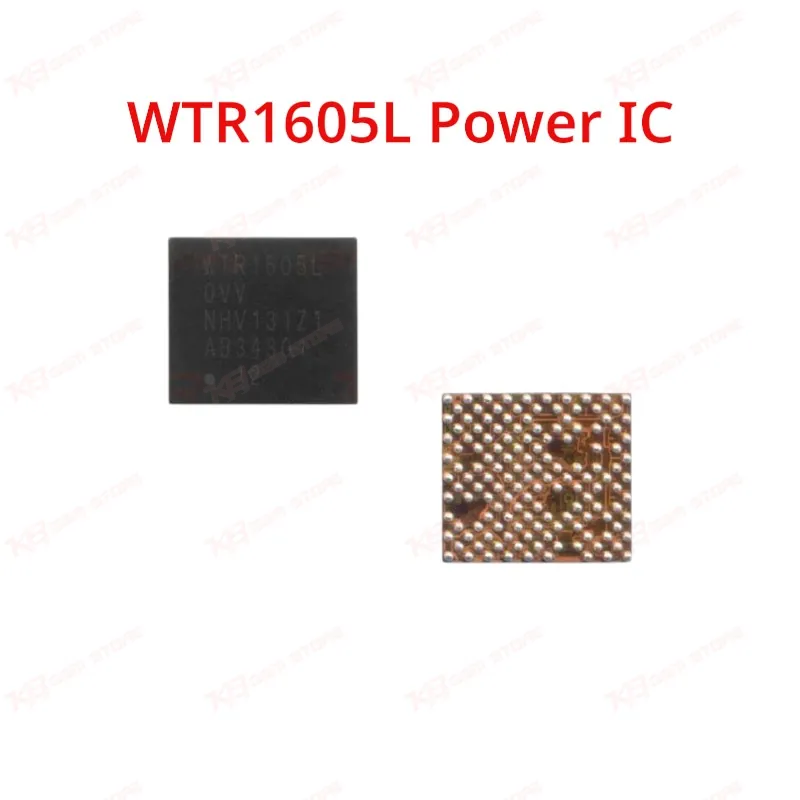
WTR1605L Power IC
WTR1605L Power IC
Regular price
Rs.200.00 PKR
Regular price
Sale price
Rs.200.00 PKR
Shipping calculated at checkout.
Quantity
Couldn't load pickup availability
The WTR1605L is a genuine QUALCOMM RF transceiver, the chip technicians reach for when an iPhone 5S or 5C shows no service, searching network, or weak signal after a drop or liquid exposure. It handles LTE, HSPA+, CDMA2000, TD-SCDMA, EDGE, and GPS processing on the logic board, so replacing it restores full network and GPS function in one job instead of chasing separate faults. The WLNSP/BGA package matches your existing reballing setup, and the -40°C to 105°C rating means it survives normal hot air rework without pre-baking concerns. Keep it stocked for fast-turnaround network complaints.
⚖️ Weight: 0.01 kg
SKU:MST-IC-251
- Safe & Secure Payment
- Fast Delivery
- WhatsApp Support


Description
FAQ
What is the product name?
The product name is the WTR1605L RF Transceiver IC.
What is the brand of this product?
The brand of this product is QUALCOMM.
What is the model of this product?
The model of this product is WTR1605L.
What is this product used for?
Technicians use it to restore LTE, HSPA+, CDMA2000, TD-SCDMA, EDGE, and GPS signal function on affected logic boards.
Which devices are compatible with this product?
This IC is compatible with the Apple iPhone 5S, iPhone 5C, and iPad Air (iPad 5).
Who should use this product?
This product suits mobile repair technicians, GSM technicians, repair shops, and service centers handling iPhone 5S/5C network repairs.
Does the WTR1605L fix a permanently searching network on iPhone 5S?
Yes, a damaged WTR1605L is one of the most common causes of a permanently searching or no-service status once antenna and SIM tray checks come back clean.
What package type does the WTR1605L use for reballing?
It ships in a WLNSP/BGA package, so your standard BGA reballing and hot air rework process applies directly without special adapters.