


WTR2605 Network IC
WTR2605 Network IC
Regular price
Rs.250.00 PKR
Regular price
Sale price
Rs.250.00 PKR
Shipping calculated at checkout.
Quantity
Couldn't load pickup availability
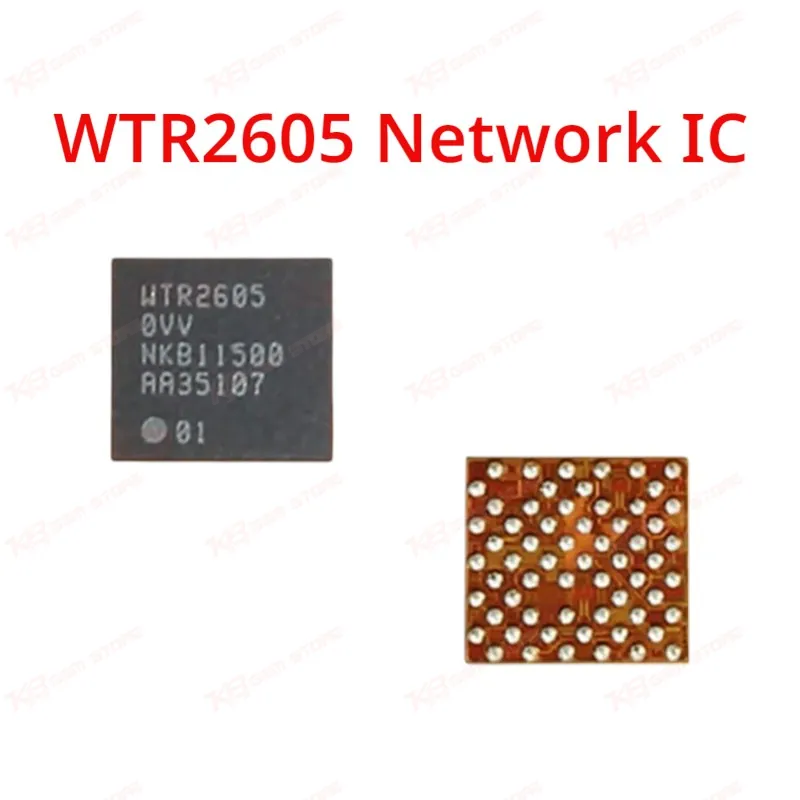
The WTR2605 Network IC is a Qualcomm RF transceiver chip responsible for handling the RF signal path on Qualcomm Snapdragon-based Android phones. Technicians reach for this IC when a device shows no service, weak signal, or network registration failure that survives a software flash. Built as a BGA component, it needs precise reballing and hot air control during replacement. Stock this IC on your bench for Xiaomi, Samsung, and other Qualcomm-platform devices with persistent network issues you can't fix through software alone.
⚖️ Weight: 0.01 kg
SKU:MST-IC-227
- Safe & Secure Payment
- Fast Delivery
- WhatsApp Support


Description
FAQ
What is the product name?
The product name is WTR2605 Network IC.
What is the brand of this product?
The brand of this product is Qualcomm.
What is the model of this product?
The model of this product is WTR2605.
What is this product used for?
This product is used for repairing no-service and weak-signal network faults on Qualcomm-platform Android phones.
Which devices are compatible with this product?
This product is compatible with Qualcomm Snapdragon-based Android devices that use the WTR2605 RF transceiver in their signal chain, including several Xiaomi and Samsung models.
Who should use this product?
This product is suitable for mobile repair technicians, repair shops, service centers, and professional users.
Does the WTR2605 fix a "no service" issue that survives a flash?
Yes, when the fault isolates to the RF transceiver rather than software, IMEI, or the SIM path, replacing the WTR2605 resolves the network issue.
Is the WTR2605 a BGA component requiring reballing?
Yes, the WTR2605 uses a BGA package, so replacement requires hot air rework and precise reballing rather than standard soldering.