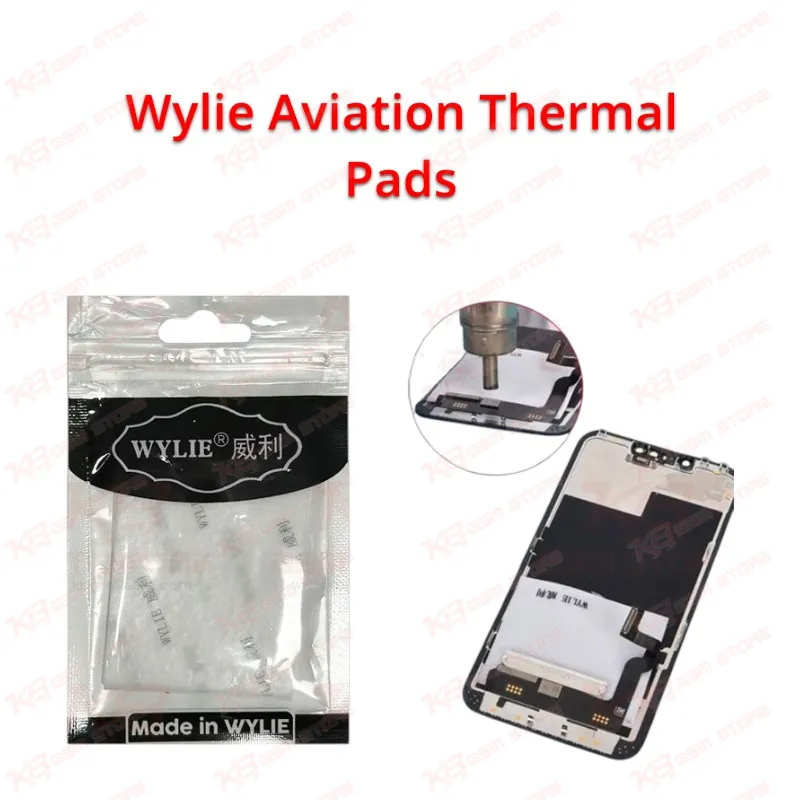
Working on a motherboard with a hot air station or soldering iron always carries the risk of heat spreading to components you never intended to touch, and that risk multiplies when you're doing a screen IC transplant or CPU reballing job where a single overheated trace or damaged flex cable can turn a simple repair into a warranty claim. WYLIE Aviation Thermal Pads solve this exact problem by giving you a heat-resistant silicone barrier that sits between your heat source and the parts you need to protect. Each pack includes 5 pads made from high-density silicone material engineered to withstand temperatures up to 600°C, so you can run your hot air gun at aggressive settings for stubborn IC removal or reballing without worrying about scorching the board underneath or the screen beside it. The thermal conductivity coefficient of 0.012 means the pads resist heat transfer efficiently, keeping the protected side noticeably cooler even while the exposed surface takes direct heat. This makes them especially useful for iPhone and Android LCD screen IC transplants, where the screen has to sit close to the heat zone during the swap and any temperature spike can cause discoloration, dead pixels, or backlight failure. Instead of risking the display, you lay the thermal pad over the screen surface, project your rework area onto the pad itself, and work with the confidence that the panel underneath stays insulated from the direct blast of hot air. The pads are thin enough that they do not interfere with your view of the work area or add bulk that gets in the way of tweezers and probes, and the flexible silicone body conforms to the contours of the board or screen rather than sitting rigid and shifting during the job. For motherboard-level repairs, technicians use these pads to shield nearby components, connectors, and flex cables while reworking a specific IC, so heat stays localized instead of radiating out and risking a secondary fault on a board that was otherwise healthy. This is particularly relevant on dense modern boards where PMICs, charging ICs, and RF components sit close together, and where hardware fault troubleshooting often means removing one IC without disturbing anything nearby. The pads are also handy during general soldering and desoldering work on phone, tablet, and laptop boards, giving you a quick way to mask off an area before you start heating, without needing to build a custom shield or rely on tape that can melt or leave residue. Because the pads are reusable and recyclable rather than single-use consumables, they hold up across multiple rework sessions on the bench, which keeps your per-repair cost down compared to disposable heat shields. The self-contained silicone construction also means there is no adhesive residue to clean off boards or screens afterward, so you can move straight from a screen protection job into a board-level IC swap without extra prep time between jobs. For repair shops handling a mix of dead phone, hang-on-logo, and IC change jobs where hot air rework is a daily task, having a stock of these pads on the bench reduces the chance of a heat-related mistake turning a routine repair into a costly board replacement. The pads pair naturally with hot air rework stations, BGA reballing kits, and IC removal tools already common on a GSM technician's bench, filling the specific gap of localized heat protection that general silicone work mats do not fully address. Whether you're transplanting a screen IC, reballing a CPU, or reworking a charging IC on a crowded board, these thermal pads give you a practical, repeatable way to keep heat exactly where you want it and away from everything else.