


Brand:
YCS
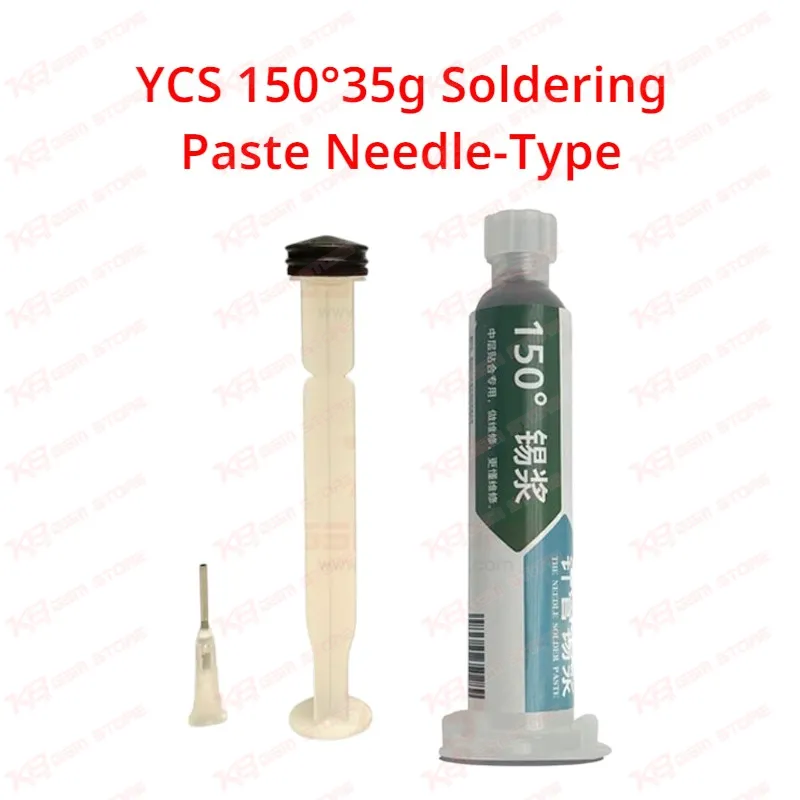
YCS 150°35g Soldering Paste Needle-Type
YCS 150°35g Soldering Paste Needle-Type
Regular price
Rs.750.00 PKR
Regular price
Sale price
Rs.750.00 PKR
Shipping calculated at checkout.
Quantity
Couldn't load pickup availability
The YCS 150°35g Soldering Paste Needle-Type gives mobile repair technicians a 150°C melting point solder paste in a precise 35g needle syringe. You place a controlled bead directly on IC pads, SMD pads, and jumper points without wasting paste or bridging nearby balls. YCS adds silver particles to the mix for better conductivity, which helps you avoid cold joints that bring a phone back with a charging issue or hang on logo fault. It fits IC replacement, BGA chip soldering, and SMD rework on smartphone motherboards, and it is a practical pick for any Pakistani repair bench that handles board-level work daily.
SKU:MST-SOLDERING-ACCESSORIES-741
⚖️ Weight: 0.1 kg
- Safe & Secure Payment
- Fast Delivery
- WhatsApp Support


Description
FAQ
What is the product name?
The product name is YCS 150°35g Soldering Paste Needle-Type.
What is the brand of this product?
The brand of this product is YCS.
What is the model of this product?
The model of this product is YCS 150°C 35g Needle-Type Solder Paste.
What is this product used for?
This product is used for mobile motherboard PCB, BGA, and SMD chip soldering and rework.
Which devices are compatible with this product?
This product is compatible with mobile phone motherboards and BGA/SMD components; it is universal and not device-specific.
Who should use this product?
This product is suitable for mobile repair technicians, repair shops, service centers, and professional users.
Why choose 150°C solder paste instead of 183°C paste for mobile IC replacement?
A 150°C melting point lets you reflow the chip with less hot air, which reduces heat stress on nearby connectors, capacitors, and underfilled chips. YCS also offers 183°C and 199°C versions in the same 35g syringe format when a job calls for a higher melting point.
Does YCS solder paste help prevent cold solder joints?
Yes. YCS adds silver particles to improve conductivity, which helps reduce false and cold solder joints and cuts down repeat rework on charging and audio IC repairs.