


Brand:
YCS
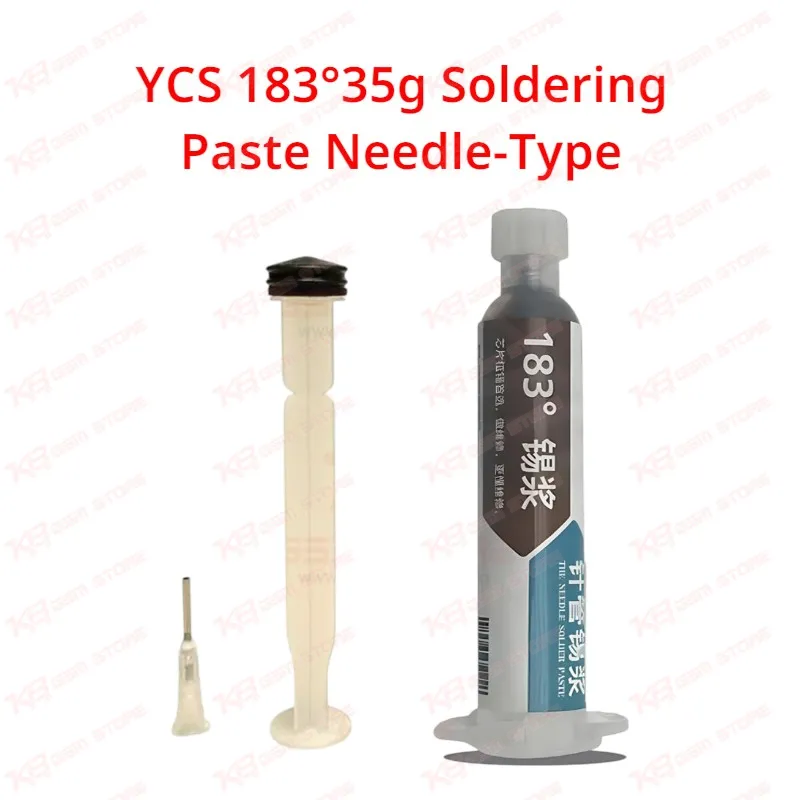
YCS 183°35g Soldering Paste Needle-Type
YCS 183°35g Soldering Paste Needle-Type
Regular price
Rs.850.00 PKR
Regular price
Sale price
Rs.850.00 PKR
Shipping calculated at checkout.
Quantity
Couldn't load pickup availability
The YCS 183°35g Soldering Paste Needle-Type gives you precise, controlled paste delivery for BGA, CPU, IC, and PCB rework on mobile phone motherboards. YCS rates this paste at 183°C, the medium-temperature grade in its lineup, so it handles most everyday hot air jobs without pushing your board into excessive heat. The needle syringe lets you apply a thin bead exactly where each pad needs it, and the silver-particle formula improves conductivity to cut down on false joints. A practical, low-cost consumable for every Pakistani repair bench handling dead phones and charging faults.
SKU:MST-SOLDERING-ACCESSORIES-739
⚖️ Weight: 0.1 kg
- Safe & Secure Payment
- Fast Delivery
- WhatsApp Support


Description
FAQ
What is the product name?
The product name is YCS 183°35g Soldering Paste Needle-Type.
What is the brand of this product?
The brand of this product is YCS.
What is the model of this product?
The model of this product is the YCS 183°C 35g needle-type solder paste.
What is this product used for?
This product is used for BGA, CPU, IC, and PCB precision soldering and rework on mobile phone motherboards.
Which devices are compatible with this product?
This product is compatible with mobile phone motherboards and PCBs of all brands, as it is a universal soldering consumable and not device-specific.
Who should use this product?
This product is suitable for mobile repair technicians, repair shops, service centers, and professional users.
Can I use YCS 183°C solder paste for CPU reballing on mobile boards?
Yes. YCS lists this paste for BGA, CPU, IC, and PCB precision soldering, and the needle syringe makes it easy to fill reballing stencil holes evenly.
What is the difference between YCS 150°C, 183°C, and 199°C solder paste?
They are different temperature grades. YCS classes 150°C as low temperature, 183°C as medium temperature, and 199°C as high temperature, so you choose the grade based on how much heat the board and nearby parts can take.