


Brand:
YCS
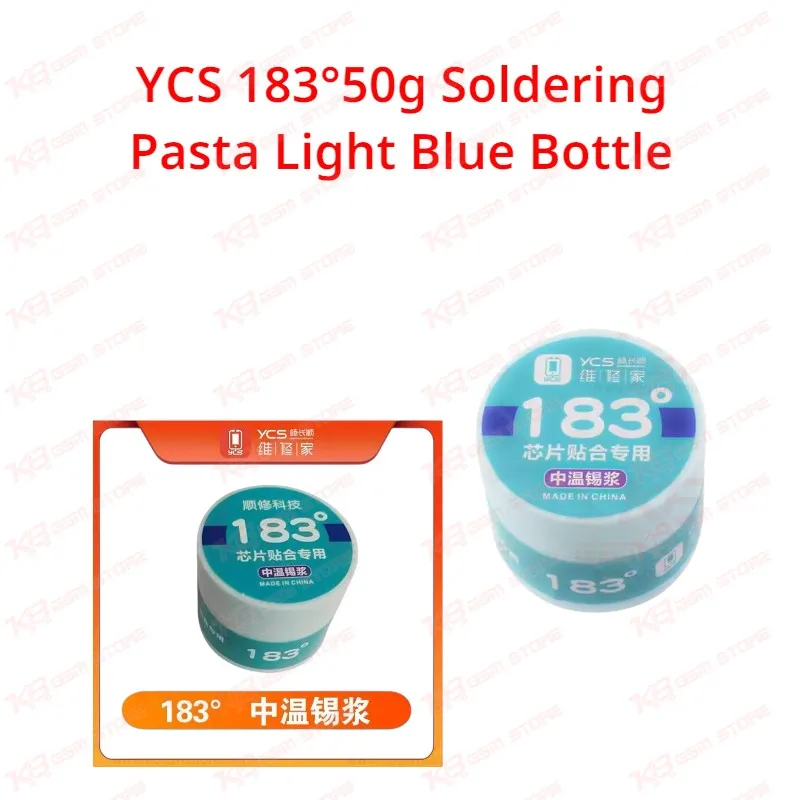
YCS 183°50g Soldering Pasta Light Blue Bottle
YCS 183°50g Soldering Pasta Light Blue Bottle
Regular price
Rs.1,200.00 PKR
Regular price
Sale price
Rs.1,200.00 PKR
Shipping calculated at checkout.
Quantity
Couldn't load pickup availability
The YCS 183°50g Soldering Pasta Light Blue Bottle gives mobile repair technicians a dependable medium-temperature solder paste for BGA reballing, IC replacement, CPU pad work, and SMD rework on phone motherboards. Its 183°C melting point sits between low- and high-temperature grades, so you get clean reflow without overheating nearby components. The paste holds its shape on the stencil, keeps chips from drifting during reflow, and forms bright, full joints that resist cold or false soldering. The 50g bottle carries enough paste for a long run of daily repairs and fits neatly on any repair bench in Pakistan.
SKU:MST-SOLDERING-ACCESSORIES-734
⚖️ Weight: 0.1 kg
- Safe & Secure Payment
- Fast Delivery
- WhatsApp Support


Description
FAQ
What is the product name?
The product name is YCS 183°50g Soldering Pasta Light Blue Bottle.
What is the brand of this product?
The brand of this product is YCS.
What is the model of this product?
The model of this product is YCS 183°C 50g Solder Paste.
What is this product used for?
This product is used for BGA reballing, IC and CPU soldering, and PCB rework on mobile phone motherboards.
Which devices are compatible with this product?
This product is compatible with BGA chips, ICs, CPUs, and PCBs on mobile phone motherboards; it is not device-specific.
Who should use this product?
This product is suitable for mobile repair technicians, repair shops, service centers, and professional users.
What is the difference between YCS 138, 150, 183, 199, and 215 solder paste?
The number shows the melting temperature in °C. YCS classes 138 and 150 as low-temperature pastes, 183 as medium-temperature, and 199 and 215 as high-temperature pastes.
Is YCS 183 solder paste suitable for CPU and BGA reballing on mobile boards?
Yes. YCS designs its 183°C paste for BGA, IC, CPU, and PCB precision soldering, which covers standard reballing work on mobile motherboards.