


Brand:
YCS
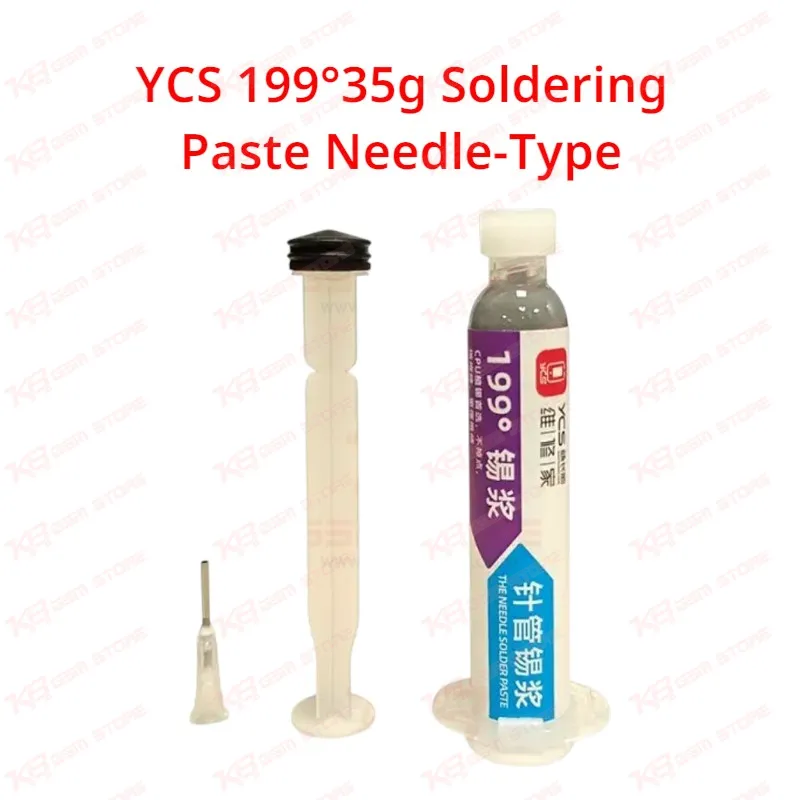
YCS 199°35g Soldering Paste Needle-Type
YCS 199°35g Soldering Paste Needle-Type
Regular price
Rs.800.00 PKR
Regular price
Sale price
Rs.800.00 PKR
Shipping calculated at checkout.
Quantity
Couldn't load pickup availability
The YCS 199°35g Soldering Paste Needle-Type gives you a high-temperature, silver-added solder paste in a precise syringe tube for mobile phone motherboard work. You apply it directly to pads, BGA chips, CPUs, and SMD components, and the 199°C melting point keeps base joints stable while you rework nearby parts with a lower-temperature paste. The dense formula holds small parts in position under hot air, and the added silver improves conductivity to cut down on cold joints and repeat repairs. Pakistani technicians handling dead phones, boot loop faults, and IC replacement get a dependable bench consumable at a practical price.
SKU:MST-SOLDERING-ACCESSORIES-740
⚖️ Weight: 0.1 kg
- Safe & Secure Payment
- Fast Delivery
- WhatsApp Support


Description
FAQ
What is the product name?
The product name is YCS 199°35g Soldering Paste Needle-Type.
What is the brand of this product?
The brand of this product is YCS.
What is the model of this product?
The model of this product is YCS 199 (199°C, 35g syringe).
What is this product used for?
This product is used for mobile phone motherboard soldering, including BGA, CPU, IC, and SMD repair and reballing.
Which devices are compatible with this product?
This product is compatible with mobile phone PCBs, BGA chips, CPUs, ICs, and SMD components; it is universal and not device-specific.
Who should use this product?
This product is suitable for mobile repair technicians, repair shops, service centers, and professional users.
What is the difference between YCS 199°C, 183°C, and 150°C solder paste?
YCS classifies 199°C as a high-temperature grade, 183°C as medium, and 150°C as low. Use 199°C for the first or base joints, then rework nearby parts with a lower grade so the original joints stay intact.
Can I use YCS 199°C paste for CPU and BGA reballing?
Yes. YCS positions its paste range for BGA, CPU, and IC ball planting; fill the stencil with a scraper and heat evenly with hot air until the balls form round and bright.