


Brand:
YCS
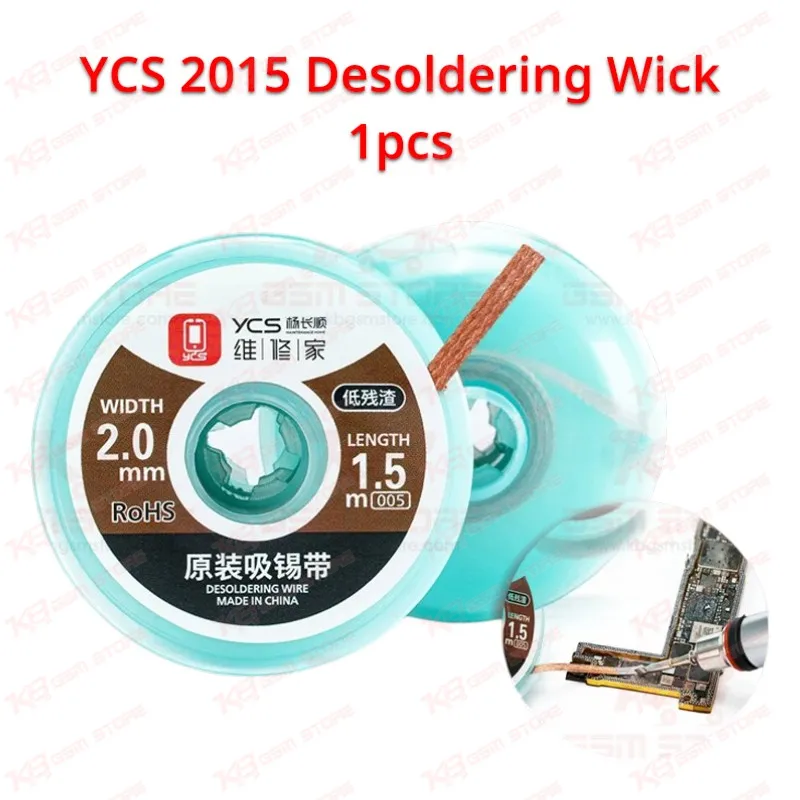
YCS 2015 Desoldering Wick 1pcs
YCS 2015 Desoldering Wick 1pcs
Regular price
Rs.300.00 PKR
Regular price
Sale price
Rs.300.00 PKR
Shipping calculated at checkout.
Quantity
Couldn't load pickup availability
The YCS 2015 Desoldering Wick is a 2.0mm width, 1.5m length pure copper braid built for technicians who need clean, fast solder removal on mobile phone motherboards. It absorbs excess solder efficiently during IC removal, jumper work, and board-level repair, leaving low residue behind. The flat needle weaving design resists fraying, so it holds up through repeated passes on your repair bench. RoHS compliant and safe for daily workshop use, this wick fits directly into ISP, eMMC, and general soldering workflows where a dead phone or hardware fault needs a clean board before rework begins.
SKU:MST-SOLDERING-ACCESSORIES-457
⚖️ Weight: 0.01 kg
- Safe & Secure Payment
- Fast Delivery
- WhatsApp Support


Description
FAQ
What is the product name?
The product name is YCS 2015 Desoldering Wick.
What is the brand of this product?
The brand of this product is YCS.
What is the model of this product?
The model of this product is 2015.
What is this product used for?
This product is used for absorbing excess solder during IC removal, chip desoldering, and PCB cleaning before rework.
Which devices are compatible with this product?
This product works on any mobile phone or PCB motherboard, since it is a universal solder-absorbing wick rather than a device-specific tool.
Who should use this product?
This product is suitable for mobile repair technicians, repair shops, service centers, and professional users.
Does the YCS 2015 wick leave residue after use on the board?
No, it is built as a low-residue wick, so cleanup after desoldering takes less time and effort compared to standard braids.
Can this wick be used for eMMC or UFS chip removal on mobile motherboards?
Yes, its 2.0mm width and pure copper construction make it suitable for chip-level desoldering work including eMMC and UFS removal.