


Brand:
YCS
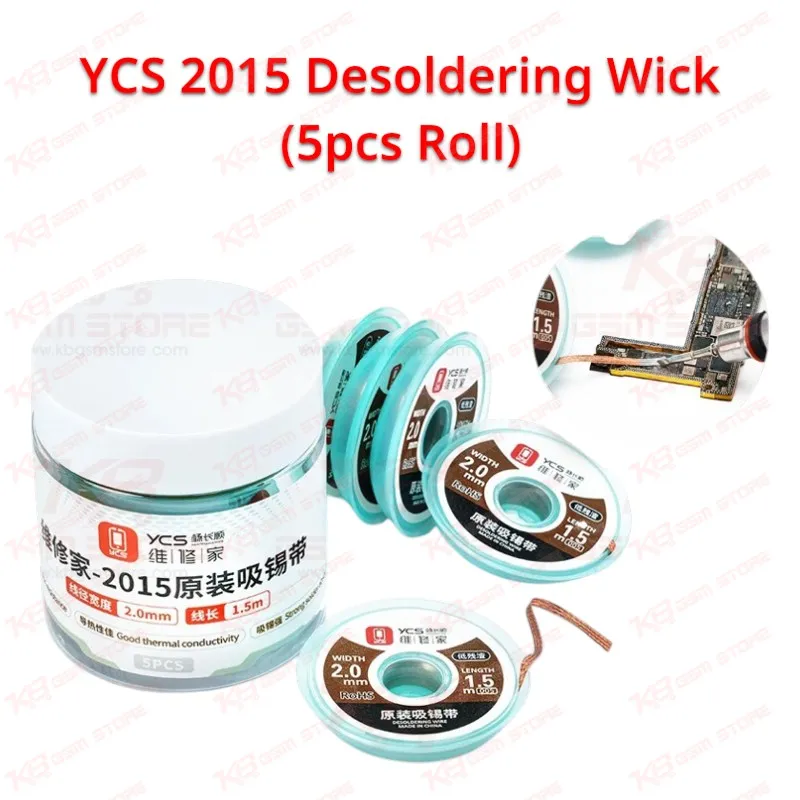
YCS 2015 Desoldering Wick (5pcs Roll)
YCS 2015 Desoldering Wick (5pcs Roll)
Regular price
Rs.1,350.00 PKR
Regular price
Sale price
Rs.1,350.00 PKR
Shipping calculated at checkout.
Quantity
Couldn't load pickup availability
The YCS 2015 Desoldering Wick is a 2.0mm pure copper solder wick built for mobile repair technicians who need fast, clean solder removal on PCBs and motherboards. Each roll gives you 5 pieces at 1.5 meters length, made with a flat needle weaving design that resists fraying during repeated use. The low residue formula cuts down cleanup time on your repair bench, while high thermal conductivity means the wick absorbs solder quickly even on tough joints. RoHS compliant and rosin-cored, this wick is a staple for IC removal, board cleaning, and rework tasks in any GSM repair shop.
SKU:MST-SOLDERING-ACCESSORIES-458
⚖️ Weight: 0.2 kg
- Safe & Secure Payment
- Fast Delivery
- WhatsApp Support


Description
FAQ
What is the product name?
The product name is YCS 2015 Desoldering Wick.
What is the brand of this product?
The brand of this product is YCS.
What is the model of this product?
The model of this product is 2015.
What is this product used for?
This product is used for removing excess solder from PCBs and mobile phone motherboards during repair, IC removal, and rework tasks.
Which devices are compatible with this product?
This product is universal and works on any mobile phone motherboard or PCB, not limited to a specific brand or chipset.
Who should use this product?
This product is suitable for mobile repair technicians, repair shops, service centers, and professional users.
Does this wick work on lead-free solder joints?
Yes, the pure copper braid absorbs both leaded and lead-free solder effectively when used with sufficient iron heat.
Will this wick damage board pads if used incorrectly?
Excess heat or force can lift pads, so apply the iron tip briefly and let the wick absorb solder without pressing hard against the board.