


Brand:
YCS
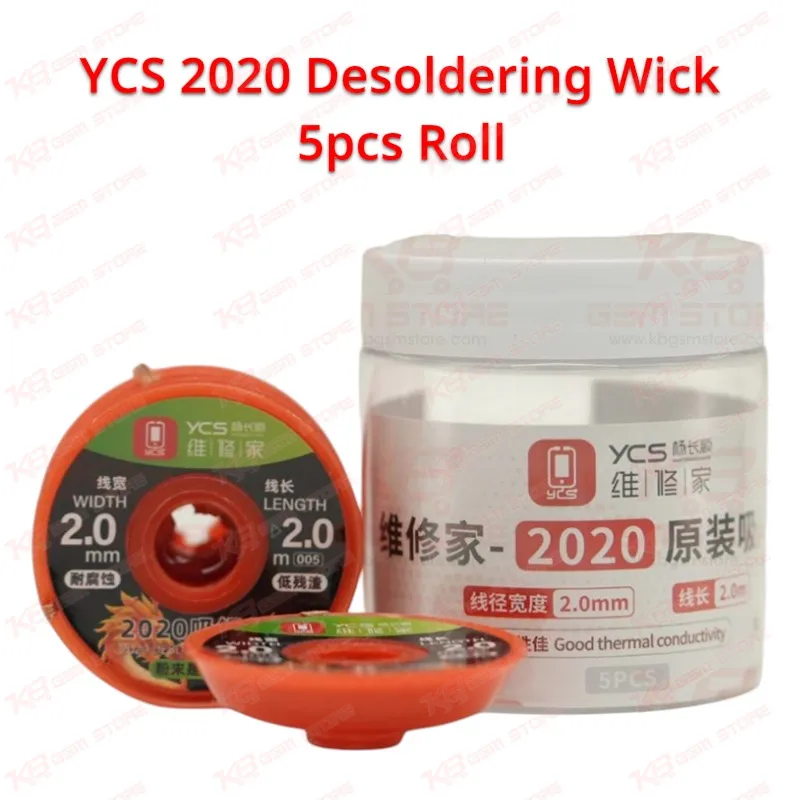
YCS 2020 Desoldering Wick 5pcs Roll
YCS 2020 Desoldering Wick 5pcs Roll
Regular price
Rs.1,500.00 PKR
Regular price
Sale price
Rs.1,500.00 PKR
Shipping calculated at checkout.
Quantity
Couldn't load pickup availability
The YCS 2020 desoldering wick is a 2.0mm wide, 2.0m long pure copper solder wick built for mobile phone motherboard and PCB repair work. Made with an ultra-soft copper braid and a low-residue rosin flux core, it lifts excess solder cleanly without damaging pads or nearby components. Technicians use it for IC removal prep, board cleaning, and general de-tinning on smartphone and laptop boards. The 5-piece roll pack keeps your repair bench stocked for daily desoldering jobs, from dead phone diagnostics to full board-level rework.
SKU:MST-SOLDERING-ACCESSORIES-459
⚖️ Weight: 0.2 kg
- Safe & Secure Payment
- Fast Delivery
- WhatsApp Support


Description
FAQ
What is the product name?
The product name is YCS 2020 Desoldering Wick.
What is the brand of this product?
The brand of this product is YCS.
What is the model of this product?
The model of this product is 2020.
What is this product used for?
This product is used for removing excess solder from PCBs during mobile phone and board-level repair work.
Which devices are compatible with this product?
This product is compatible with smartphone, tablet, and laptop motherboards as a general-purpose desoldering consumable.
Who should use this product?
This product is suitable for mobile repair technicians, repair shops, service centers, and professional users.
Does this wick leave residue on the board after use?
No, the rosin flux core is designed for low residue, so pads stay clean after desoldering.
What width and length does this wick come in?
This roll is 2.0mm wide and 2.0 meters long, suited for precision work on mobile motherboards.