


Brand:
YCS
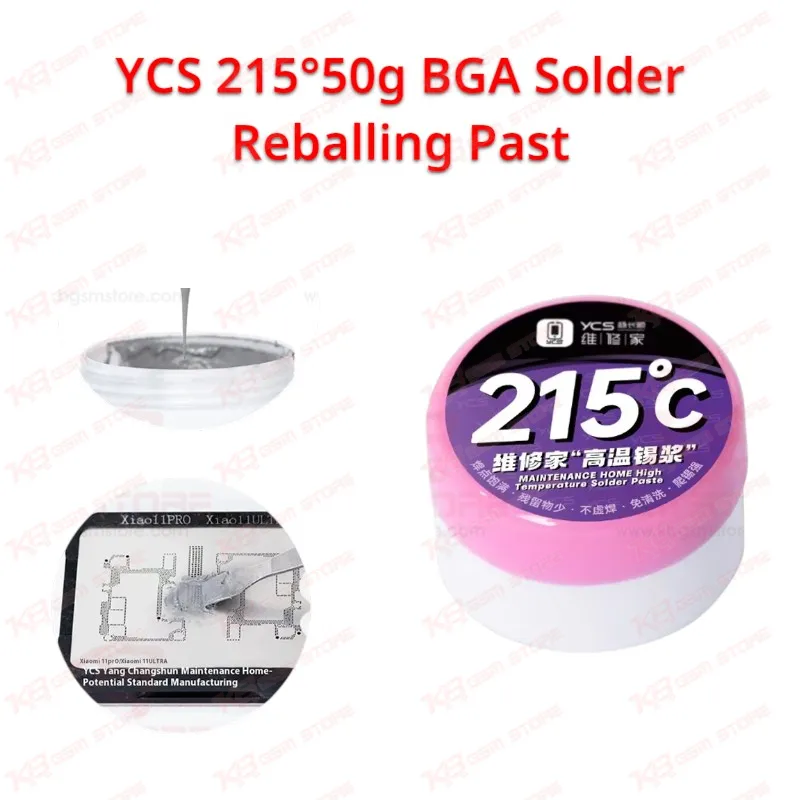
YCS 215°50g BGA Solder Reballing Past
YCS 215°50g BGA Solder Reballing Past
Regular price
Rs.1,300.00 PKR
Regular price
Sale price
Rs.1,300.00 PKR
Shipping calculated at checkout.
Quantity
Couldn't load pickup availability
The YCS 215°50g BGA Solder Reballing Past gives your repair bench a high-temperature tin paste for CPU, IC and BGA chip reballing on mobile motherboards. Rated at 215°C, it holds its shape in the stencil, wets copper pads evenly, and leaves bright, full solder balls that resist cold joints and false soldering. Strong anti-oxidation keeps the paste consistent job after job, and the compact 50g jar sits neatly beside your hot air station. Use it when a reballed chip must survive later heat work on the same board, and order it from KB GSM Store with delivery across Pakistan.
SKU:MST-SOLDERING-ACCESSORIES-727
⚖️ Weight: 0.05 kg
- Safe & Secure Payment
- Fast Delivery
- WhatsApp Support


Description
FAQ
What is the product name?
The product name is YCS 215°50g BGA Solder Reballing Past.
What is the brand of this product?
The brand of this product is YCS.
What is the model of this product?
The model of this product is YCS 215°C 50g Solder Paste.
What is this product used for?
This product is used for BGA reballing, CPU and IC rework, and precision PCB soldering on mobile phone motherboards.
Which devices are compatible with this product?
This product is compatible with BGA-packaged chips and SMD components on mobile phone PCBs; it is universal and not device-specific.
Who should use this product?
This product is suitable for mobile repair technicians, repair shops, service centers, and professional users.
When should I use 215°C paste instead of 138°C or 150°C low-temperature paste?
Use 215°C paste when the reballed chip must stay secure while you heat the board again for other repairs; choose low-temperature paste for layered motherboards and heat-sensitive areas where you need to limit heat exposure.
What hot air setup do I need to reball with 215°C solder paste?
You need enough heat at the joint to exceed the paste’s 215°C rating, so preheat the board from underneath, keep it secured in a PCB holder, and adjust your nozzle temperature and airflow to your station, since exact settings vary by equipment.