


Brand:
YCS
YCS 2nd MAX Electric Polishing Pen
YCS 2nd MAX Electric Polishing Pen
Regular price
Rs.3,800.00 PKR
Regular price
Sale price
Rs.3,800.00 PKR
Shipping calculated at checkout.
Quantity
Couldn't load pickup availability
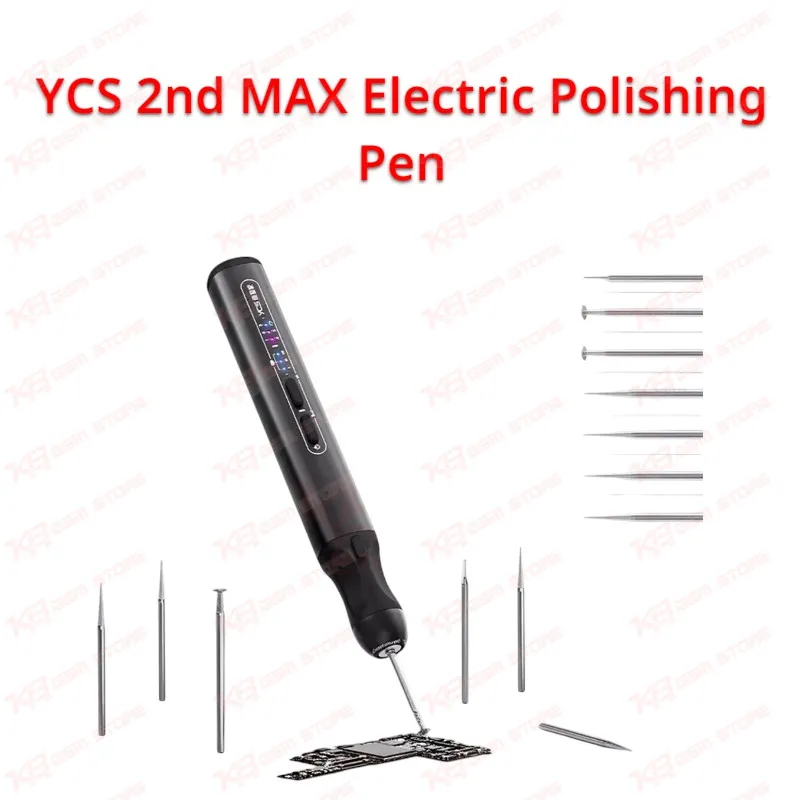
The YCS 2nd MAX Electric Polishing Pen gives your repair bench a compact, cordless grinding tool for the jobs heat and tweezers cannot finish. You get a Type-C rechargeable built-in battery, five speed gears with status indicator lights, and seven grinding heads matched to real motherboard work, from slotting stripped tail screws to cutting shield covers and fine chip grinding. The quick release mechanism lets you swap heads in seconds, and the pen-style grip keeps your hand steady close to the board. It is a practical choice for Pakistani technicians who handle glue removal, IC grinding and PCB disassembly every day.
SKU:MST-SOLDERING-ACCESSORIES-712
⚖️ Weight: 0.1 kg
- Safe & Secure Payment
- Fast Delivery
- WhatsApp Support


Description
FAQ
What is the product name?
The product name is YCS 2nd MAX Electric Polishing Pen.
What is the brand of this product?
The brand of this product is YCS.
What is the model of this product?
The model of this product is 2nd MAX.
What is this product used for?
This product is used for IC and CPU grinding, glue removal, shield cover cutting, screw slotting, drilling and polishing during mobile phone motherboard repair.
Which devices are compatible with this product?
This product is compatible with mobile phone motherboards, PCBs, epoxy boards and chip surfaces; it is a universal tool and not device-specific.
Who should use this product?
This product is suitable for mobile repair technicians, repair shops, service centers, and professional users.
Which YCS 2nd MAX grinding head should I use to remove a stripped tail screw?
Use the K-pin 1.0 head to cut a slot across the damaged screw head, then turn it out with a flat screwdriver.
Can the YCS 2nd MAX polishing pen remove underfill glue around a CPU without damaging pads?
Yes, it handles glue removal; soften the underfill with hot air first, then clean the residue on a low gear with light pressure to protect the solder pads.