


Brand:
YCS
YCS 55G Yellow Soldering Flux
YCS 55G Yellow Soldering Flux
Regular price
Rs.550.00 PKR
Regular price
Sale price
Rs.550.00 PKR
Shipping calculated at checkout.
Quantity
Couldn't load pickup availability
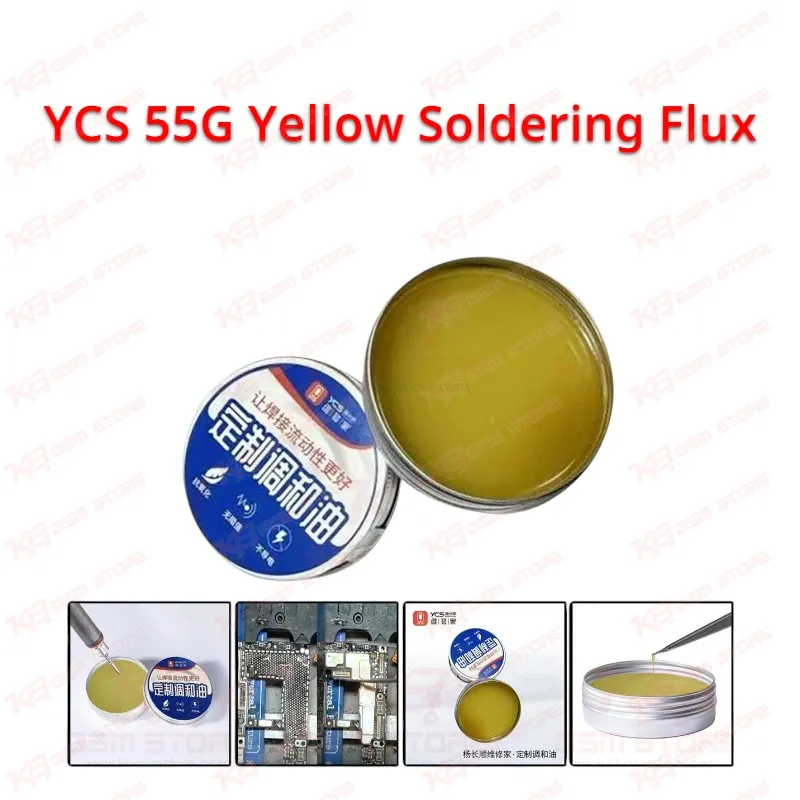
The YCS 55G Yellow Soldering Flux gives your repair bench a reliable flux supply for daily board-level work on mobile phones. You apply a thin layer before you lift or seat an IC, and the flux clears surface oxidation so solder wets the pads evenly and flows where you want it. The 55g container lasts through heavy shop use, from charging IC replacement to jumper work on damaged tracks. Technicians who handle dead phones, network faults, and charging issues every day keep it next to the hot air station and soldering iron for fast, clean results.
SKU:MST-SOLDERING-ACCESSORIES-715
⚖️ Weight: 0.05 kg
- Safe & Secure Payment
- Fast Delivery
- WhatsApp Support


Description
FAQ
What is the product name?
The product name is YCS 55G Yellow Soldering Flux.
What is the brand of this product?
The brand of this product is YCS.
What is the model of this product?
The model of this product is YCS 55G.
What is this product used for?
This product is used for soldering, desoldering, IC rework, reballing, and jumper work on mobile phone PCBs.
Which devices are compatible with this product?
This product is compatible with mobile phone motherboards universally; it is not device-specific.
Who should use this product?
This product is suitable for mobile repair technicians, repair shops, service centers, and professional users.
Can I use YCS 55G Yellow Soldering Flux for BGA reballing?
Yes. You apply a thin layer on the chip or pads, place solder balls through a reballing stencil, and reflow with hot air.
Should I clean flux residue after soldering?
Cleaning with isopropyl alcohol and a soft brush after each job is good bench practice, as it keeps the board tidy and makes joint inspection easier.