


Brand:
YCS
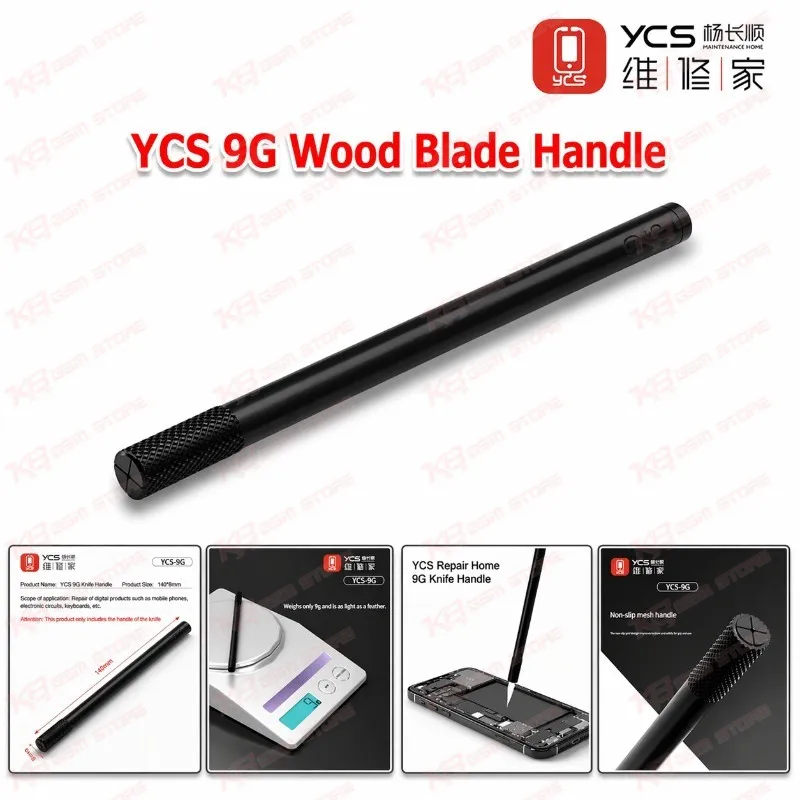
YCS 9G Wood Blade Handle
YCS 9G Wood Blade Handle
Regular price
Rs.800.00 PKR
Regular price
Sale price
Rs.800.00 PKR
Shipping calculated at checkout.
Quantity
Couldn't load pickup availability
The YCS 9G Wood Blade Handle is an ultra-light precision knife handle built for board-level mobile repair, weighing only 9 grams with a slim 140 x 8 mm body. Its frosted, non-slip textured grip gives you steady control when you cut underfill glue around CPU and NAND chips, scrape epoxy off PCB pads, or delaminate a motherboard CPU under the microscope. Pair it with YCS precision blades for a sharp, consistent edge during every IC change. Technicians and repair shops across Pakistan use it for chip removal, glue cleaning, keyboard maintenance, and general electronic circuit repair work.
SKU:MST-SOLDERING-ACCESSORIES-659
⚖️ Weight: 0.01 kg
- Safe & Secure Payment
- Fast Delivery
- WhatsApp Support


Description
FAQ
What is the product name?
The product name is YCS 9G Wood Blade Handle.
What is the brand of this product?
The brand of this product is YCS.
What is the model of this product?
The model of this product is YCS 9G (Ultra-light 9G Knife Holder).
What is this product used for?
This product is used for CPU and NAND chip removal, underfill glue cleaning, motherboard CPU delamination, and general electronic circuit repair.
Which devices are compatible with this product?
This product is compatible with mobile phone motherboards, electronic circuit boards, keyboards, and other digital products, as it is a universal hand tool and not device-specific.
Who should use this product?
This product is suitable for mobile repair technicians, repair shops, service centers, and professional users.
Can I use the YCS 9G handle to remove underfill glue around a CPU or NAND chip?
Yes. YCS built this handle for CPU and NAND chip disassembly and glue removal. Soften the underfill with hot air first, then cut along the glue line with a sharp blade before lifting the chip to protect the pads.
What are the weight and dimensions of the YCS 9G Wood Blade Handle?
The handle weighs 9 grams and measures 140 x 8 mm, which gives you pen-like control for precise board-level scraping and cutting.