


Brand:
YCS
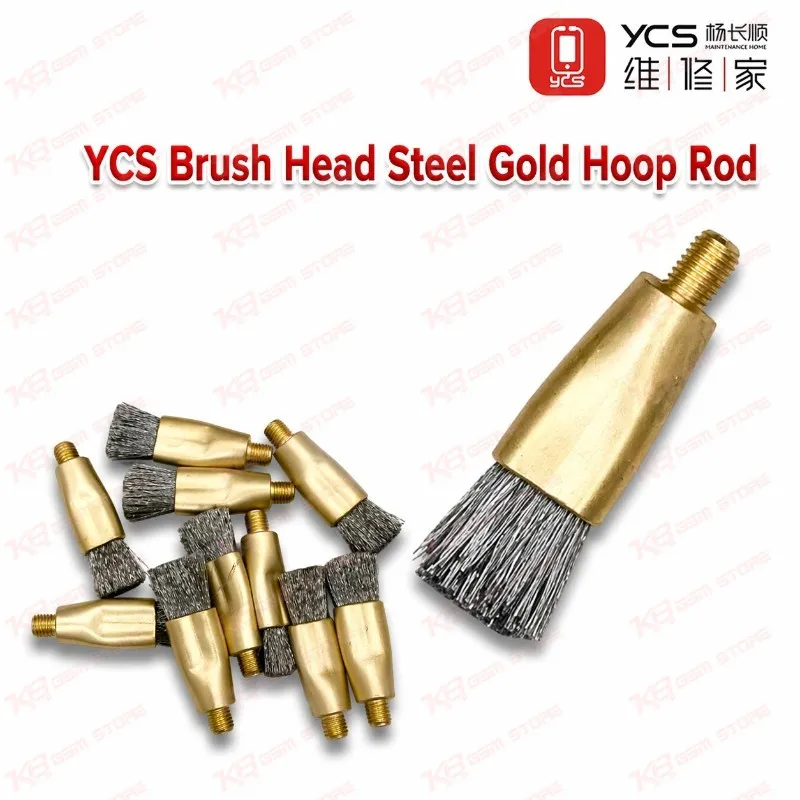
YCS Brush Head Steel Gold Hoop Rod
YCS Brush Head Steel Gold Hoop Rod
Regular price
Rs.1.00 PKR
Regular price
Sale price
Rs.1.00 PKR
Shipping calculated at checkout.
Quantity
Couldn't load pickup availability
The YCS Brush Head Steel Gold Hoop Rod is a rotary steel wire brush head that mounts in polishing pens and grinding pens used for mobile phone repair. Its steel bristles sit inside a gold-tone hoop on a slim rod, giving you a compact, controlled brushing tip for clearing rust, oxide, and green corrosion from water-damaged motherboards, metal shields, charging connector areas, and frame contact points. Run it at low speed to prep a board before diagnosis, IC change work, or reflow. It is a practical consumable for Pakistani repair shops that handle water-damage and board cleaning jobs every day.
SKU:MST-SOLDERING-ACCESSORIES-653
⚖️ Weight: 0.01 kg
- Safe & Secure Payment
- Fast Delivery
- WhatsApp Support


Description
FAQ
What is the product name?
The product name is YCS Brush Head Steel Gold Hoop Rod.
What is the brand of this product?
The brand of this product is YCS.
What is the model of this product?
The model of this product is YCS Brush Head Steel Gold Hoop Rod.
What is this product used for?
This product is used for rotary cleaning of rust, oxide, and corrosion on mobile phone motherboards and metal parts with a polishing pen.
Which devices are compatible with this product?
This product is compatible with rotary polishing pens and grinding pens that have a matching collet, and you can use it on motherboards of any mobile phone brand.
Who should use this product?
This product is suitable for mobile repair technicians, repair shops, service centers, and professional users.
Can I use this steel brush head directly on solder pads and small components?
Steel bristles abrade aggressively, so use the head on corroded metal areas, shields, and connector surroundings at low speed with light contact. Avoid brushing exposed solder pads you plan to reuse and keep away from tiny passive components.
How do I know if this brush head fits my polishing pen?
Compare the rod diameter of the head with your pen's collet or chuck size before mounting. A matching collet holds the rod straight and secure, while a mismatch causes wobble and uneven brushing.