


Brand:
YCS
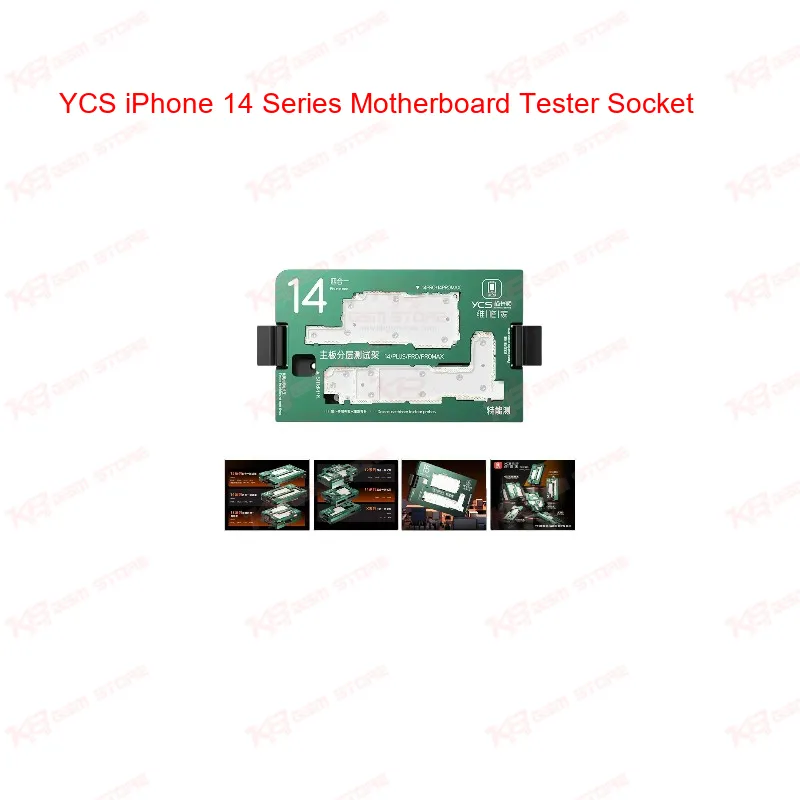
YCS iPhone 14 Series Motherboard Tester Socket
YCS iPhone 14 Series Motherboard Tester Socket
Regular price
Rs.38,000.00 PKR
Regular price
Sale price
Rs.38,000.00 PKR
Shipping calculated at checkout.
Quantity
Couldn't load pickup availability
The YCS iPhone 14 Series Motherboard Tester Socket lets you test the logic board of iPhone 14, 14 Plus, 14 Pro, and 14 Pro Max without soldering the layers back together. You place the separated board halves into the socket, power the board, and check boot, display, camera, Face ID, and wifi function on the spot. Beryllium copper probes hold accurate contact, so you catch a hardware fault before you commit to reassembly. Any repair shop dealing with dead phone boards, CPU reballing, or NAND/IC change jobs on the iPhone 14 series needs this fixture on the bench — it saves time, protects your board, and stops you from repeating disassembly work.
SKU:MST-SOCKET-21
⚖️ Weight: 0.3 kg
- Safe & Secure Payment
- Fast Delivery
- WhatsApp Support


Description
FAQ
What is the product name?
The product name is the YCS iPhone 14 Series Motherboard Tester Socket.
What is the brand of this product?
The brand of this product is YCS.
What is the model of this product?
The model is the YCS iSocket 4-in-1 Motherboard Test Fixture for the iPhone 14 series.
What is this product used for?
You use it to test an iPhone 14 series motherboard's function right after separating the board layers, before you solder them back together.
Which devices are compatible with this product?
This socket supports iPhone 14, iPhone 14 Plus, iPhone 14 Pro, and iPhone 14 Pro Max.
Who should use this product?
This tool suits mobile repair technicians, GSM software technicians, repair shop owners, and service centers handling iPhone 14 series board-level repairs.
Does this socket test the iPhone 14 motherboard without soldering the layers back together?
Yes, you place the separated top and bottom board layers into the fixture, power the board, and run a full function check without any reflow or resoldering.
Can this fixture check Face ID, camera, and wifi function after chip-level repair on iPhone 14 boards?
Yes, once the board sits in the socket and powers on, you can verify boot, display, touch, camera, Face ID, and wifi signal directly.