


Brand:
YCS
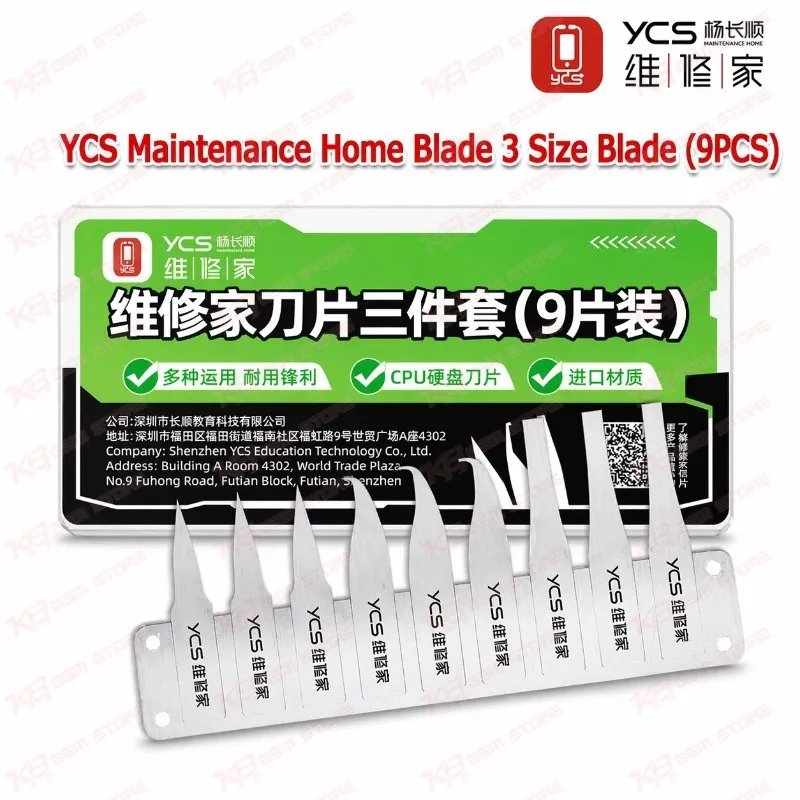
YCS Blade Tips Full Set (9Pcs/Set)
YCS Blade Tips Full Set (9Pcs/Set)
Regular price
Rs.1,200.00 PKR
Regular price
Sale price
Rs.1,200.00 PKR
Shipping calculated at checkout.
Quantity
Couldn't load pickup availability
The YCS Blade Tips Full Set (9Pcs/Set) gives mobile repair technicians nine hand-polished replacement blades in three sizes for CPU, NAND, and IC glue removal. Use the smaller edges to cut side underfill around tight chips and the wider edges to clean pads after chip removal. These blades fit naturally into board-level workflows such as IC change, reballing, and eMMC/UFS chip lifting for programming. With nine pieces in one pack, you always have a sharp edge ready on your repair bench, so you avoid slipping with a dull blade and damaging pads or traces on expensive motherboards.
SKU:MST-SOLDERING-ACCESSORIES-662
⚖️ Weight: 0.01 kg
- Safe & Secure Payment
- Fast Delivery
- WhatsApp Support


Description
FAQ
What is the product name?
The product name is YCS Maintenance Home Blade 3 Size Blade (9PCS).
What is the brand of this product?
The brand of this product is YCS (Maintenance Home).
What is the model of this product?
The model of this product is Maintenance Home Blade 3 Size Blade (9PCS).
What is this product used for?
This product is used for CPU, NAND, and IC chip removal, underfill glue removal, and solder pad cleaning on mobile phone motherboards.
Which devices are compatible with this product?
This product is compatible with mobile phone motherboards, tablets, and other digital device circuit boards; it is a universal tool and not device-specific.
Who should use this product?
This product is suitable for mobile repair technicians, repair shops, service centers, and professional users.
Can these blades remove hard underfill glue from CPU and NAND chips?
Yes. YCS designs these blades for chip removal and glue cleaning on phone motherboards. Soften the underfill with controlled hot air first, then work the blade along each chip edge to avoid lifting pads.
Does the pack include a handle, and which handle fits these blades?
No, the pack contains nine blades only. You can pair them with the YCS 9G blade handle, which YCS offers for these blades.