


Brand:
YCS
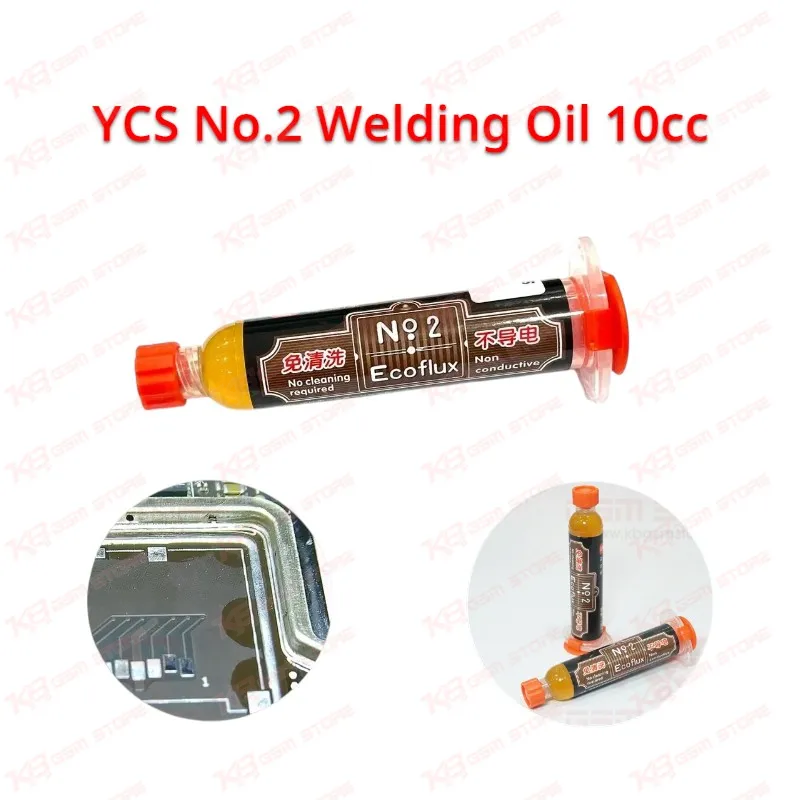
YCS No.2 Welding Oil 10cc
YCS No.2 Welding Oil 10cc
Regular price
Rs.600.00 PKR
Regular price
Sale price
Rs.600.00 PKR
Shipping calculated at checkout.
Quantity
Couldn't load pickup availability
YCS No.2 Welding Oil 10cc gives your repair bench a dependable flux for daily mobile board work. It cleans oxide from pads and component legs and helps solder flow evenly. You get stronger joints on ICs, connectors, and small SMD parts. Use it for charging IC replacement, display connector work, BGA chip lifting, and pad tinning on Android and iPhone motherboards. The 10cc size suits shops that solder all day, and the measured application keeps your board neat. When a dead phone lands on your bench with a hardware fault, this welding oil supports a cleaner rework from the first touch of heat.
SKU:MST-SOLDERING-ACCESSORIES-721
⚖️ Weight: 0.06 kg
- Safe & Secure Payment
- Fast Delivery
- WhatsApp Support


Description
FAQ
What is the product name?
The product name is YCS No.2 Welding Oil 10cc.
What is the brand of this product?
The brand of this product is YCS.
What is the model of this product?
The model of this product is No.2.
What is this product used for?
This product is used for flux-assisted soldering and desoldering in mobile phone and PCB repair.
Which devices are compatible with this product?
This product is compatible with all mobile phone motherboards and PCBs, as it is a universal soldering flux and not device-specific.
Who should use this product?
This product is suitable for mobile repair technicians, repair shops, service centers, and professional users.
Can I use YCS No.2 Welding Oil 10cc for BGA CPU and eMMC reballing?
Yes. Apply a thin layer on the chip before laying solder balls through the stencil, then reflow with hot air so the balls form evenly, and use it again when you reseat the chip on the board.
Should I clean the board after using this welding oil?
Yes. Clean the residue with isopropyl alcohol and a soft brush after the job, so you can inspect every joint under the microscope and keep the board area neat.