


Brand:
2UUL
2UUL PW02 iOS+Android Power Cable
2UUL PW02 iOS+Android Power Cable
Regular price
Rs.5,000.00 PKR
Regular price
Sale price
Rs.5,000.00 PKR
Shipping calculated at checkout.
Quantity
Couldn't load pickup availability
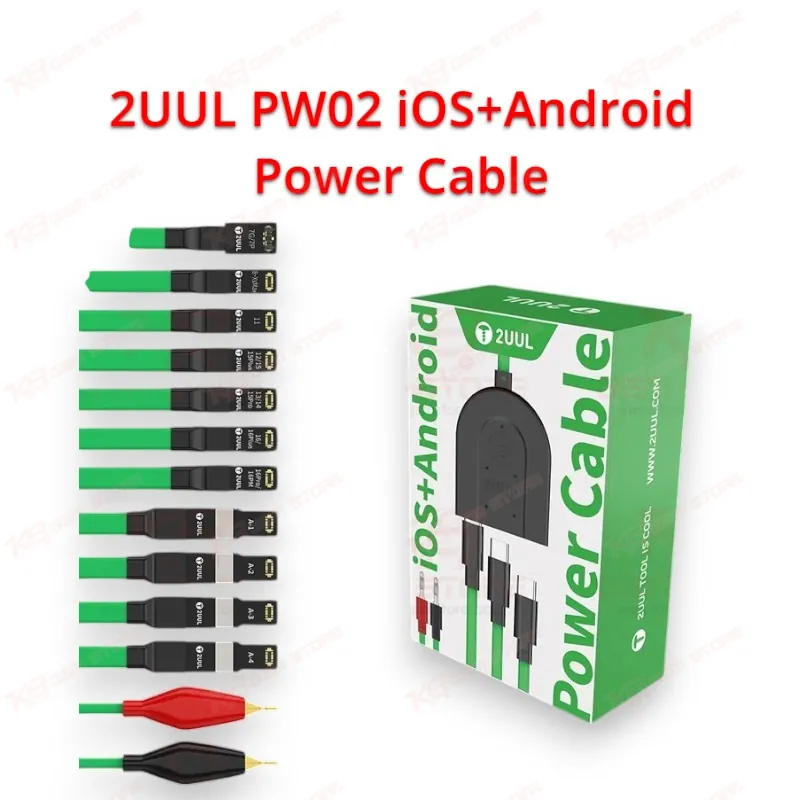
The 2UUL PW02 iOS+Android Power Cable gives your repair bench one boot cable for iPhone 7 to iPhone 16 Pro Max and selected Oppo, Vivo, Huawei, Honor and Redmi boards. The host carries three Type-C interfaces, so you detach and replace worn cables without buying a new set. The flat, knot-resistant 1.0 m cable and small pure copper alligator clip make power-on checks quick on dead phones, hang on logo cases and charging issue boards. Use it at the start of your diagnostics workflow, then move to your soldering or programming tools once you know where the fault sits.
SKU:MST-SOLDERING-TOOLS-785
⚖️ Weight: 0.39 kg
- Safe & Secure Payment
- Fast Delivery
- WhatsApp Support


Description
FAQ
What is the product name?
The product name is 2UUL PW02 iOS+Android Power Cable.
What is the brand of this product?
The brand of this product is 2UUL.
What is the model of this product?
The model of this product is PW02.
What is this product used for?
This product is used for powering and boot-testing iPhone and selected Android motherboards during repair diagnostics.
Which devices are compatible with this product?
This product is compatible with iPhone 7 to iPhone 16 Pro Max and the listed Oppo, Vivo, Huawei, Honor and Redmi models in Android groups A-1 to A-4.
Who should use this product?
This product is suitable for mobile repair technicians, repair shops, service centers, and professional users.
Which iPhone models does the 2UUL PW02 support?
It supports iPhone 7 through iPhone 16 Pro Max, including the Plus, mini, Pro and Pro Max variants.
Can I replace a worn cable without replacing the whole PW02?
Yes. The host has three Type-C interfaces, and you can detach and replace the cables at any time.
Does the PW02 cover Samsung or Xiaomi phones?
The listed Android coverage includes Oppo, Vivo, Huawei, Honor and Redmi models only. For Samsung and Xiaomi boards, check the Android-focused 2UUL PW04 instead.