


Brand:
2UUL
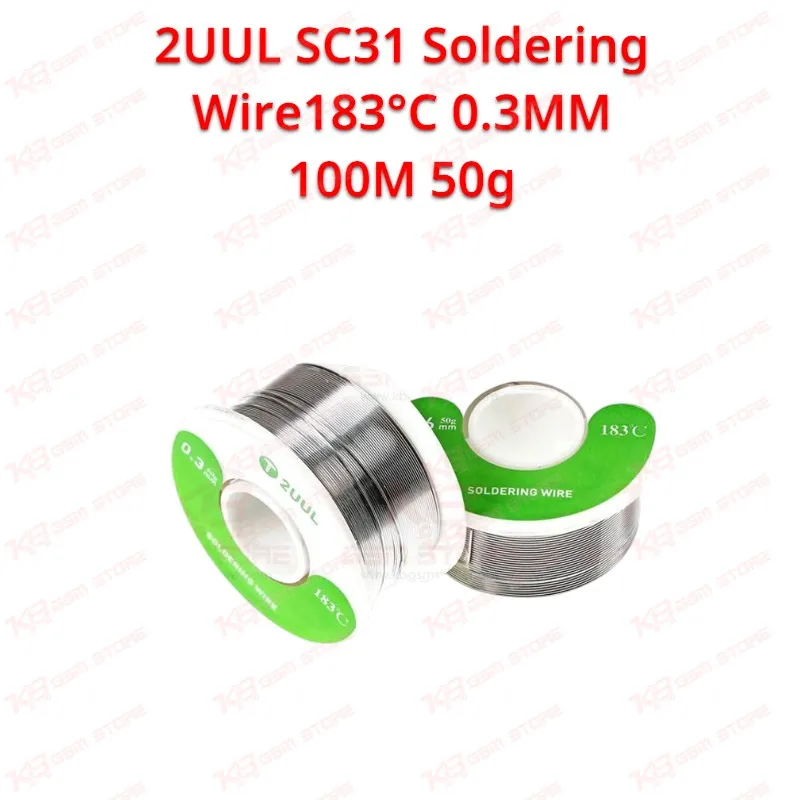
2UUL SC31 Soldering Wire183°C 0.3MM 100M 50g
2UUL SC31 Soldering Wire183°C 0.3MM 100M 50g
Regular price
Rs.900.00 PKR
Regular price
Sale price
Rs.900.00 PKR
Shipping calculated at checkout.
Quantity
Couldn't load pickup availability
The 2UUL SC31 soldering wire gives you a 0.3mm ultra-fine diameter built for board-level mobile repair work. With a 183°C melting point and a built-in rosin flux core, it flows cleanly onto IC pads, jumper points, and connector legs without excess bridging. The 100m spool at 50g weight keeps your repair bench stocked through dozens of jobs before you need a refill. Technicians doing IC change, jumper lagana, or charging port rework get consistent, low-residue joints that clean up fast under the microscope. A dependable consumable for daily GSM workshop use.
SKU:MST-SOLDERING-ACCESSORIES-305
⚖️ Weight: 0.01 kg
- Safe & Secure Payment
- Fast Delivery
- WhatsApp Support


Description
FAQ
What is the product name?
The product name is 2UUL SC31 Soldering Wire 183°C 0.3mm 100M 50g.
What is the brand of this product?
The brand of this product is 2UUL.
What is the model of this product?
The model of this product is SC31.
What is this product used for?
This product is used for board-level soldering tasks such as IC change, jumper wiring, and connector repair on mobile phone circuit boards.
Which devices are compatible with this product?
This product is universal and not device-specific, suitable for any mobile phone or electronics board requiring fine-gauge solder work.
Who should use this product?
This product is suitable for mobile repair technicians, repair shops, service centers, and professional users.
Does this solder wire need a separate flux for board repair?
No, the SC31 has a built-in rosin flux core, so it does not require dipping into separate flux for most board-level joints.
What melting point does the 2UUL SC31 solder wire have?
The 2UUL SC31 has a 183°C melting point, suited for standard iron and hot air rework on mobile PCBs.