


Brand:
2UUL
2UUL TW31 Ultrahard insulative Ceramic Tweezer
2UUL TW31 Ultrahard insulative Ceramic Tweezer
Regular price
Rs.1,100.00 PKR
Regular price
Sale price
Rs.1,100.00 PKR
Shipping calculated at checkout.
Quantity
Couldn't load pickup availability
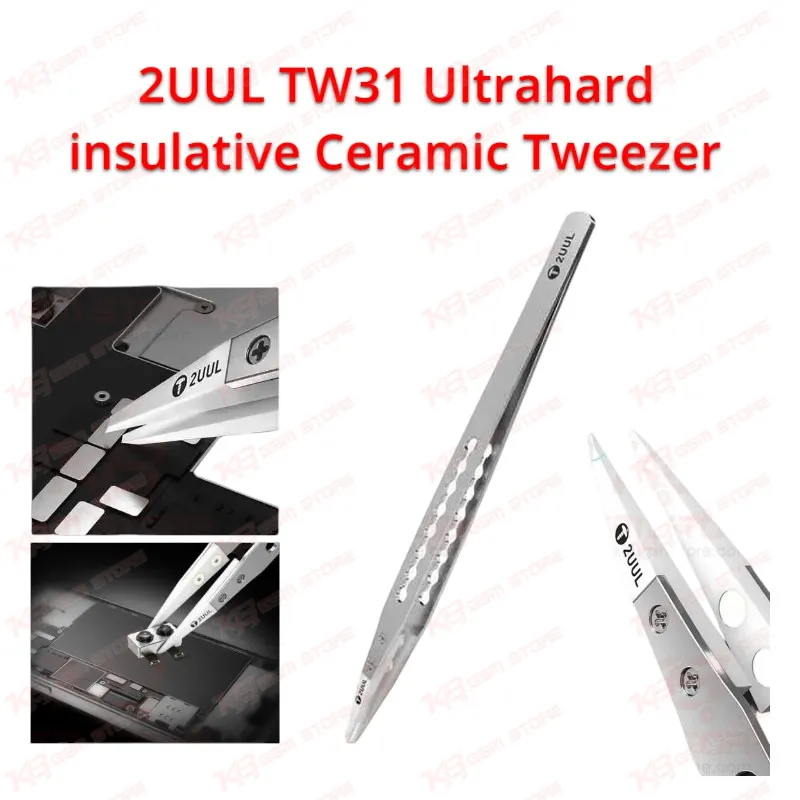
The 2UUL TW31 Ultrahard insulative Ceramic Tweezer gives mobile repair technicians a non-conductive, anti-static pickup tool for motherboard work. The ultra-hard ceramic tips resist deformation and corrosion, so they stay aligned when you lift ICs, CPU chips, BGA components, and small SMD parts from a dead phone board. At 163 mm long and 26g net weight, the tweezer stays light and steady during long bench sessions. Repair shops in Pakistan use it on charging issue, hang on logo, and boot loop boards alongside hot air stations, soldering stations, and microscopes.
SKU:MST-SOLDERING-TOOLS-993
⚖️ Weight: 0.1 kg
- Safe & Secure Payment
- Fast Delivery
- WhatsApp Support


Description
FAQ
What is the product name?
The product name is 2UUL TW31 Ultrahard insulative Ceramic Tweezer.
What is the brand of this product?
The brand of this product is 2UUL.
What is the model of this product?
The model of this product is TW31.
What is this product used for?
This product is used for precision pickup, disassembly, and placement of ICs, CPU chips, BGA chips, and small components on mobile phone motherboards.
Which devices are compatible with this product?
This product is a universal hand tool and is not device-specific. You can use it on mobile phone motherboards and other electronic boards.
Who should use this product?
This product is suitable for mobile repair technicians, repair shops, service centers, and professional users.
Can this tweezer cause a short circuit on a powered board?
The ceramic body does not conduct electricity, so the tips do not bridge pads the way steel tweezers do. Power off the board whenever the repair allows.
Do the tips bend or deform like steel tweezers?
2UUL describes the ultra-hard ceramic as non-deformable, so the tips keep their alignment through repeated pickup, prying, and daily bench use.