


Brand:
2UUL
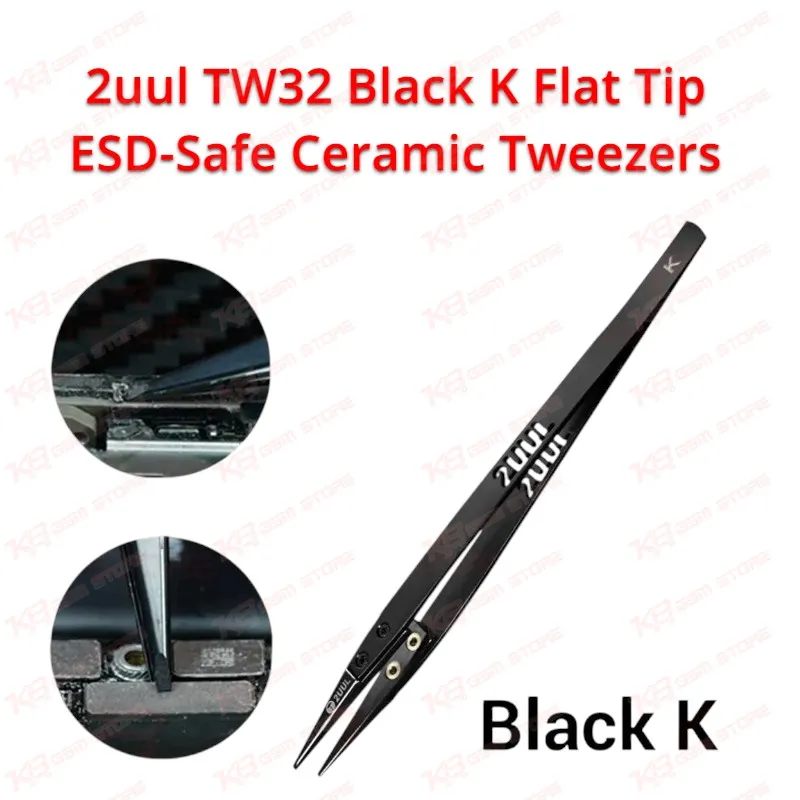
2uul TW32 Black K Flat Tip ESD-Safe Ceramic Tweezers
2uul TW32 Black K Flat Tip ESD-Safe Ceramic Tweezers
Regular price
Rs.1,100.00 PKR
Regular price
Sale price
Rs.1,100.00 PKR
Shipping calculated at checkout.
Quantity
Couldn't load pickup availability
The 2uul TW32 Black K Flat Tip ESD-Safe Ceramic Tweezers give mobile repair technicians an insulating, anti-static grip for work on live boards. The ceramic flat tip holds small ICs, shield cans, flex cables, and SMD parts steadily, resists heat near hot air, and slides into narrow gaps to clear adhesive borders during disassembly. You use it for CPU and BGA chip handling, motherboard diagnostics, and precision rework where a metal tip risks a short. Repair shops and service centers across Pakistan buy this tweezer from KB GSM Store for dead phone boards, charging issue repairs, and daily bench work.
SKU:MST-SOLDERING-TOOLS-995
⚖️ Weight: 0.1 kg
- Safe & Secure Payment
- Fast Delivery
- WhatsApp Support


Description
FAQ
What is the product name?
The product name is 2uul TW32 Black K Flat Tip ESD-Safe Ceramic Tweezers.
What is the brand of this product?
The brand of this product is 2UUL.
What is the model of this product?
The model of this product is TW32.
What is this product used for?
This product is used for precision handling of ICs, chips, and small components, and for clearing adhesive borders during mobile phone board repair and disassembly.
Which devices are compatible with this product?
This tool is universal and not device-specific. It works on mobile phone motherboards, CPU and BGA chips, and SMD components.
Who should use this product?
This product is suitable for mobile repair technicians, repair shops, service centers, and professional users.
Can I use the 2uul TW32 on a powered board without shorting pads?
The tip is ceramic, so it does not conduct current across pads, and the ESD-safe design protects sensitive components. Disconnect the battery whenever your repair allows it.
Is the ceramic tip suitable for work near a hot air station?
The ceramic tip is heat-resistant, which suits handling parts near hot air. No maximum temperature is published, so keep the tweezers out of direct high-heat airflow longer than necessary.