


Brand:
SUGON
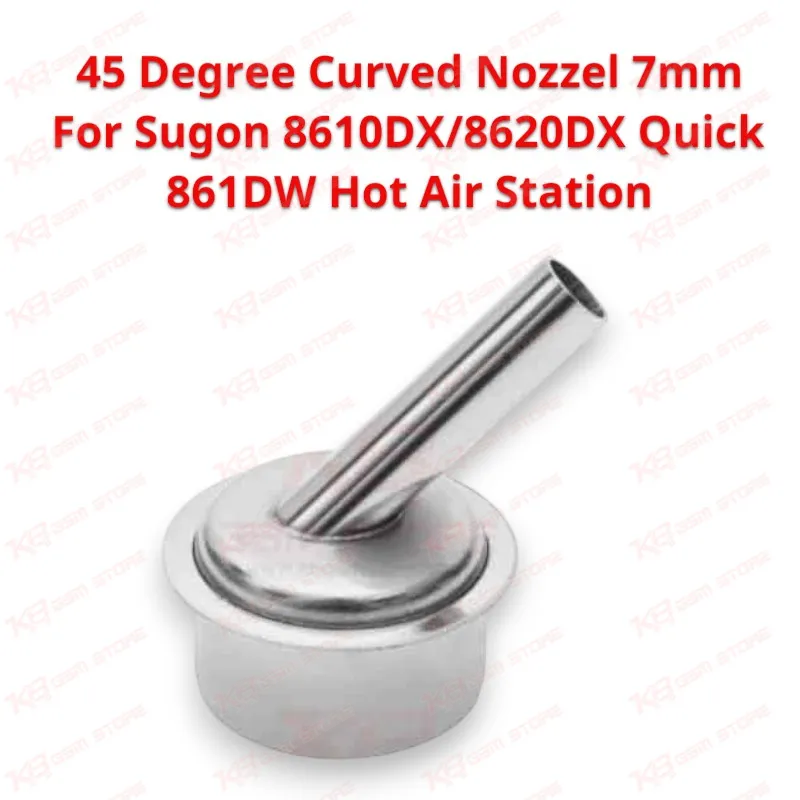
45 Degree Curved Nozzel 7mm For Sugon 8610DX/8620DX Quick 861DW Hot Air Station
45 Degree Curved Nozzel 7mm For Sugon 8610DX/8620DX Quick 861DW Hot Air Station
Regular price
Rs.1.00 PKR
Regular price
Sale price
Rs.1.00 PKR
Shipping calculated at checkout.
Quantity
Couldn't load pickup availability
45 Degree Curved Nozzel 7mm for Sugon and Quick Hot Air Stations The 45 Degree Curved Nozzel 7mm For Sugon 8610DX/8620DX Quick 861DW Hot Air Station gives you an angled airflow path for rework on crowded boards. The 45-degree bend lets you aim hot air at a chip from the side, so your wrist stays clear of tall shields, connectors, and neighbouring components. The 7mm opening focuses heat on small ICs, so you lift and reseat parts without cooking the area around them. If you do IC change karna on charging, display, or network fault boards, this nozzle works as a daily-use replacement or an extra for your Sugon or Quick station.
SKU:MST-SOLDERING-TOOLS-213
⚖️ Weight: 0.01 kg
- Safe & Secure Payment
- Fast Delivery
- WhatsApp Support


Description
FAQ
What is the product name?
The product name is 45 Degree Curved Nozzel 7mm For Sugon 8610DX/8620DX Quick 861DW Hot Air Station.
What is the brand of this product?
The listing names Sugon and Quick as the compatible station brands.
What is the model of this product?
The model is the 45 Degree Curved 7mm nozzle for Sugon 8610DX/8620DX and Quick 861DW.
What is this product used for?
You use it to direct hot air at a 45-degree angle onto small chips during IC removal and reflow.
Which devices are compatible with this product?
It is compatible with the Sugon 8610DX, Sugon 8620DX, and Quick 861DW hot air stations.
Who should use this product?
This product is suitable for mobile repair technicians, repair shops, service centers, and professional users.
Why choose a 45-degree curved nozzle instead of a straight nozzle?
The bend lets you approach a chip from the side, so you avoid tall shields and connectors and keep your view clear under the microscope.
What size of chip suits a 7mm hot air nozzle?
A 7mm nozzle suits small to medium ICs such as charging, audio, and power management chips. Use a larger nozzle for wide BGA packages or big shield covers.