


Brand:
AIFEN
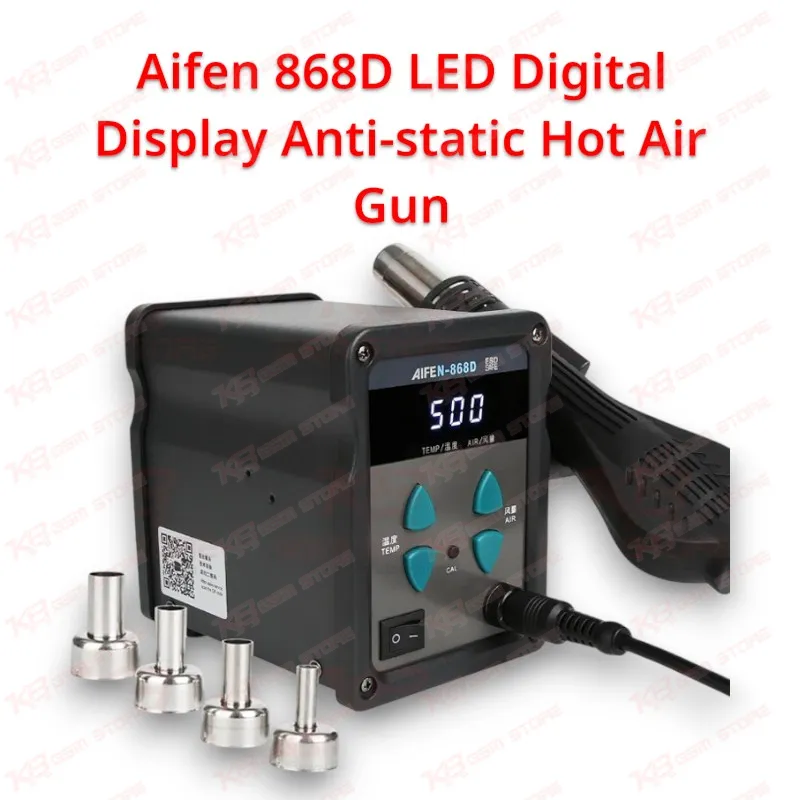
Aifen 868D LED Digital Display Anti-static Hot Air Gun
Aifen 868D LED Digital Display Anti-static Hot Air Gun
Regular price
Rs.9,500.00 PKR
Regular price
Sale price
Rs.9,500.00 PKR
Shipping calculated at checkout.
Quantity
Couldn't load pickup availability
Aifen 868D Hot Air Gun for Mobile Repair Benches The Aifen 868D LED Digital Display Anti-static Hot Air Gun gives your repair bench a chip-controlled 700W hot air source with a temperature range of 100–500°C. You set the heat and the airflow separately, and the display shows both values as you adjust them. The gun reaches temperature fast and holds it steady, so your IC change karna jobs, BGA reflow, and connector removal stay predictable. Seven nozzles ship in the box, covering straight, spiral, and oblique airflow for small ICs and bigger shields. If you run a mobile repair shop in Pakistan, this unit handles daily hardware fault work without drama.
SKU:MST-SOLDERING-TOOLS-750
⚖️ Weight: 2.0 kg
- Safe & Secure Payment
- Fast Delivery
- WhatsApp Support


Description
FAQ
What is the product name?
The product name is Aifen 868D LED Digital Display Anti-static Hot Air Gun.
What is the brand of this product?
The brand of this product is Aifen.
What is the model of this product?
The model of this product is 868D.
What is this product used for?
This product is used for hot air desoldering, BGA reflow, and SMD rework on mobile phone PCBs and other small electronics boards.
Which devices are compatible with this product?
This product is universal and not device-specific. It works on any PCB or component you can safely heat with hot air.
Who should use this product?
This product is suitable for mobile repair technicians, repair shops, service centers, and professional users.
What temperature range does the Aifen 868D hot air gun cover?
The Aifen 868D covers 100–500°C (212–932°F). You can switch the display between Celsius and Fahrenheit.
Which nozzles come with the Aifen 868D and how do you switch between direct and spiral air?
Seven nozzles come in the box: 7mm and 10mm straight, 10mm and 12mm spiral, and 7mm, 10mm, and 12mm oblique. You change between direct and spiral air by swapping the nozzle on the integrated air outlet handle.