Skip to product information
1 of 4
Brand: AMAOE

Amaoe Emmc3 (EMMC/EMCP/UFS/UMCP/LPDDR/NAND/PCIE) Stencil

Amaoe Emmc3 (EMMC/EMCP/UFS/UMCP/LPDDR/NAND/PCIE) Stencil

Regular price Rs.800.00 PKR
Regular price Sale price Rs.800.00 PKR
Sale Sold out
Shipping calculated at checkout.
Quantity

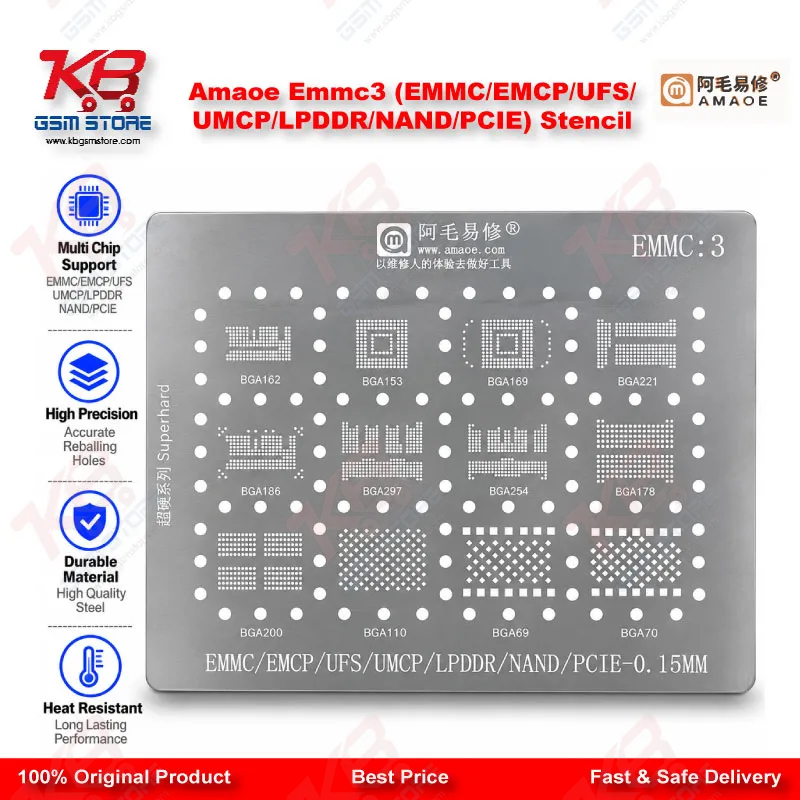
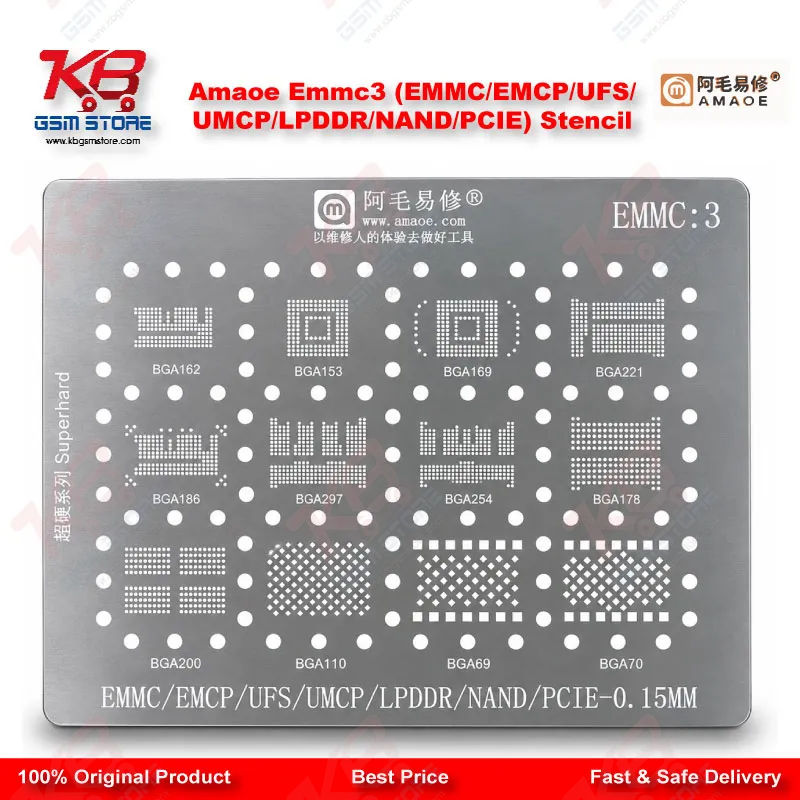
Amaoe Emmc3 Stencil for eMMC, eMCP and UFS Reballing The Amaoe Emmc3 (EMMC/EMCP/UFS/UMCP/LPDDR/NAND/PCIE) Stencil gives you one 0.15mm steel mesh for reballing the memory chips you pull off Android boards. You cover eMMC, eMCP, UFS, UMCP, LPDDR, NAND and PCIe packages, with BGA153, BGA169, BGA221, BGA254, BGA178 and BGA297 footprints on one plate. When you do IC change karna on a dead phone or a boot loop issue, you reball the new or reclaimed chip cleanly and reflow it with your hot air station. Order it from KB GSM Store and keep a ready stencil on your repair bench.

SKU:MST-SOLDERING-TOOLS-216

⚖️ Weight: 0.05 kg

  • Safe & Secure Payment
  • Fast Delivery
  • WhatsApp Support
View full details

Description

Amaoe Emmc3 Reballing Stencil for eMMC, eMCP, UFS and NAND Chips Every technician who handles storage chips knows the drawer problem: one footprint, one stencil, and the collection keeps growing until you cannot find the right plate. The Amaoe Emmc3 (EMMC/EMCP/UFS/UMCP/LPDDR/NAND/PCIE) Stencil cuts that clutter. Amaoe makes it as a 0.15mm steel mesh in its Universal series, and it replaces the discontinued Emmc1 stencil. You get apertures for BGA153, BGA169, BGA221, BGA254, BGA178, BGA297, BGA110, BGA70 and BGA60 packages on one plate, so a single stencil handles a wide spread of Android memory chips. Use it on dead phone jobs, dead after flash cases, and any hardware fault that points at the storage chip.How the Stencil Fits Your Reballing Workflow Start after you lift the faulty chip with your hot air station and clean the old solder off the board pads and the chip underside. Under your microscope, lay the Amaoe Emmc3 stencil over the chip and line up the apertures with the pads until every opening sits centred. Take your time on alignment, because a stencil sitting even slightly off shifts every ball and costs you a second attempt on the same chip. Hold the chip steady in a PCB holder, then spread your solder through the openings. Heat the stencil and chip together until the solder forms balls, let it cool, and lift the steel mesh. Shops that change many storage chips each week save real bench time by keeping this one plate within reach.Package Coverage and Steel Mesh Build The name on the label tells you the scope. eMMC packs NAND flash with its controller, and eMCP stacks LPDDR memory with eMMC storage in one package, so you reball both with the same plate when the footprint matches. UFS and UMCP follow the same idea on the newer interface, where UMCP pairs UFS with LPDDR. NAND and PCIe packages sit under the same 0.15mm mesh. You clean the steel mesh with flux remover after each job and reuse it. Always count the balls on your chip and compare the layout with the stencil before you start, because the right BGA size decides whether the apertures land on your pads. Check the Compatible Devices list below for the exact BGA sizes.Pairing It With Programmers and ISP Tools A fresh reball only solves half the job. Once the chip sits back on the board, you still need to write the firmware, so you move to your eMMC programmer, UFS adapter or ISP pinout tool and run your box for the software side. That flow covers hang on logo faults, boot loop issue cases and phones that died after flash. If you want firmer alignment, step up to a reballing platform from the Reballing Kits category, which holds the chip while you work. Keep your soldering station, hot air stations and a microscope close by, because clean pads and steady heat decide whether the reballed chip passes testing on the first try. Many shop owners search for the price in Pakistan before they check fit, so confirm your chip package first and order the stencil that matches your most frequent jobs.

Key Features

  • Universal 0.15mm steel mesh stencil from the Amaoe EMMC3 series
  • Covers eMMC, eMCP, UFS, UMCP, LPDDR, NAND and PCIe memory packages
  • Apertures for BGA153, BGA169, BGA221, BGA254, BGA178 and BGA297
  • Extra footprints for BGA110, BGA70 and BGA60 packages
  • Replaces the discontinued Amaoe Emmc1 stencil
  • Suits storage chip reballing on Android phones and tablets
  • Fits a workflow built around hot air stations, soldering stations and PCB holders
  • Reusable steel mesh you clean with flux remover after each job

Specifications

Brand Entity Amaoe
Product Entity Amaoe Emmc3 BGA Reballing Stencil (EMMC
Technology Entity BGA reballing, 0.15mm steel mesh stencil, eMMC, eMCP, UFS, UMCP, LPDDR, NAND, PCIe
Compatible Device Entities Android phones and tablets with eMMC, eMCP, UFS, UMCP, LPDDR, NAND or PCIe memory chips
Repair Process Entity Memory chip reballing, IC change, hot air rework, PCB repair
Industry Entity Mobile repair industry, GSM hardware repair, Pakistan

Compatible Devices

  • Android phone and tablet memory chips in eMMC, eMCP, UFS and UMCP packages
  • LPDDR, NAND and PCIe memory packages
  • BGA153, BGA169, BGA221 and BGA254 footprints
  • BGA178 and BGA297 footprints
  • BGA110, BGA70 and BGA60 footprints
  • Universal — not model-specific; you match by chip package and ball layout

Common Repair Uses

  • Reballing a replacement eMMC or eMCP chip during IC change on a dead phone
  • Reballing UFS and UMCP chips on Android boards with storage faults
  • Reworking a chip that shows dead after flash once you confirm a storage hardware fault
  • Preparing a chip for reflow before you reprogram it with an eMMC or UFS programmer
  • Reballing NAND, LPDDR and PCIe memory packages for PCB repair

FAQ

What is the product name?
The product name is Amaoe Emmc3 (EMMC/EMCP/UFS/UMCP/LPDDR/NAND/PCIE) Stencil. What is the brand of this product?

Ask any Query