Skip to product information
1 of 4
Brand: AMAOE

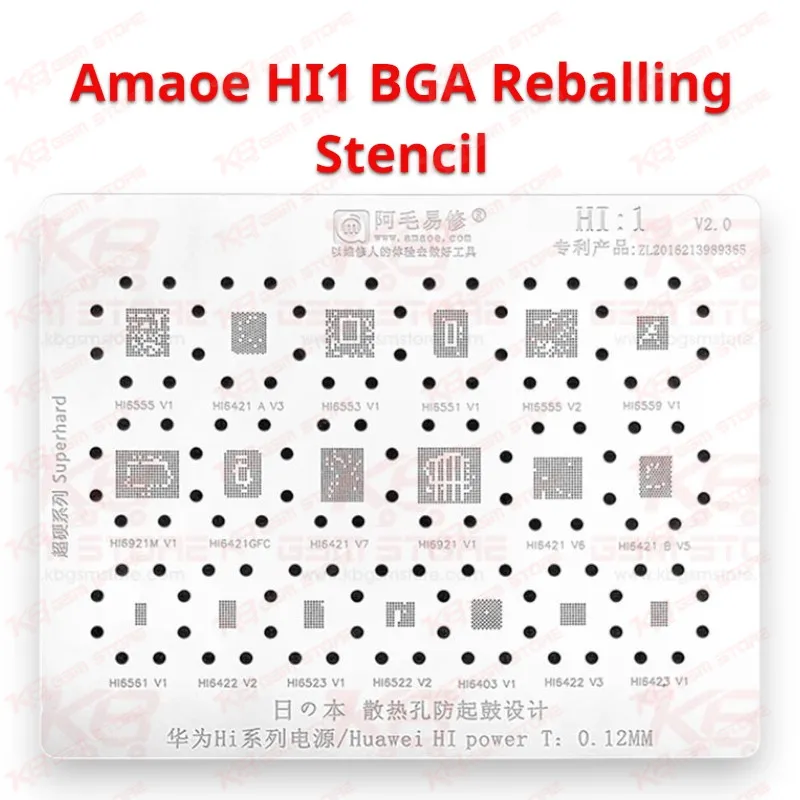
Amaoe HI1 BGA Reballing Stencil

Amaoe HI1 BGA Reballing Stencil

Regular price Rs.599.00 PKR
Regular price Sale price Rs.599.00 PKR
Sale Sold out
Shipping calculated at checkout.
Quantity

Amaoe HI1 BGA Reballing Stencil for Mobile IC Repair The Amaoe HI1 BGA Reballing Stencil gives you a ready template for rebuilding the ball grid on a BGA IC after chip removal. Every aperture lines up with a pad, so you place solder balls evenly and avoid the shorts that hand-placed balls cause. You use it on your repair bench with a hot air station, flux, and a PCB holder during any IC change karna job, from a dead phone to a hang on logo board. It is light, flat, and easy to clean, so it stays ready for the next hardware fault. Match the footprint to your chip before you order.

SKU:MST-SOLDERING-TOOLS-224

⚖️ Weight: 0.01 kg

  • Safe & Secure Payment
  • Fast Delivery
  • WhatsApp Support
View full details

Description

Amaoe HI1 BGA Reballing Stencil: Even Ball Placement for Your IC Change Jobs Every technician knows the moment after an IC change karna job. You lift the chip, clean the pads, and the old balls are gone or smeared across the surface. The Amaoe HI1 BGA Reballing Stencil gives you a flat template with one aperture per pad, so you rebuild the ball grid in a single controlled pass instead of fighting with tweezers. A dead phone, a boot loop issue, or a board that went dead after flash only comes back to life when the chip sits flat on even balls. This stencil is the step that makes that possible, and it earns its place next to your preheater and hot air station on the repair bench.Where the Stencil Fits in Your Repair Workflow You use the stencil after you remove the IC and before you refit it to the board. The sequence runs in a clear order. Lift the chip with hot air, clean the pads with flux and solder wick, check the pads under your microscope, then reball. If you skip the stencil and place balls by hand, you get uneven heights, and uneven heights give you shorts or open joints after reflow. That adds a second hardware fault to a phone that came in with a charging issue or a network issue. A good template keeps every ball the same size and position, so the chip settles flat on the board. You also save time on repeat jobs, because the same stencil serves every chip that shares its footprint.How You Reball With It Start with a clean, flat IC. Hold the chip in a PCB holder or reballing jig, lay the stencil on top, and line up every aperture with its pad under magnification. Spread a thin layer of flux, then pour solder balls across the stencil or press solder paste through the apertures with a spatula. Lift the stencil straight up, check that every pad holds a ball, and fix any gaps with tweezers. Heat the chip with hot air at a controlled temperature until the balls melt and settle, then let the chip cool before you move it. Always check your ball size against the pad pitch before you begin, because the wrong size ruins the joint no matter how good the stencil is.Care, Handling, and Choosing the Right Footprint Keep the stencil flat and away from bent corners. A warped sheet lets balls hide under the edges and bridge neighbouring pads. Wipe it with flux remover or isopropyl alcohol after each job, so old flux and solder residue never clog an aperture. Store it flat in a tool box instead of loose in a drawer with your tweezers. Before you order, match the stencil pattern to your chip footprint, because a stencil only fits the ball layout its apertures match. If you reball every day, pair it with a reballing jig or stencil platform, and stock hot air stations, preheaters, and PCB holders from the same category, so your whole IC repair setup arrives in one order.

Key Features

  • Dedicated BGA reballing template for mobile IC rework
  • One aperture per pad, so every ball lands in its position
  • Flat, thin profile that sits flush on a cleaned IC
  • Fits a hot air station and preheater workflow
  • Works with solder balls or solder paste
  • Reusable after cleaning with flux remover or isopropyl alcohol
  • Compact and light, so it fits in any tool box
  • Supports the full chip change sequence: remove, clean, reball, refit

Specifications

Brand Entity Amaoe
Product Entity Amaoe HI1 BGA Reballing Stencil
Technology Entity BGA reballing, solder ball placement
Compatible Device Entities Mobile phone BGA ICs matching the HI1 stencil footprint
Repair Process Entity IC change, chip reballing, BGA rework
Industry Entity Mobile repair industry, PCB repair

Compatible Devices


Mobile phone BGA ICs whose ball layout matches the HI1 stencil footprint (device-level list not verified; confirm the pattern against your chip before buying)

Common Repair Uses

  • Reballing a BGA IC after chip removal during an IC change karna job
  • Replacing smeared or missing balls on a chip that lifted during a repair
  • Restoring the ball grid on a chip you cleaned for a dead phone or hardware fault
  • Reballing before refitting a chip on boards that show a boot loop issue or hang on logo after a faulty reflow

FAQ

What is the product name?
The product name is Amaoe HI1 BGA Reballing Stencil.
What is the brand of this product?
The brand of this product is Amaoe.
What is the model of this product?
The model of this product is HI1.
What is this product used for?
This product is used for reballing BGA ICs on mobile phone boards after chip removal.
Which devices are compatible with this product?
This product fits BGA ICs whose ball layout matches the HI1 stencil pattern. Check your chip footprint before you order.
Who should use this product?
This product is suitable for mobile repair technicians, repair shops, service centers, and professional users.
How do you reball an IC with the Amaoe HI1 stencil on your repair bench?
Clean the chip, hold it in a jig, align the stencil apertures with the pads, add flux, fill the apertures with solder balls or paste, lift the stencil, and reflow with hot air until the balls settle.
How do you clean the stencil after reballing so the apertures stay clear?
Wipe it with flux remover or isopropyl alcohol right after each job, then store it flat so it does not warp.

Ask any Query