


Brand:
AMAOE
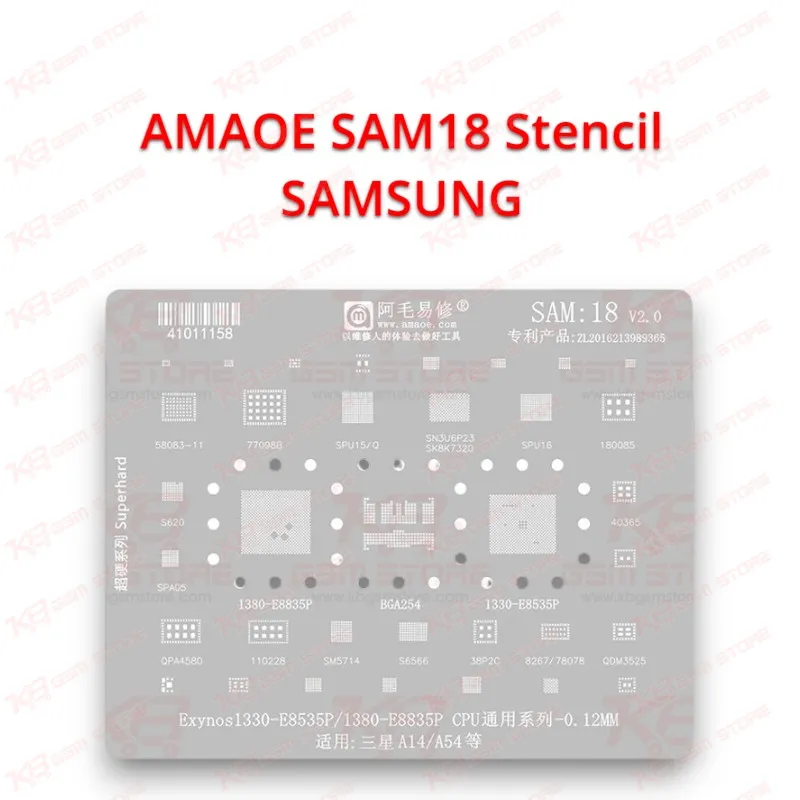
AMAOE SAM18 Stencil SAMSUNG
AMAOE SAM18 Stencil SAMSUNG
Regular price
Rs.900.00 PKR
Regular price
Sale price
Rs.900.00 PKR
Shipping calculated at checkout.
Quantity
Couldn't load pickup availability
AMAOE SAM18 Stencil for Samsung Exynos 1330/1380 CPU Reballing
The AMAOE SAM18 Stencil SAMSUNG is a 0.12mm steel BGA reballing stencil for the Exynos 1330 (E8535P), Exynos 1380 (E8835P), and MT6789V CPU universal series. These chips power popular Galaxy A-series phones such as the A14 and A54. A dead phone, a boot loop issue, or a hang on logo fault can come from cracked CPU solder joints. When it does, this stencil lets you rebuild a clean, even ball grid so the chip seats properly on the board. It suits busy repair benches that handle Samsung mid-range boards every day and need reliable CPU rework results at a fair price in Pakistan.
SKU:MST-SOLDERING-ACCESSORIES-1121
⚖️ Weight: 0.1 kg
- Safe & Secure Payment
- Fast Delivery
- WhatsApp Support


Description
FAQ
What is the product name?
The product name is AMAOE SAM18 Stencil SAMSUNG.
What is the brand of this product?
The brand of this product is Amaoe.
What is the model of this product?
The model of this product is SAM18.
What is this product used for?
This product is used for BGA reballing of Samsung Exynos 1330, Exynos 1380, and MediaTek MT6789V CPUs during board-level repair.
Which devices are compatible with this product?
This product is compatible with the Samsung Galaxy A14 and Galaxy A54, plus Samsung models on the Exynos 1330 (E8535P), Exynos 1380 (E8835P), and MT6789V CPU universal series.
Who should use this product?
This product is suitable for mobile repair technicians, repair shops, service centers, and professional users.
What thickness is the AMAOE SAM18 stencil, and why does it matter for Samsung CPU reballing?
The SAM18 is a 0.12mm stencil. That thickness holds an even amount of paste in each opening and still releases cleanly, which gives you uniform balls on large Exynos SoC packages.
Does the AMAOE SAM18 stencil support MediaTek CPUs on Samsung boards?
Yes. Besides the Exynos 1330 and Exynos 1380 layouts, the SAM18 plate covers the MediaTek MT6789V CPU universal series used in Samsung phones.