


Brand:
MECHANIC
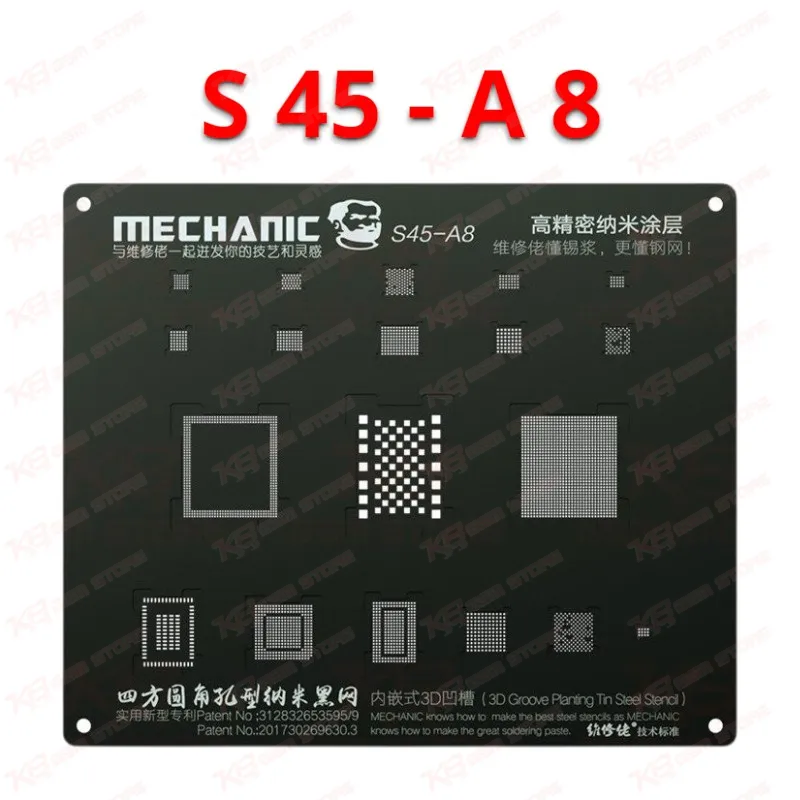
Mechanic 3D Groove Black Stencil For iPhone A8
Mechanic 3D Groove Black Stencil For iPhone A8
Regular price
Rs.1,500.00 PKR
Regular price
Sale price
Rs.1,500.00 PKR
Shipping calculated at checkout.
Quantity
Couldn't load pickup availability
The Mechanic 3D Groove Black Stencil For iPhone A8 gives your repair bench a faster, cleaner way to reball the A8 CPU on iPhone 6 and iPhone 6 Plus boards. Its stepped 3D groove seats the chip in position automatically, so you skip the slow manual alignment that ruins reball jobs on cheap flat stencils. Square holes with rounded corners release formed solder balls easily, and the heat-resistant steel resists bulging under hot air. For Pakistani repair shops handling dead phones, boot loop faults, and CPU-level hardware faults on older iPhones, this stencil turns a risky reball into a routine bench job.
SKU:MST-SOLDERING-TOOLS-104
⚖️ Weight: 0.01 kg
- Safe & Secure Payment
- Fast Delivery
- WhatsApp Support


Description
FAQ
What is the product name?
The product name is Mechanic 3D Groove Black Stencil For iPhone A8.
What is the brand of this product?
The brand of this product is Mechanic.
What is the model of this product?
The model of this product is 3D Groove Black Stencil – A8.
What is this product used for?
This product is used for BGA reballing of the Apple A8 CPU on iPhone 6 and iPhone 6 Plus logic boards.
Which devices are compatible with this product?
This product is compatible with iPhone 6 and iPhone 6 Plus, which use the Apple A8 processor.
Who should use this product?
This product is suitable for mobile repair technicians, repair shops, service centers, and professional users.
Can I use the Mechanic 3D Groove Black Stencil For iPhone A8 on the A9 CPU of an iPhone 6s?
No. The A9 uses a different ball layout from the A8, so an iPhone 6s or 6s Plus needs a dedicated A9 stencil.
How does the 3D groove help during A8 CPU reballing?
The stepped groove holds the chip in a fixed pocket that lines the stencil apertures up with the solder pads automatically, so the chip cannot slide while you apply paste and hot air, which gives you even, aligned balls without manual adjustment.