


Brand:
MECHANIC
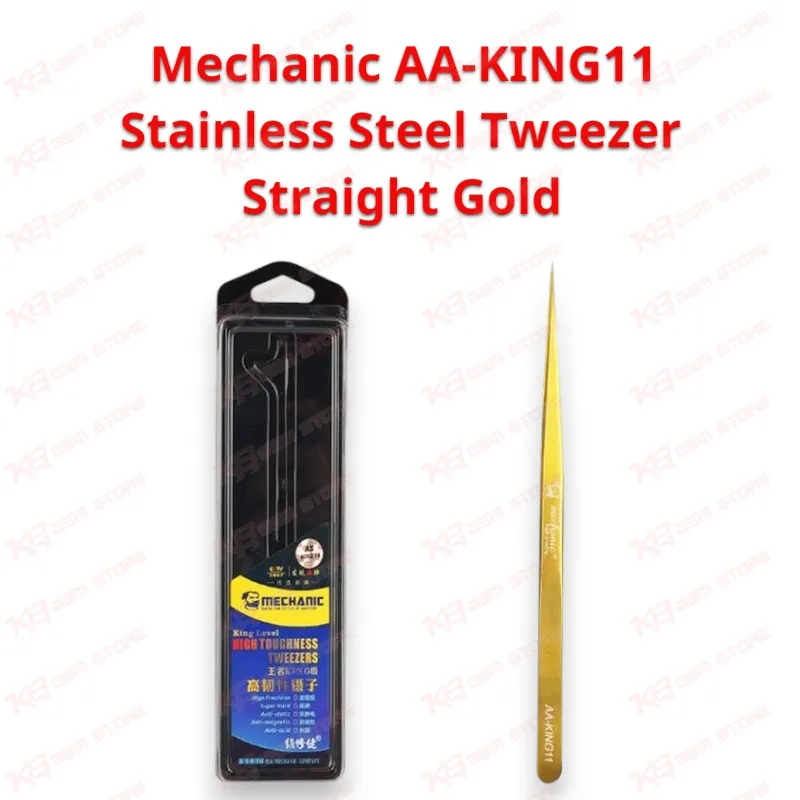
Mechanic AA-KING11 Stainless Steel Tweezer Straight Gold
Mechanic AA-KING11 Stainless Steel Tweezer Straight Gold
Regular price
Rs.1.00 PKR
Regular price
Sale price
Rs.1.00 PKR
Shipping calculated at checkout.
Quantity
Couldn't load pickup availability
The Mechanic AA-KING11 Stainless Steel Tweezer Straight Gold is a 140 mm precision tweezer from the Mechanic KING series, built for technicians who handle tiny SMD parts every day. Its straight, tapered stainless steel tip gives you firm control when you lift shield covers, place capacitors, hold jumper wires, or align a charging IC on its pads. The anti-magnetic, acid-resistant body keeps small components from sticking to the tip, and the gold finish makes it easy to spot on a crowded repair bench. A reliable, affordable tweezer for repair shops and service centers across Pakistan.
SKU:MST-SOLDERING-TOOLS-182
⚖️ Weight: 0.15 kg
- Safe & Secure Payment
- Fast Delivery
- WhatsApp Support


Description
FAQ
What is the product name?
The product name is Mechanic AA-KING11 Stainless Steel Tweezer Straight Gold.
What is the brand of this product?
The brand of this product is Mechanic.
What is the model of this product?
The model of this product is AA-KING11.
What is this product used for?
This product is used for precise handling of SMD components, IC removal and placement, jumper wire work, and general PCB repair on mobile phones and other electronics.
Which devices are compatible with this product?
This product is compatible with all smartphone, tablet, and laptop boards, as it is a universal hand tool and not device-specific.
Who should use this product?
This product is suitable for mobile repair technicians, repair shops, service centers, and professional users.
What is the length of the Mechanic AA-KING11 tweezer?
The Mechanic AA-KING11 measures 140 mm in overall length, which gives you good reach inside a phone frame while keeping your fingers away from the heated area.
Is the AA-KING11 tweezer magnetic?
No. Mechanic specifies the AA-KING11 as anti-magnetic, so small components will not stick to the tip or get pulled toward it while you work.
Is the AA-KING11 a straight or bent tweezer?
The AA-KING11 has a straight tip. The Mechanic KING series also includes bent-tip models such as the KING15 for technicians who prefer an angled approach.