


Brand:
MECHANIC
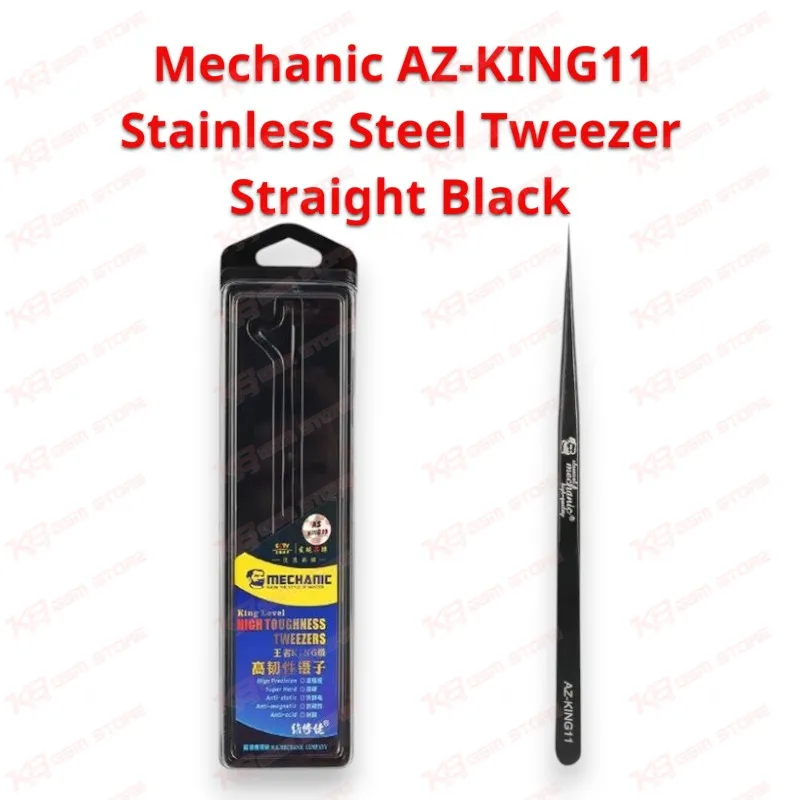
Mechanic AZ-KING11 Stainless Steel Tweezer Straight Black
Mechanic AZ-KING11 Stainless Steel Tweezer Straight Black
Regular price
Rs.1.00 PKR
Regular price
Sale price
Rs.1.00 PKR
Shipping calculated at checkout.
Quantity
Couldn't load pickup availability
Mechanic AZ-KING11 Straight Tweezer for Precision Board Work
The Mechanic AZ-KING11 Stainless Steel Tweezer Straight Black gives you an ultra-fine straight tip built for the small jobs that decide a repair: placing SMD capacitors, holding jumper wire, and lifting tiny components under the microscope. The thickened, hardened stainless steel body resists bending, so the tips stay aligned after months of daily bench use. Its ESD-safe build lets you handle sensitive ICs without risking static damage. For repair shops in Lahore, Karachi, and Islamabad looking for a dependable precision tweezer at a fair price in Pakistan, this black KING11 variant earns a permanent spot on the bench.
SKU:MST-SOLDERING-TOOLS-179
⚖️ Weight: 0.15 kg
- Safe & Secure Payment
- Fast Delivery
- WhatsApp Support


Description
FAQ
What is the product name?
The product name is Mechanic AZ-KING11 Stainless Steel Tweezer Straight Black.
What is the brand of this product?
The brand of this product is Mechanic.
What is the model of this product?
The model of this product is AZ-KING11.
What is this product used for?
This product is used for precision handling of SMD components, jumper wire, and ICs during board-level mobile phone and electronics repair.
Which devices are compatible with this product?
This product is compatible with all smartphone, tablet, and small electronics PCBs, since it is a universal hand tool and not device-specific.
Who should use this product?
This product is suitable for mobile repair technicians, repair shops, service centers, and professional users.
Is the Mechanic AZ-KING11 tweezer ESD safe for handling sensitive ICs?
Yes. The AZ-KING11 uses an ESD-safe anti-static design, which helps protect sensitive chips such as eMMC, UFS, and audio ICs during handling. Use it with a grounded mat and wrist strap for full static protection.
Is the AZ-KING11 different from the AA-KING11, AK-KING11, and AS-KING11?
All four belong to the same Mechanic KING11 straight tweezer series. The prefix marks the color: AZ is black, AA is gold, AK is red, and AS is blue.