


Brand:
MECHANIC
Mechanic Bottle Nozzel PE50
Mechanic Bottle Nozzel PE50
Regular price
Rs.100.00 PKR
Regular price
Sale price
Rs.100.00 PKR
Shipping calculated at checkout.
Quantity
Couldn't load pickup availability
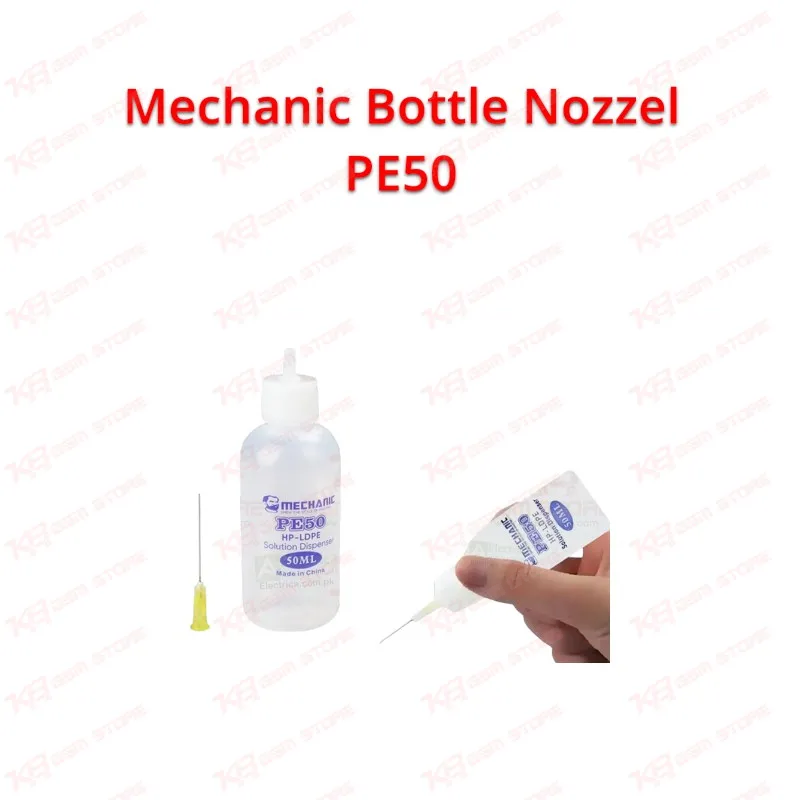
The Mechanic PE50 is a 50ml plastic dispenser bottle built for controlled, drop-by-drop liquid application on the repair bench. It comes with a fine needle-type nozzle that lets you apply isopropyl alcohol, flux, or acetone exactly where you need it, without soaking the board or wasting liquid. The squeezable body and screw-on lid make refilling simple and mess-free. Technicians use this bottle for daily board cleaning, glue softening during screen separation, and general PCB maintenance. It's a small tool, but one that sits on almost every workbench in a mobile repair shop.
SKU:MST-SOLDERING-ACCESSORIES-164
⚖️ Weight: 0.09 kg
- Safe & Secure Payment
- Fast Delivery
- WhatsApp Support


Description
FAQ
What is the product name?
The product name is Mechanic PE50 Alcohol Dispenser Bottle.
What is the brand of this product?
The brand of this product is Mechanic.
What is the model of this product?
The model of this product is PE50 (MC-PE50).
What is this product used for?
This product is used for controlled dispensing of alcohol, flux, or acetone during board cleaning and repair work.
Which devices are compatible with this product?
This product is universal and not tied to any specific phone brand or model, since it's a liquid dispensing accessory rather than a device tool.
Who should use this product?
This product is suitable for mobile repair technicians, repair shops, service centers, and professional users.
Can I use flux and thinner in the same PE50 bottle as alcohol?
It's better to keep one bottle per liquid type, since mixing flux, thinner, and alcohol residue in the same bottle can clog the needle tip and cross-contaminate your boards.
Does the needle tip work for precise application around tightly packed PCB components?
Yes, the needle tip is designed for exactly this — it releases a thin, directed stream so you can clean or apply liquid around dense component areas without flooding the board.