


Brand:
MECHANIC
Mechanic Dusty TC-24 Dual-Ended Type-C Data Cable Tester
Mechanic Dusty TC-24 Dual-Ended Type-C Data Cable Tester
Regular price
Rs.1,500.00 PKR
Regular price
Sale price
Rs.1,500.00 PKR
Shipping calculated at checkout.
Quantity
Couldn't load pickup availability
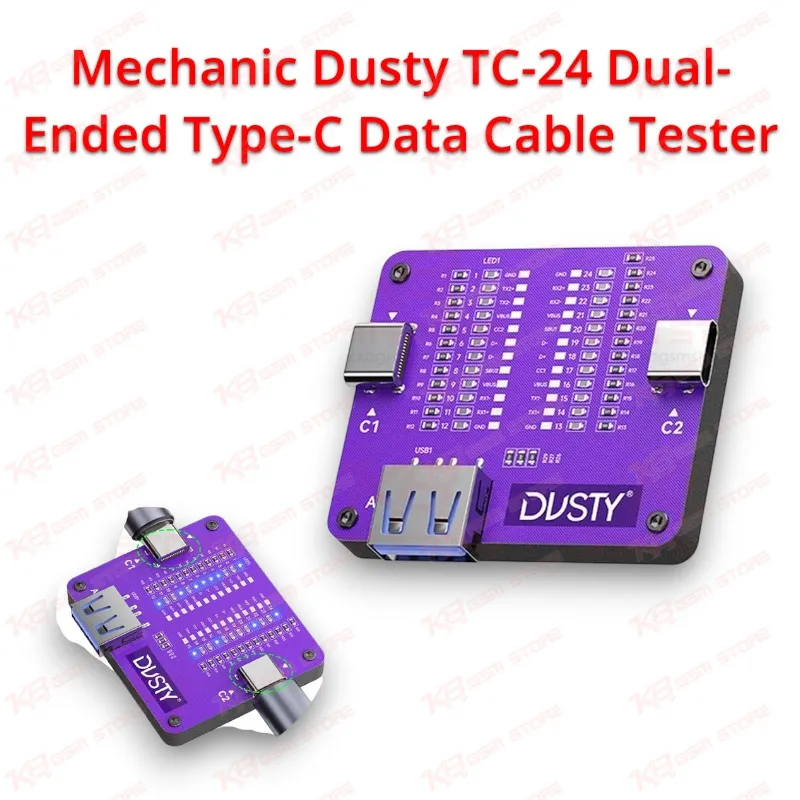
The Mechanic Dusty TC-24 Dual-Ended Type-C Data Cable Tester checks USB-C to USB-C fast charging cables with a full 24-pin continuity test and shows the result through 12 LED indicators. It pinpoints broken wires and the exact faulty pin, so you confirm a cable fault before you open a phone for a charging issue or a failed PC connection. A single CR2032 battery powers the compact 42 x 50 mm body, so you can use it right away on your repair bench, at the shop counter, or during on-site service. It suits mobile repair technicians, service centers, and repair shops that test cables for iPhone and Android phones across Pakistan.
SKU:MST-SOLDERING-TOOLS-1188
⚖️ Weight: 0.5 kg
- Safe & Secure Payment
- Fast Delivery
- WhatsApp Support


Description
FAQ
What is the product name?
The product name is Mechanic Dusty TC-24 Dual-Ended Type-C Data Cable Tester.
What is the brand of this product?
The brand of this product is Mechanic.
What is the model of this product?
The model of this product is TC-24 (Dusty).
What is this product used for?
This product is used for testing dual-ended Type-C data and fast charging cables, finding broken wires, and identifying the exact faulty pin.
Which devices are compatible with this product?
This product is compatible with USB-C to USB-C cables used with Android phones and iPhone models that have a USB-C port.
Who should use this product?
This product is suitable for mobile repair technicians, repair shops, service centers, and professional users.
How many pins does the TC-24 test on a Type-C cable?
The TC-24 runs a complete 24-pin continuity test and shows the status through 12 LED indicators, so you can identify the specific faulty pin.
Does the TC-24 need a charger or USB power source to work?
No. A single CR2032 coin cell battery powers the tester, and one battery comes with the unit, so you can test cables without any external power.