


Brand:
MECHANIC
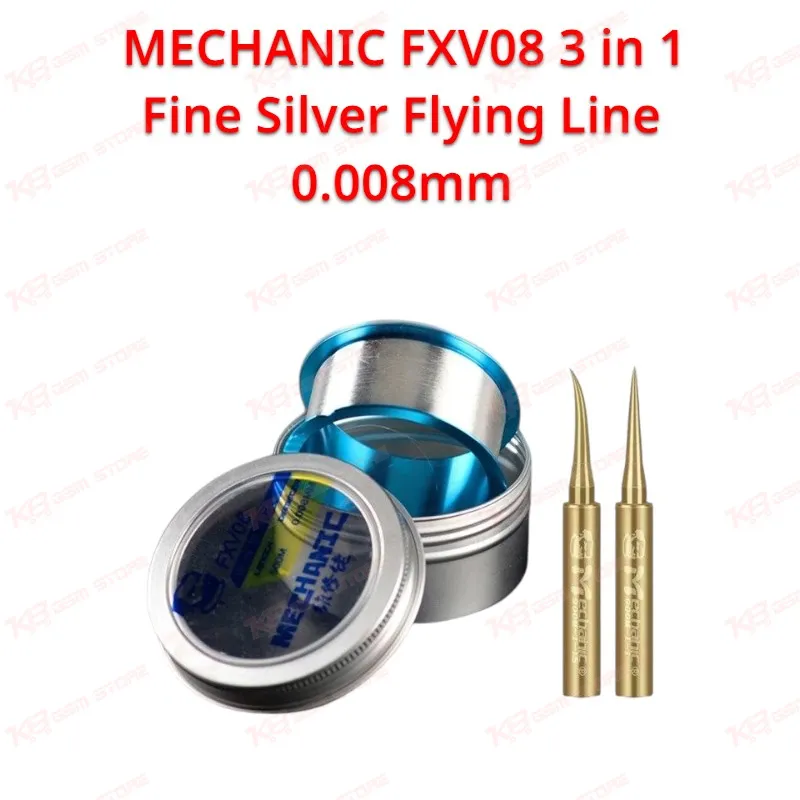
MECHANIC FXV08 3 in 1 Fine Silver Flying Line 0.008mm
MECHANIC FXV08 3 in 1 Fine Silver Flying Line 0.008mm
Regular price
Rs.2,999.00 PKR
Regular price
Sale price
Rs.2,999.00 PKR
Shipping calculated at checkout.
Quantity
Couldn't load pickup availability
The MECHANIC FXV08 gives your repair bench a proper fix for broken CPU points, cracked motherboard traces, and short lines on the PCB. This 3 in 1 set pairs a 500m spool of 0.008mm fine silver flying wire with a pure copper welding head, so you jump breakpoints and fix dead after flash boards without hunting for a matching trace. The tin-silver alloy wire sits down flat on the board, sticks to solder fast, and carries current the way a stock trace does. If you deal with fingerprint line faults, hang on logo boards, or CPU chip breakpoints, this spool belongs in your soldering accessories drawer.
SKU:MST-SOLDERING-ACCESSORIES-60
⚖️ Weight: 0.4 kg
- Safe & Secure Payment
- Fast Delivery
- WhatsApp Support


Description
FAQ
What is the product name?
The product name is MECHANIC FXV08 3 in 1 Fine Silver Flying Line 0.008mm.
What is the brand of this product?
The brand of this product is MECHANIC.
What is the model of this product?
The model of this product is FXV08.
What is this product used for?
This product is used for jumping broken CPU points, repairing cut motherboard traces, and fixing screw hole short circuits on mobile phone PCBs.
Which devices are compatible with this product?
This product works on any mobile phone or tablet motherboard, including Samsung, Oppo, Vivo, Infinix, Tecno, and iPhone boards, since it is applied at the trace level rather than to a specific device.
Who should use this product?
This product is suitable for mobile repair technicians, repair shops, service centers, and professional users.
Is this wire suitable for iPhone fingerprint line repair?
Yes, the 0.008mm fine silver line is commonly used to rebuild broken fingerprint flex traces on iPhone motherboards.
Does the FXV08 set include a soldering tip?
Yes, the 3 in 1 set includes a pure copper welding head matched for BGA chip and motherboard rework alongside the flying line spool.