


Brand:
MECHANIC
Mechanic GK8 Multifunctional CPU IC Glue Removal Blade with Handle
Mechanic GK8 Multifunctional CPU IC Glue Removal Blade with Handle
Regular price
Rs.1,800.00 PKR
Regular price
Rs.2,000.00 PKR
Sale price
Rs.1,800.00 PKR
Shipping calculated at checkout.
Quantity
Couldn't load pickup availability
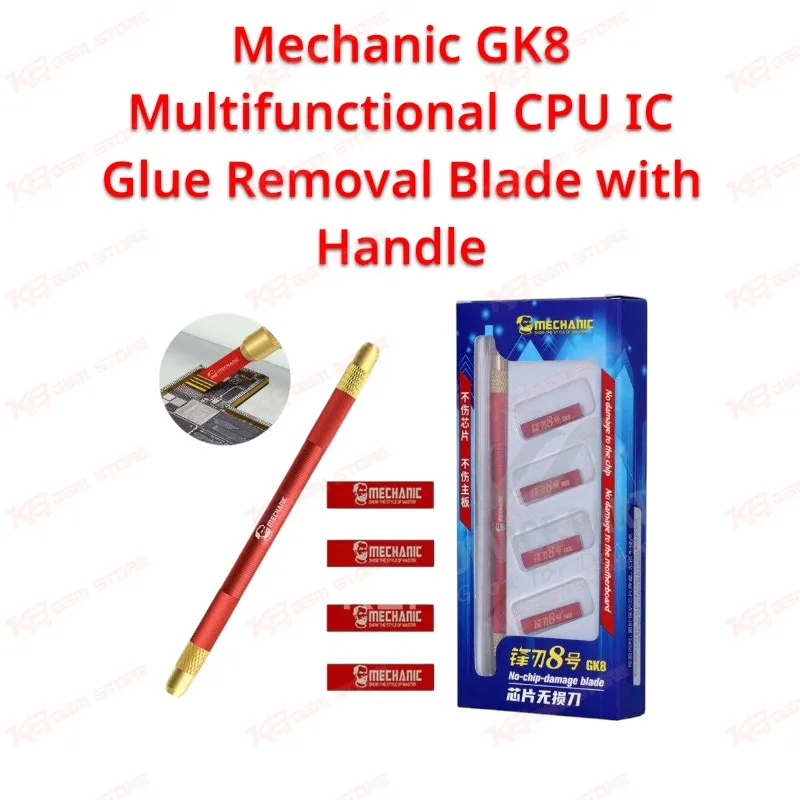
The Mechanic GK8 gives your repair bench a safer way to strip glue off motherboard pads before reballing or chip replacement. Its eight-layer ultra-thin copper sheet flexes into tight spaces around CPU, IC, baseband, and NAND pads without lifting solder joints or scratching the board. The multi-composite sandwich structure adds double-end protection, so the blade stays rigid enough to scrape hardened glue while staying gentle on delicate pads. Fitted with an ergonomic handle for full control, this tool suits dead phone board rework, IC change jobs, and general PCB cleanup on any repair bench in Pakistan.
SKU:MST-SOLDERING-ACCESSORIES-61
⚖️ Weight: 0.05 kg
- Safe & Secure Payment
- Fast Delivery
- WhatsApp Support


Description
FAQ
What is the product name?
The product name is Mechanic GK8 Multifunctional CPU IC Glue Removal Blade with Handle.
What is the brand of this product?
The brand of this product is Mechanic.
What is the model of this product?
The model of this product is GK8.
What is this product used for?
This product is used for removing hardened glue and underfill from motherboard chip pads without damaging the pad or lifting solder joints.
Which devices are compatible with this product?
This product is universal and not device-specific — it works on CPU, IC, baseband, NAND, and eMMC chip pads across Android smartphone motherboards.
Who should use this product?
This product is suitable for mobile repair technicians, repair shops, service centers, and professional users.
Does the GK8 blade damage motherboard pads during glue removal?
No — the eight-layer flexible copper sheet is built to glide over pads without lifting them, which is the main reason technicians use it before reballing.
Can this blade be used on both CPU and baseband IC pads?
Yes — the double-protected edge design works on CPU, baseband, NAND, and eMMC pads, so one blade covers glue removal across most chip-level repair jobs.