


Brand:
MECHANIC
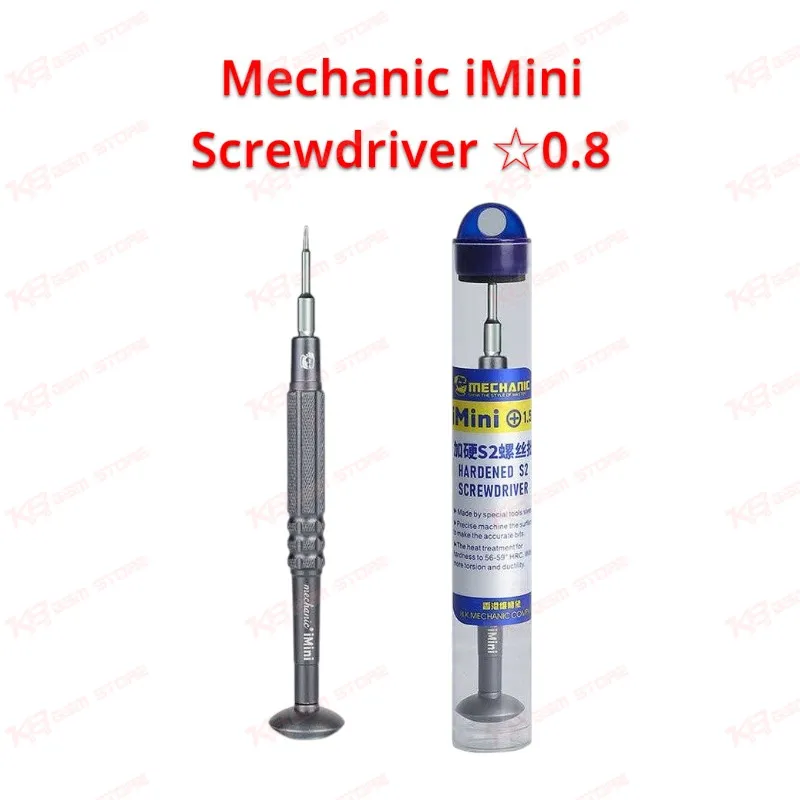
Mechanic iMini Screwdriver ☆0.8
Mechanic iMini Screwdriver ☆0.8
Regular price
Rs.400.00 PKR
Regular price
Sale price
Rs.400.00 PKR
Shipping calculated at checkout.
Quantity
Couldn't load pickup availability
The MECHANIC iMini ☆0.8 is a precision pentalobe screwdriver built for opening Apple devices without stripping tiny screws. The chrome-molybdenum bit holds a strong magnetic charge, so the five-pointed star tip grips the screw head instead of sliding off mid-turn. An aviation aluminum handle keeps the tool light in your hand during long repair sessions, while the anti-slip grip stops it from turning in your fingers when torque builds up. Built for the bottom-case pentalobe screws on iPhones and similar 0.8mm five-star fasteners, this screwdriver belongs on every repair bench doing daily teardown work.
SKU:MST-SOLDERING-ACCESSORIES-50
⚖️ Weight: 0.01 kg
- Safe & Secure Payment
- Fast Delivery
- WhatsApp Support


Description
FAQ
What is the product name?
The product name is MECHANIC iMini Five Star 0.8 Pentalobe Precision Screwdriver.
What is the brand of this product?
The brand of this product is MECHANIC.
What is this product used for?
This screwdriver removes 0.8mm five-star (pentalobe) screws, most commonly the two bottom-case screws on iPhones, before starting a teardown.
Which devices are compatible with this product?
It fits any device using a 0.8mm pentalobe (P2) screw, including iPhone bottom-case screws and similar small electronics fasteners.
Who should use this product?
This tool suits mobile repair technicians, repair shop owners, service centers, and professional teardown work.
Does this screwdriver strip iPhone pentalobe screws easily?
No — the chrome-molybdenum bit is machined to a tight 0.8mm fit specifically to resist rounding on Apple's pentalobe screws, which is where cheaper bits usually fail.
Is the magnetic tip strong enough to hold the screw during reinsertion, not just removal?
Yes — the magnetic pickup holds the screw through both removal and reinsertion, which is why it's used for fast bottom-case screw work without dropping screws.