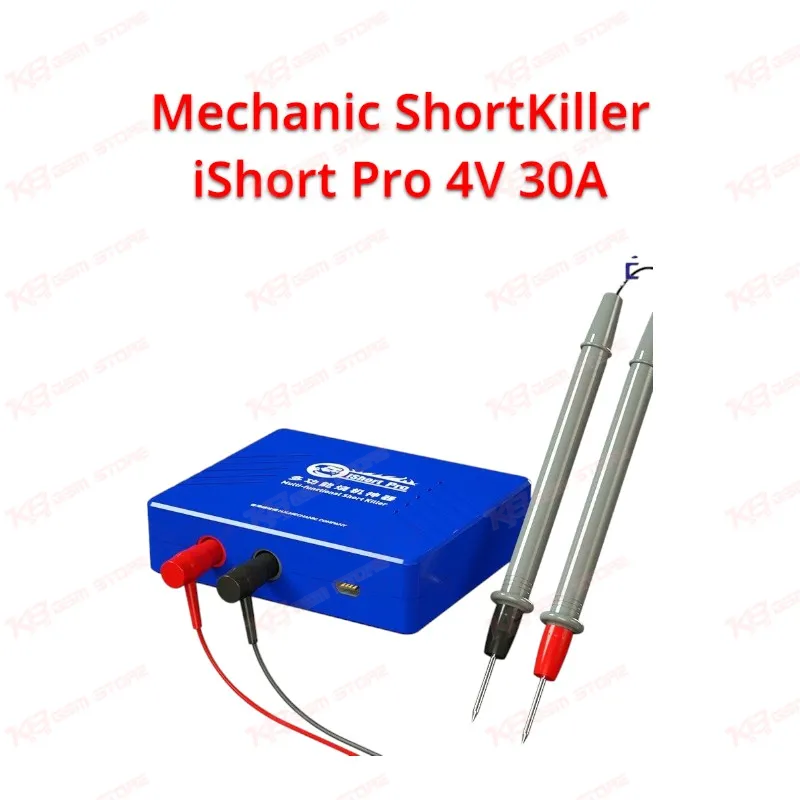
Every board with a dead phone complaint starts the same way on your bench — check for a short before you touch anything else, because pushing power into a shorted line only spreads the damage. The MECHANIC iShort Pro handles that first step in under a second, locking onto the exact short circuit path instead of leaving you to probe blindly with a multimeter. Set the output to 4V and let the tool's 30A max current find where the current is leaking, then watch the affected capacitor or resistor heat up fast enough that you can lift it clean off the pad. That instant heating at up to 100W output means you're not sitting there for minutes waiting for a component to loosen — you get short-circuit disassembly done in seconds, which matters when a customer is standing at your counter asking why their phone won't boot. This is the same board-level diagnostic step that comes before IC change karna or any jumper lagana work, because you can't fix a hardware fault properly until you know exactly which component is pulling the board down. Technicians dealing with charging issue complaints, hang on logo boards, or a phone that's dead after flash all reach for a short killer first, since a short can mimic half a dozen other symptoms and waste hours if you skip straight to software marna or box chalana without ruling it out. The iShort Pro's 90cm test probes come with both needle-tip and banana connectors, giving you the reach and precision to test tight motherboard areas on phones as well as larger boards on laptops and PCs, so one tool covers detection duty across most of your repair queue. Power comes from a built-in rechargeable battery holding charge for roughly 168 hours in standby, charged through a USB Micro-B cable, so it stays portable and doesn't tie you to a bench outlet every time you need to pull it out mid-repair. The compact 95x78x25mm housing fits into a tool drawer or repair kit without taking up space you'd rather keep for your soldering station or microscope. This isn't a tool that replaces your full diagnostic workflow — it's the fast first check that tells you whether you're dealing with a genuine short or something else entirely, saving you from wasting reballing or IC replacement time on a board that just needs a shorted capacitor pulled. Repair shops running high volumes of dead-phone intake use tools like this to triage boards quickly, separating quick short-circuit fixes from boards that need deeper CPU or NAND-level work. Pair it with your existing test box or multimeter and you get a workflow where detection, isolation, and removal happen back-to-back instead of switching between guesswork and confirmation. Whether you're running a solo repair bench or training junior technicians at a service center, having a dedicated short killer cuts down diagnostic time on one of the most common board complaints you'll see — a dead phone that won't power on because something downstream is pulling current where it shouldn't.