


Brand:
MECHANIC
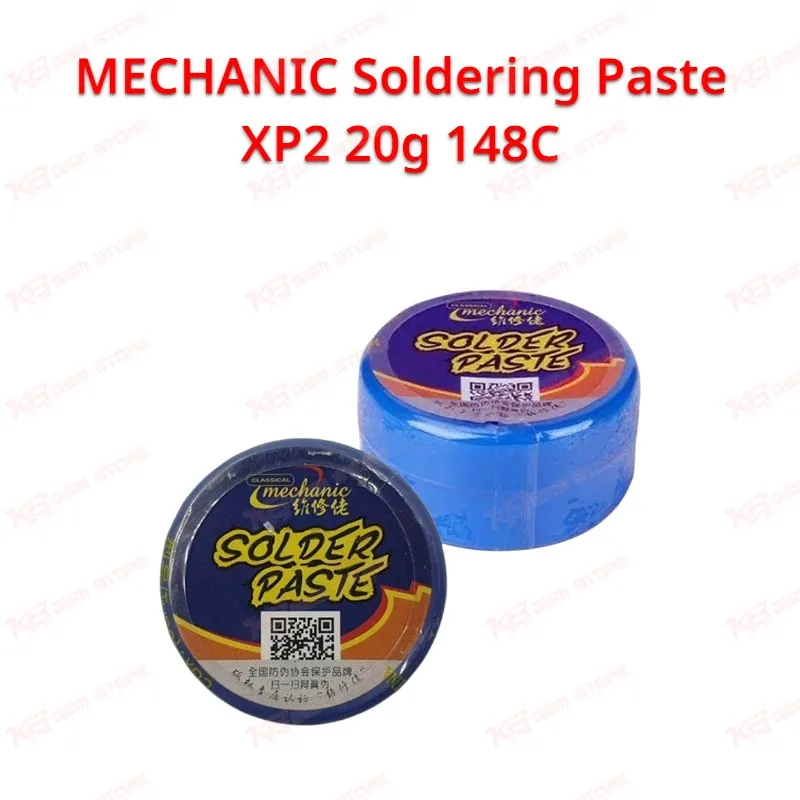
MECHANIC Soldering Paste XP2 20g 148C
MECHANIC Soldering Paste XP2 20g 148C
Regular price
Rs.1.00 PKR
Regular price
Sale price
Rs.1.00 PKR
Shipping calculated at checkout.
Quantity
Couldn't load pickup availability
Mechanic XP2 is a 148°C low-melting-point solder paste built for layered motherboard repair on iPhone X, XR, XS, and XS Max boards. Made from Sn63/Pb37 alloy with a 20-38um particle size, it gives you controlled reflow without lifting nearby components on multi-layer PCBs. The 20g jar covers small-component soldering, EPROM rework, and fine-pitch BGA work on your repair bench. Low melt point means less heat stress on delicate pads during dead phone and hardware fault repairs. A reliable pick for GSM technicians doing board-level work in Pakistan.
SKU:MST-SOLDERING-ACCESSORIES-57
⚖️ Weight: 0.01 kg
- Safe & Secure Payment
- Fast Delivery
- WhatsApp Support


Description
FAQ
What is the product name?
The product name is Mechanic XP2 148°C Solder Paste 20g.
What is the brand of this product?
The brand of this product is Mechanic.
What is the model of this product?
The model of this product is XP2.
What is this product used for?
This product is used for low-temperature soldering on layered motherboards, small SMD components, and EPROM chips during mobile repair work.
Which devices are compatible with this product?
This paste is suited for iPhone X, XR, XS, and XS Max layered motherboards, and general low-temperature PCB soldering where a 148°C paste is needed.
Who should use this product?
This product is suitable for mobile repair technicians, repair shops, service centers, and professional users.
Is Mechanic XP2 suitable for soldering EPROM memories?
Yes, Mechanic XP2 works well for EPROM memory chip soldering because of its clean, false-solder-free joints.
What's the difference between Mechanic XP2 148°C and the 183°C version?
XP2 148°C is meant for heat-sensitive, layered motherboards, while the 183°C version suits general SMD component soldering where higher heat isn't a concern.