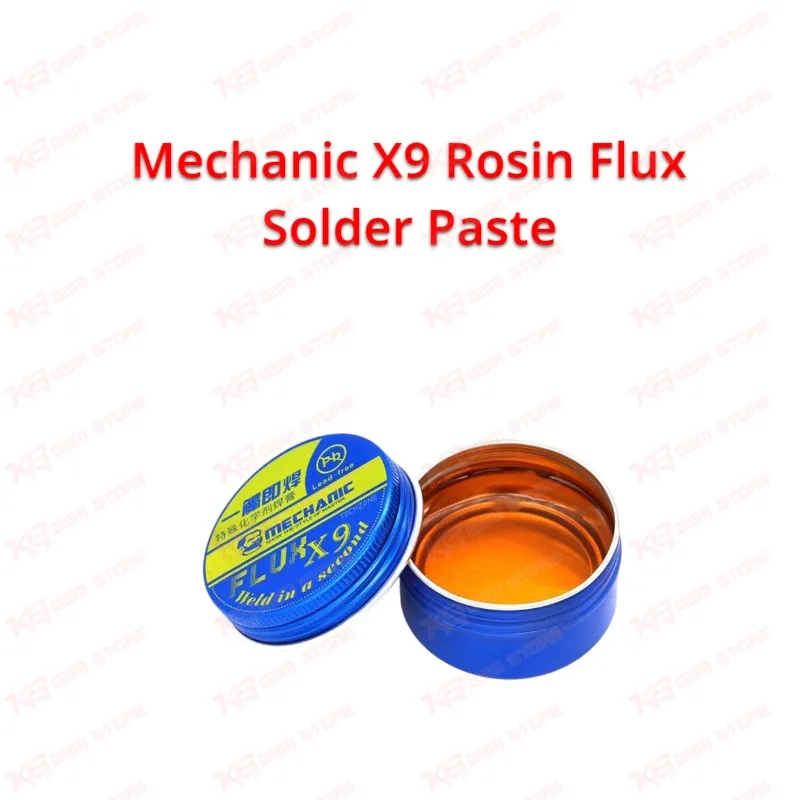
Mechanic X9 Rosin Flux Solder Paste solves a problem every GSM technician runs into on the bench: weak solder flow, oxidized pads, and inconsistent joints during motherboard repair. This rosin-based paste flux comes in a 20g tin measuring 48×26mm and delivers a semi-viscous consistency that spreads evenly across BGA pads, IC legs, and PCB tracks without running off the work area. You apply it before reflow or reballing, and it immediately improves tin adhesion while cutting down the oxidation that normally causes cold joints and weak connections on aging boards. The formula carries a mild pH, so it does not attack ICs or copper pads even when you leave it on the board through a longer repair session, which matters when you are chasing a hardware fault that needs multiple reflow attempts. After soldering, the residue stays transparent and thin, so you skip aggressive cleaning steps and move straight to testing the board, saving real time on high-volume repair days. Mechanic built the X9 to sit above standard rosin fluxes by blending in additional chemical components during production, specifically targeting the low anti-oxidation resistance that plain rosin struggles with on the market. That means when you are working a dead phone case, doing an IC change karna job, or reballing a CPU or PMIC, the flux keeps working through the full process instead of drying out or losing effectiveness halfway through. Many technicians also dip their desoldering braid directly into the X9 before lifting components, since the flux soaks into the braid and pulls tin off pads faster and cleaner than a dry braid alone, which speeds up chip removal on boards with a hang on logo or charging issue that traces back to a faulty component. The paste form gives you more control than liquid flux pens, especially under a microscope, because you can place a precise amount exactly where the joint needs help without it spreading onto neighboring components on a densely populated board. This makes the X9 a reliable choice for micro-soldering work where a single misplaced drop can bridge pads or damage nearby traces. Its melting point sits slightly higher than standard soldering tin, which keeps the flux active through the full melt cycle rather than burning off before the joint is fully formed, giving you steadier results on both leaded and lead-free solder work. Repair shops handling network issue boards, display problem repairs involving board-level connectors, or FRP lock and software marna jobs that require opening the board for testing all benefit from having a dependable flux on hand that does not corrode contact points during diagnostic probing. Because the tin is compact and reusable, it fits into a technician's daily toolkit alongside hot air stations, soldering irons, and BGA rework stations without taking up bench space. Whether you run a service center doing high-volume smartphone repair or a specialized PCB repair workshop handling laptop and tablet motherboards, Mechanic X9 gives you a flux that performs consistently across IC reflow, reballing, jumper lagana repairs, and general board cleaning, backed by a formula built specifically to address the oxidation and residue problems that slow down repair workflows on real production boards.