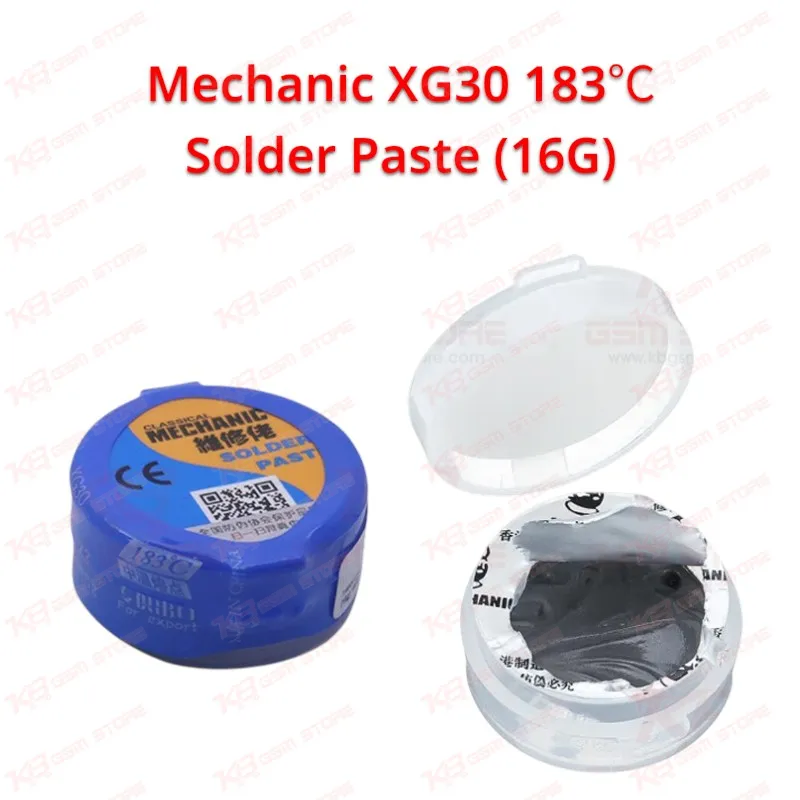
Mechanic XG-30 solder paste is a 183°C melting point formula built around Sn63/Pb37 alloy composition, designed specifically for the demands of professional mobile phone repair and PCB rework benches. When you're handling dead phone boards, IC change jobs, or fine-pitch BGA rework, the melting behavior of your solder paste directly affects joint quality, and XG-30 holds a consistent 183°C threshold that gives predictable reflow without scorching surrounding components. The resin and solvent-based flux in this formula activates cleanly once heat is applied, spreading evenly across pads without pooling or dragging solder balls out of alignment, which matters most when you're working on tight-pitch CPU ICs or PMIC footprints where a single misaligned ball causes a dead after flash situation. You get a no-clean formulation here, meaning once the joint is made and cooled, there's no obligation to wipe down flux residue before moving to the next step of your repair, saving real time when you're running multiple boards through your bench in a single shift. The paste carries a moderate viscosity that resists collapsing under stencil printing or manual dispensing, so components stay seated where you place them instead of shifting during preheat, a common cause of bridging and false soldering on crowded boards. Technicians working GSM repair environments know that IC change karna and jumper lagana jobs demand a paste that won't dry out mid-task or lose tack before you get the hot air gun in position, and XG-30's silver-infused formula is built to maintain workable consistency through the application and reflow cycle without requiring rushed technique. Storage matters with any solder paste, and XG-30 is rated to hold its properties when kept between 0°C and 10°C, so a small fridge or cool drawer at the repair bench keeps a syringe usable for extended periods rather than hardening after a few weeks of room temperature exposure. This paste finds its main use in BGA reballing and rework, where pre-coating pads with a thin, even layer of paste before ball placement determines whether your reflow produces a clean, void-free connection or a batch of cold joints that fail diagnostic testing later. It also handles general SMD component resoldering on motherboards, charging IC replacement, and PMIC-level chip work where a stable, low-residue paste reduces the risk of shorting nearby pads. For technicians dealing with hang on logo or boot loop issue boards that trace back to a cracked or lifted IC, having a paste that reflows predictably at a known temperature takes one variable out of an already complex diagnostic process. The syringe packaging format keeps the paste protected from air exposure between uses, which extends working life compared to open-tub pastes that oxidize faster once opened. Mechanic has built XG-30 as part of a broader special paste line covering different melting points, and the 183°C tier sits in the standard leaded-alloy range that most repair technicians reach for as their default paste for day-to-day board work, reserving lower-temperature pastes for components more sensitive to heat. Whether you're running a solo repair counter or managing a full service center bench, this paste integrates into standard rework stations, hot air setups, and preheating platforms without requiring any special calibration, making it a straightforward addition to an existing toolkit built around BGA rework, IC programming, and board-level diagnostics.