Skip to product information
1 of 4
Brand: RELIFE

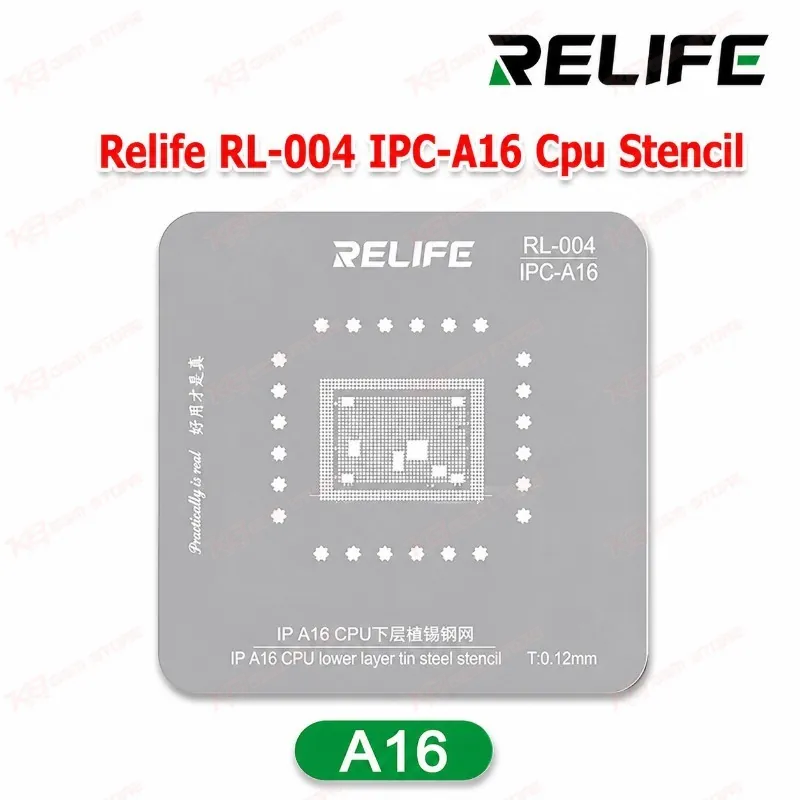
Relife RL-004 IPC-A16 Cpu Stencil

Relife RL-004 IPC-A16 Cpu Stencil

Regular price Rs.800.00 PKR
Regular price Sale price Rs.800.00 PKR
Sale Sold out
Shipping calculated at checkout.
Quantity

The Relife RL-004 IPC-A16 Cpu Stencil gives GSM technicians a precise steel mesh built for reballing the Apple A16 CPU used in iPhone 14 Pro and iPhone 14 Pro Max boards. You get a half-etched, round-square hole layout that lines up tightly on the chip pads, so solder balls sit even and uniform instead of bridging or shifting mid-process. The 0.12mm profile keeps the mesh thin enough for fast, controlled tin planting on your repair bench, while built-in cooling channels stop heat from carrying into surrounding components during rework. Technicians handling dead-after-flash boards, CPU jumper faults, or IC change jobs on A16-based boards rely on this stencil to bring reballing accuracy back into a workshop-level process.

SKU:MST-SOLDERING-TOOLS-777

⚖️ Weight: 0.01 kg

  • Safe & Secure Payment
  • Fast Delivery
  • WhatsApp Support
View full details

Description

Working on an A16-based iPhone board that keeps failing after an IC change or reflow usually comes down to one thing — the reballing step wasn't precise enough, and that's exactly the gap the Relife RL-004 IPC-A16 Cpu Stencil is built to close. This stencil uses a half-etching manufacturing process, meaning certain sections of the mesh sit slightly recessed so smaller components on the board can settle into the groove without getting scorched or knocked out of place while you work the hot air station over the chip. The round-square hole geometry isn't a cosmetic choice either — it's what keeps each solder ball round and consistent once it drops through, which matters a lot when you're planting tin on a CPU pad layout as dense as the A16's, where even a slightly deformed ball can cause a boot loop or a hang-on-logo fault right after reassembly. Cooling holes built into the mesh pull heat away from the stencil body during the reflow pass, so the steel doesn't warp or transfer excess heat sideways into nearby passives, which is a common cause of secondary board damage when technicians use a generic, non-chip-specific mesh instead of one matched to the CPU footprint. At 0.12mm thickness, the stencil stays thin enough to lift cleanly off the board after tin planting without dragging balls out of alignment, and the steel itself holds its shape through repeated use instead of bending out of true after a few reballing cycles, which is the usual failure point with cheaper mesh sets technicians pick up in bulk. In terms of where this fits into your actual repair workflow, reballing with this stencil sits right after CPU removal and pad cleaning — once you've pulled the A16 off the board using your hot air rework station and cleaned the pads under the microscope, the RL-004 IPC-A16 Cpu Stencil goes on next to replant solder balls before the chip goes back down. It pairs naturally with the rest of a board-repair bench: a reballing preheater or hot air station to run the reflow cycle, a PCB holder to keep the board steady while the stencil sits flush on the chip, flux and low-temp solder paste to fill the mesh evenly, and a chip placement tool or microscope to check ball height and spacing before final reflow. For shops that also handle eMMC or UFS-side faults on the same boards, this stencil complements your ISP pinout tools and UFS/eMMC programmer setup, since board-level CPU repair and storage-chip recovery often come up on the same dead-board job. Pakistani repair shops dealing with dead phone complaints, hardware fault diagnosis, or boards that show hang-on-logo after a failed software flash will find this stencil useful specifically because A16 boards need chip-matched tooling — using an off-spec or universal stencil on this pad layout is one of the more common reasons a board comes back a second time with the same fault. Because the mesh is purpose-cut for the A16 pad map rather than a generic multi-chip layout, alignment takes less time on the bench, and the risk of bridged or missing balls drops noticeably compared to adapting a broader stencil set to fit. For a service center standardizing its A16 CPU repair process, keeping the Relife RL-004 IPC-A16 Cpu Stencil on hand alongside your existing reballing kit means one less variable to troubleshoot when a board doesn't power back up cleanly after chip-level work.

Key Features

  • Purpose-built for the Apple A16 CPU pad layout used in iPhone 14 Pro and 14 Pro Max
  • Half-etching process protects surrounding small components during reflow
  • Round-square hole design keeps solder balls uniform and round
  • Built-in cooling holes reduce heat transfer into the stencil body
  • 0.12mm thickness for controlled, precise tin planting
  • Durable steel construction holds shape across repeated reballing cycles
  • Clean lift-off after tin planting without disturbing ball alignment
  • Fits directly into standard CPU reballing and rework workflow

Specifications

Brand Entity Relife
Product Entity CPU BGA Reballing Stencil
Technology Entity Half-etching precision steel mesh, round-square hole reballing technology
Compatible Device Entities iPhone 14 Pro, iPhone 14 Pro Max (Apple A16 chipset)
Repair Process Entity CPU reballing, solder ball planting, BGA rework
Industry Entity Mobile Repair Industry, GSM Repair Workshop Sector

Compatible Devices

  • iPhone 14 Pro (Apple A16 chipset)
  • iPhone 14 Pro Max (Apple A16 chipset)

Common Repair Uses

  • CPU reballing after board-level chip removal
  • Solder ball planting on a reworked or replaced A16 CPU
  • BGA resoldering following an IC change job
  • Board-level repair for dead-after-flash and hang-on-logo faults tied to CPU contact issues

FAQ

What is the product name?
The product name is Relife RL-004 IPC-A16 Cpu Stencil.
What is the brand of this product?
The brand of this product is Relife.
What is the model of this product?
The model of this product is RL-004 IPC-A16.
What is this product used for?
This product is used for reballing and solder ball planting on the Apple A16 CPU during board-level repair.
Which devices are compatible with this product?
This product is compatible with iPhone 14 Pro and iPhone 14 Pro Max, both built on the Apple A16 chipset.
Who should use this product?
This product is suitable for mobile repair technicians, GSM repair shops, service centers, and professional board-level repair technicians.
Does the stencil align precisely on the A16 CPU without shifting during reballing?
Yes, the round-square hole design and half-etching construction hold the mesh in position against the A16 pad layout so solder balls plant evenly without misalignment.
What stencil thickness does this tool use for tin planting?
It uses a 0.12mm precision steel mesh, thin enough for controlled ball placement while staying durable across repeated reballing cycles.

Ask any Query