Skip to product information
1 of 4
Brand: RELIFE

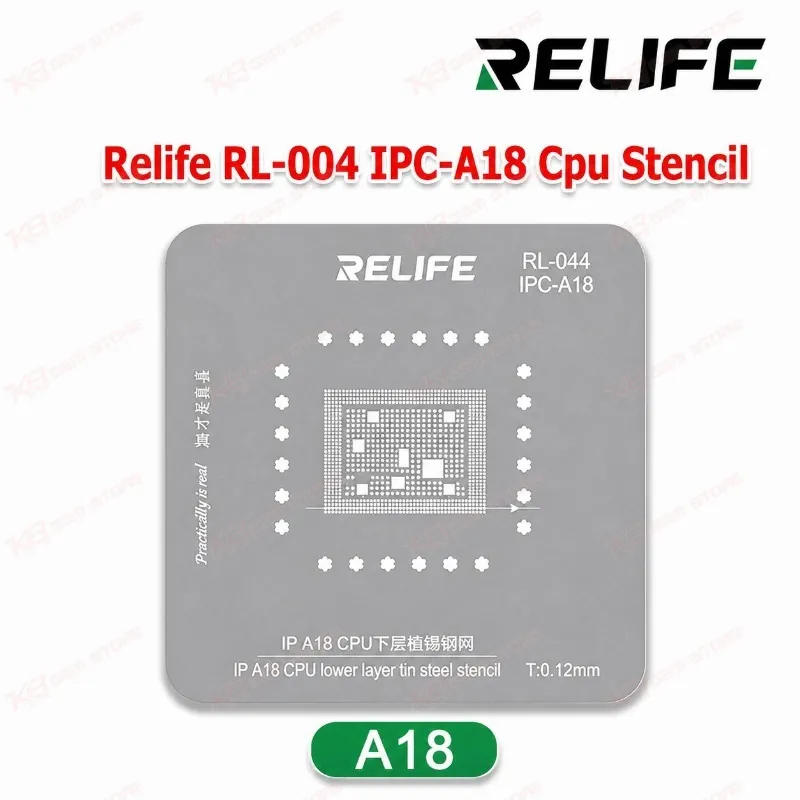
Relife RL-004 IPC-A18 Cpu Stencil

Relife RL-004 IPC-A18 Cpu Stencil

Regular price Rs.800.00 PKR
Regular price Sale price Rs.800.00 PKR
Sale Sold out
Shipping calculated at checkout.
Quantity

The Relife RL-044 IPZ15 is a precision CPU reballing stencil built for iPhone 16 A18 and A18 Pro chipset repair work. Made from high-quality stainless steel with a 0.12mm thickness, this stencil aligns solder balls accurately over IC CPU pads, giving you clean, consistent reballing results on your repair bench. Technicians handling dead phone repair, IC change, or CPU reballing after board-level faults rely on this stencil for tight ball placement without bridging or misalignment. If you're running an ISP or eMMC repair workflow alongside CPU work, the RL-044 IPZ15 fits directly into your existing chip planting setup and speeds up your reballing process on A18 series boards.

SKU:MST-SOLDERING-TOOLS-778

⚖️ Weight: 0.01 kg

  • Safe & Secure Payment
  • Fast Delivery
  • WhatsApp Support
View full details

Description

When you're pulling an A18 or A18 Pro CPU off an iPhone 16 motherboard for reballing, the accuracy of your stencil decides whether the chip goes back on clean or comes back to your bench with a boot loop issue. The Relife RL-044 IPZ15 solves this by giving you a 0.12mm stainless steel stencil cut specifically for the A18/A18 Pro ball grid array, so every solder ball lands exactly where the pad sits instead of drifting during your tin planting pass. You get a stencil that resists warping under repeated heat exposure from your hot air station, which matters when you're running multiple reballing jobs back to back in a busy repair shop. Stainless steel construction means the aperture edges stay sharp longer than cheaper alloy stencils, so your ball height and spacing stay consistent even after dozens of uses, cutting down the rework you'd otherwise do from bridged or missing balls. For a technician working dead-after-flash boards or CPU-side hang-on-logo faults, this stencil becomes part of a repeatable process: clean the CPU pads, seat the RL-044 IPZ15 over the chip, apply solder paste or loose balls, reflow under controlled heat, then inspect under your microscope before reinstalling. Because the stencil is purpose-cut for A18/A18 Pro rather than a universal multi-device template, you avoid the guesswork that comes with generic stencils where hole spacing doesn't quite match newer Apple silicon pad layouts. This matters more on A18 boards than older iPhone generations, since ball pitch has tightened with each chipset revision, and a stencil built for an older platform will leave you fighting shorts or open joints. Pakistani repair shops handling iPhone 16 series board work increasingly need chipset-specific tools like this rather than relying on one stencil for every job, especially with A18 becoming the standard chip across new iPhone intake. The RL-044 IPZ15 slots into your existing CPU repair workflow alongside your reballing platform, hot air rework station, and flux, without requiring you to change your process — you're just swapping in a stencil matched to the exact chip generation in front of you. Whether you're running a solo repair bench or managing a service center handling volume iPhone 16 intake, having the correct stencil on hand for A18/A18 Pro work reduces the failure rate on reballed boards and protects your turnaround time on customer devices. Store this stencil flat and clean it after each use to keep the aperture edges from clogging with old flux residue, since a clogged stencil is one of the most common reasons technicians see inconsistent ball height on their next job. The Relife RL-044 IPZ15 is built as a single-purpose precision tool rather than a multi-device compromise, and that focus is exactly what makes it dependable for A18-generation CPU reballing on your repair bench.

Key Features

  • Purpose-built stencil for iPhone A18/A18 Pro CPU reballing
  • 0.12mm precision stainless steel construction
  • Accurate aperture alignment for consistent ball placement
  • Resists warping under repeated hot air rework exposure
  • Compatible with standard CPU reballing platforms and fixtures
  • Reduces bridging and misaligned solder balls during tin planting
  • Reusable across multiple reballing jobs with proper cleaning
  • Fits directly into existing ISP/eMMC/CPU repair workflows

Specifications

Brand Entity Relife
Product Entity RL-044 IPZ15 CPU Reballing Stencil
Technology Entity BGA Reballing / Tin Planting Technology
Compatible Device Entities iPhone 16, iPhone 16 Pro, iPhone 16 Pro Max (A18/A18 Pro chipset)
Repair Process Entity CPU Reballing, IC Reballing, Solder Ball Placement
Industry Entity Mobile Repair Industry, PCB Repair Industry

Compatible Devices

  • iPhone 16 (A18 chipset)
  • iPhone 16 Plus (A18 chipset)
  • iPhone 16 Pro (A18 Pro chipset)
  • iPhone 16 Pro Max (A18 Pro chipset)

Common Repair Uses

  • CPU reballing after board-level chip removal
  • Solder ball planting on A18/A18 Pro IC pads
  • Dead-after-flash and boot loop repair involving CPU reseating
  • IC change procedures on iPhone 16 series motherboards
  • Precision tin planting as part of full board rework

FAQ

What is the product name?
The product name is Relife RL-044 IPZ15 CPU Reballing Stencil.
What is the brand of this product?
The brand of this product is Relife.
What is the model of this product?
The model of this product is RL-044 IPZ15.
What is this product used for?
This product is used for CPU reballing and precision solder ball placement on iPhone A18/A18 Pro chipsets during board-level repair.
Which devices are compatible with this product?
This product is compatible with iPhone 16, iPhone 16 Plus, iPhone 16 Pro, and iPhone 16 Pro Max (A18/A18 Pro chipset boards).
Who should use this product?
This product is suitable for mobile repair technicians, repair shops, service centers, and professional users.
Does this stencil work with older iPhone chipsets like A16 or A17?
No, the RL-044 IPZ15 is cut specifically for the A18/A18 Pro ball grid pattern and is not designed for older chipset generations.
What thickness is the stencil, and why does it matter for reballing accuracy?
The stencil is 0.12mm thick, which keeps ball height and pad alignment consistent during CPU reballing on tightly spaced A18 series pads.

Ask any Query