


Brand:
YCS
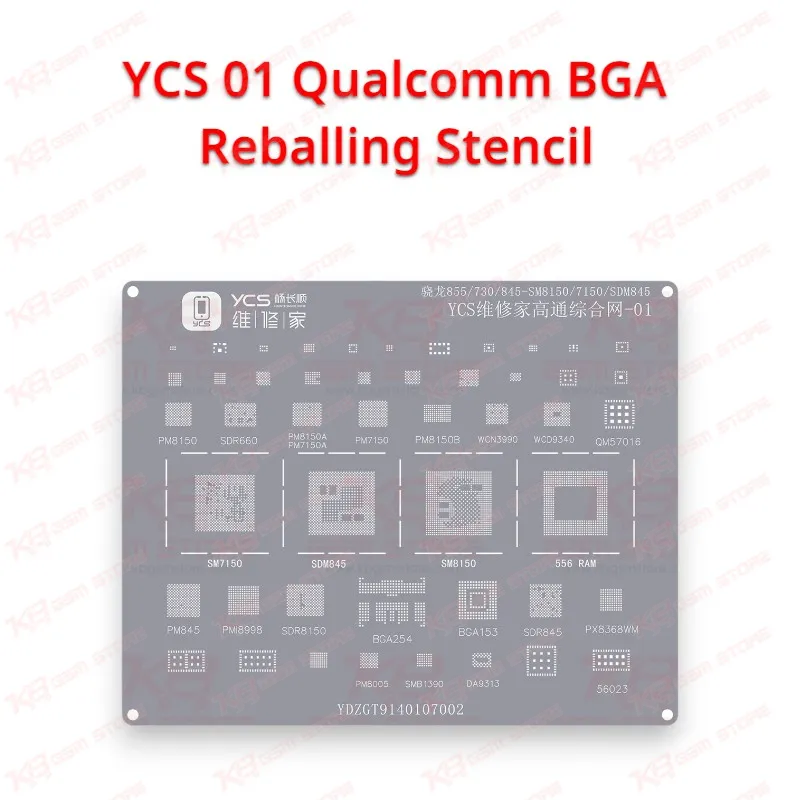
YCS 01 Qualcomm BGA Reballing Stencil
YCS 01 Qualcomm BGA Reballing Stencil
Regular price
Rs.600.00 PKR
Regular price
Sale price
Rs.600.00 PKR
Shipping calculated at checkout.
Quantity
Couldn't load pickup availability
YCS 01 Qualcomm CPU Reballing Stencil for Snapdragon Board Repair
The YCS 01 Qualcomm BGA Reballing Stencil gives you a clean, repeatable way to rebuild the solder balls on a Snapdragon CPU after you lift it from the board. When a dead phone, boot loop or hang on logo traces back to a cracked CPU joint, you need fresh, even balls before you seat the chip again. This YCS steel stencil holds paste or balls in the right grid, so the chip goes back flat and every pad makes contact. Pair it with the YCS U Platform, good flux and a hot air station, and your bench handles Qualcomm CPU jobs with fewer comebacks.
SKU:MST-SOLDERING-TOOLS-970
⚖️ Weight: 0.01 kg
- Safe & Secure Payment
- Fast Delivery
- WhatsApp Support


Description
FAQ
What is the product name?
The product name is YCS 01 Qualcomm BGA Reballing Stencil.
What is the brand of this product?
The brand of this product is YCS (YCS Repairer).
What is the model of this product?
The model of this product is 01.
What is this product used for?
This product is used for reballing Qualcomm Snapdragon CPUs during board-level mobile phone repair.
Which devices are compatible with this product?
This product is compatible with the Qualcomm CPU part numbers marked on the 01 stencil and the Android phones that use them.
Who should use this product?
This product is suitable for mobile repair technicians, repair shops, service centers, and professional users.
How do I confirm the YCS 01 stencil matches my Qualcomm CPU?
Read the part number printed on the CPU under your microscope and match it with the chip marking on the stencil, then lay the stencil over the cleaned chip and check that every hole lines up with a pad before you apply paste.
Should I lift the stencil hot or cold after reballing a Snapdragon CPU?
Let the stencil cool fully before you lift it, because lifting it hot drags the fresh balls out of shape and can pull some off the pads.