


Brand:
YCS
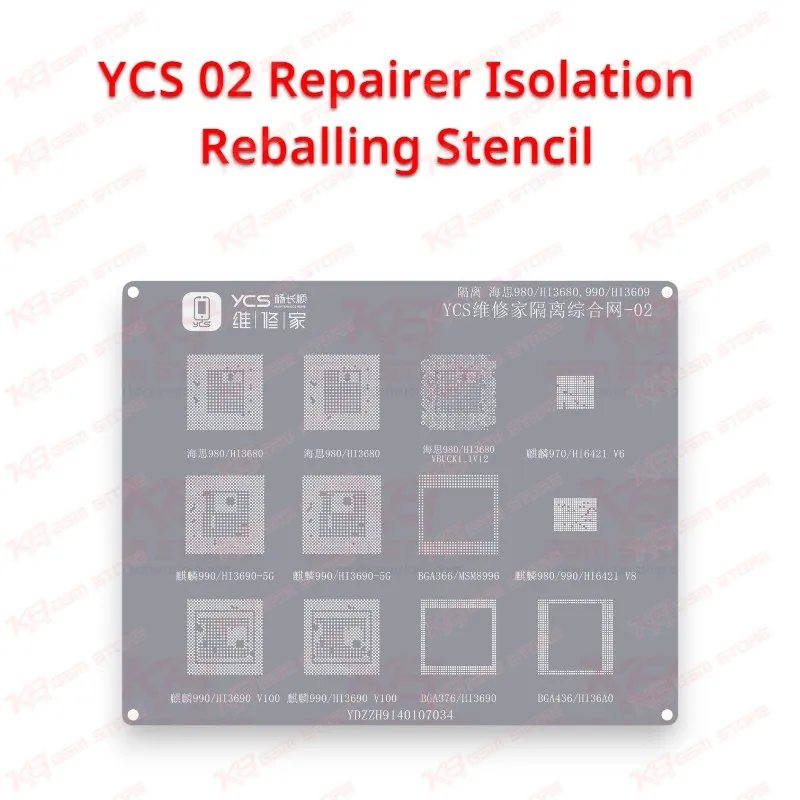
YCS 02 Repairer Isolation Reballing Stencil
YCS 02 Repairer Isolation Reballing Stencil
Regular price
Rs.600.00 PKR
Regular price
Sale price
Rs.600.00 PKR
Shipping calculated at checkout.
Quantity
Couldn't load pickup availability
YCS 02 Isolation Stencil for Precise BGA Tin Planting
The YCS 02 Repairer Isolation Reballing Stencil gives you a steady, accurate mesh for planting fresh solder balls on mobile BGA chips after removal. YCS cuts its stencils from imported alloy steel, so the sheet holds its shape under hot air and springs back flat after cleaning. Rounded-corner holes release the tin cleanly, which means full, even balls and fewer bridged pads when you reseat the chip. Pakistani repair shops use it during IC change jobs on dead phones, boot loop issues, and network faults where the old chip needs fresh balls before it goes back on the board.
SKU:MST-SOLDERING-TOOLS-969
⚖️ Weight: 0.01 kg
- Safe & Secure Payment
- Fast Delivery
- WhatsApp Support


Description
FAQ
What is the product name?
The product name is YCS 02 Repairer Isolation Reballing Stencil.
What is the brand of this product?
The brand of this product is YCS.
What is the model of this product?
The model of this product is YCS 02.
What is this product used for?
This product is used for reballing mobile phone BGA chips, planting fresh solder on an IC before you reseat it on the motherboard.
Which devices are compatible with this product?
This product is compatible with mobile phone BGA ICs that match the chip pattern printed on the YCS 02 stencil, within the YCS iPhone and Android stencil range.
Who should use this product?
This product is suitable for mobile repair technicians, repair shops, service centers, and professional users.
Can I use solder paste instead of loose solder balls with the YCS 02 stencil?
Yes. Spread a thin layer of solder paste across the holes with a spatula, scrape off the excess, and reflow it with hot air while you hold the steel mesh flat. Paste saves time compared to loading balls by hand and removes the need to match ball sizes.
Why do solder balls stick inside the reballing stencil after heating, and how do I prevent it?
Balls usually stick when you lift the mesh while the solder is still molten or when old flux blocks the holes. Let the stencil cool for a few seconds before lifting, keep your paste layer thin and level, and clean the mesh with IPA after every job.