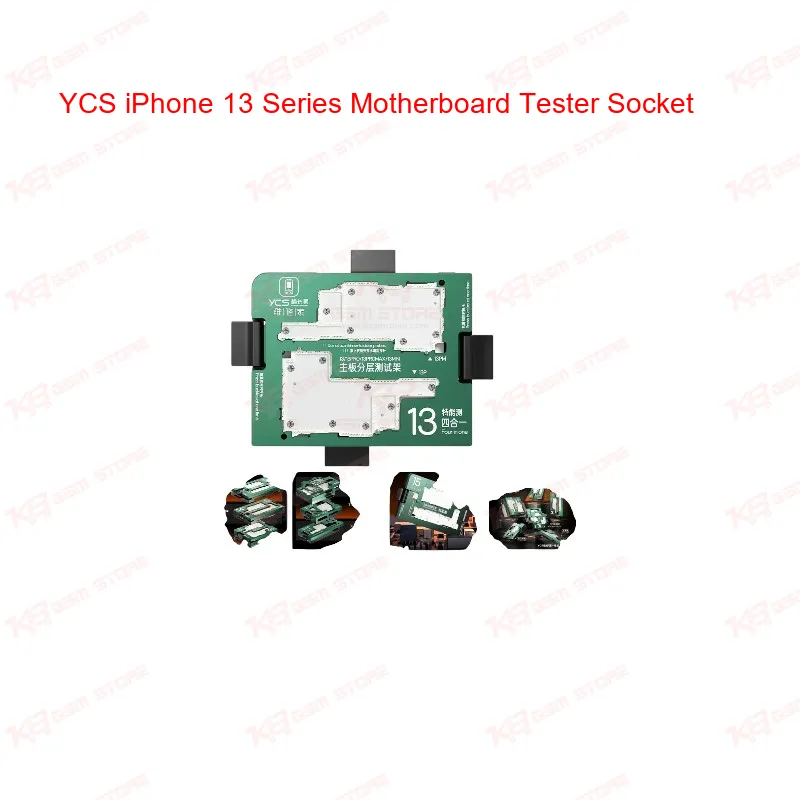
Testing an iPhone 13 series logic board the old way means assembling the phone, checking if it boots, then taking it apart again if something is wrong. That cycle wastes time and increases the chance of damaging flex cables or connectors during repeated handling. The YCS Motherboard Tester Socket removes that step entirely by giving the board a stable middle layer platform where it can be powered and tested on its own, outside the phone body. You place the motherboard on the socket, seat it properly, and the contact pins make full electrical connection so the board behaves as if it were installed in a working device.
This socket is built specifically for the iPhone 13 family: iPhone 13, iPhone 13 Mini, iPhone 13 Pro, and iPhone 13 Pro Max. Each board size and pin layout in this series is slightly different, and a generic tester frame often leads to loose contact or a board that shifts during testing. Because this platform is matched to the exact dimensions of the iPhone 13 series board, you get a snug fit every time, which means fewer false negatives caused by weak or intermittent contact rather than an actual hardware fault.
On a busy repair bench, this tool fits directly into the diagnosis stage of your workflow. Before you commit to a full board repair, reballing, or IC change, you use the socket to confirm whether the board powers on, boots to logo, or stays dead. This isolates the problem quickly: if the board comes up on the tester, the fault is more likely somewhere else in the assembly, not the motherboard itself. If it stays dead on the socket, you know the fault sits on the board and can move to component-level checks with more confidence. The build uses an ABS plastic housing paired with metal contact pins, which is the standard combination for tester sockets that see daily use. The pins are what carry the electrical load each time you seat a board, so their condition directly affects how reliable your readings stay over months of use. This platform holds its shape and pin alignment through repeated seating cycles, which matters in a shop testing several boards a day rather than one unit occasionally. For technicians working on dead phone cases, boot loop issues, or a phone that stays hang on logo after a repair attempt, this socket lets you check the motherboard independently before touching anything else. It also helps confirm your work after an IC change or jumper lagana job — you can test the board on the platform first instead of reassembling the whole phone just to see if the fix worked. That single step alone saves a meaningful amount of time across a full day of repairs.
This is not a repair tool by itself; it does not fix a fault. What it does is remove the guesswork from your diagnostic process so you are not opening and closing the phone multiple times just to confirm a status. For repair shops and service centers handling iPhone 13 series volume regularly, that time saved on assembly cycles adds up fast, and it reduces the risk of causing new damage through unnecessary handling of a device that is already faulty.