


Brand:
YCS
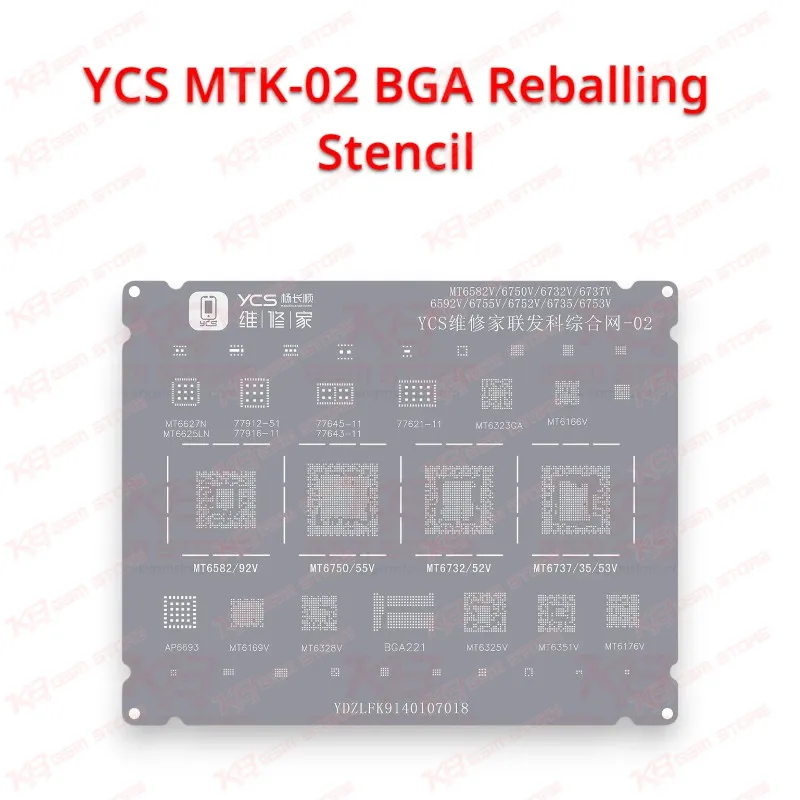
YCS MTK-02 BGA Reballing Stencil
YCS MTK-02 BGA Reballing Stencil
Regular price
Rs.600.00 PKR
Regular price
Sale price
Rs.600.00 PKR
Shipping calculated at checkout.
Quantity
Couldn't load pickup availability
YCS MTK-02 Stencil for MediaTek CPU Reballing in Pakistan
The YCS MTK-02 BGA Reballing Stencil gives you one plate with matched ball patterns for nine popular MediaTek processors, including MT6582V, MT6592V, MT6732V, MT6735, MT6737V, MT6750V, MT6752V, MT6753V, and MT6755V. When a budget Android phone lands on your bench as a dead phone, with a hang on logo fault, or with a network issue traced to a cracked CPU joint, this stencil lets you rebuild the solder balls cleanly before you reseat the chip. You stop hunting for loose single stencils, and your rework stays consistent from one MTK board to the next
SKU:MST-SOLDERING-TOOLS-978
⚖️ Weight: 0.01 kg
- Safe & Secure Payment
- Fast Delivery
- WhatsApp Support


Description
FAQ
What is the product name?
The product name is YCS MTK-02 BGA Reballing Stencil.
What is the brand of this product?
The brand of this product is YCS.
What is the model of this product?
The model of this product is MTK-02.
What is this product used for?
This product is used for reballing MediaTek CPUs during board-level mobile phone repair.
Which devices are compatible with this product?
This product is compatible with MediaTek MT6582V, MT6592V, MT6732V, MT6735, MT6737V, MT6750V, MT6752V, MT6753V, and MT6755V processors.
Who should use this product?
This product is suitable for mobile repair technicians, repair shops, service centers, and professional users.
Does the YCS MTK-02 support the Helio P10 CPU?
Yes. The MT6755V on this plate is the MediaTek Helio P10, so you can reball it directly with the matching grid.
Can I use this stencil for MediaTek power ICs or eMMC chips?
No. The YCS MTK-02 carries CPU patterns only; MediaTek power ICs and eMMC chips need their own dedicated stencils.