Skip to product information
1 of 4
Brand: YCS

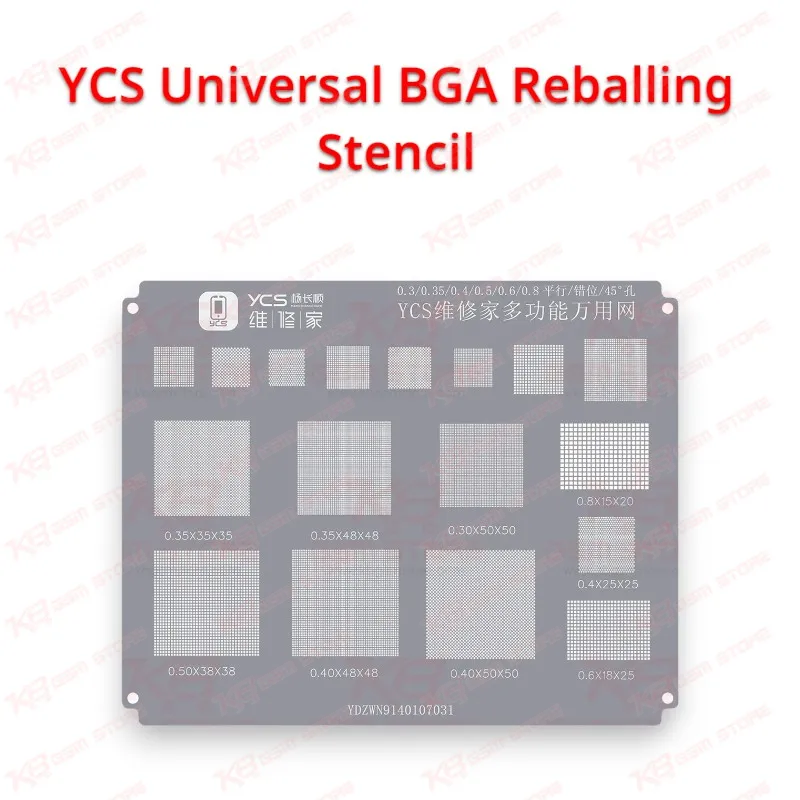
YCS Universal BGA Reballing Stencil

YCS Universal BGA Reballing Stencil

Regular price Rs.599.00 PKR
Regular price Sale price Rs.599.00 PKR
Sale Sold out
Shipping calculated at checkout.
Quantity

Universal Reballing Stencil for Mobile IC and CPU Rework
The YCS Universal BGA Reballing Stencil gives your repair bench one universal ball grid for rebuilding solder balls on mobile ICs after removal. You select the grid section that matches your chip’s ball pitch, apply flux and solder paste, then reflow with your hot air station to form fresh, even balls. Technicians reach for it when a phone comes in dead, stuck in a boot loop issue, or hanging on logo because of a cracked BGA joint under a PMIC, eMMC, or CPU. It saves you from stocking a separate stencil for every model and keeps your rework moving when a model-specific stencil is not on the shelf.

SKU:MST-SOLDERING-TOOLS-971

⚖️ Weight: 0.01 kg

  • Safe & Secure Payment
  • Fast Delivery
  • WhatsApp Support
View full details

Description

Every BGA chip on a phone board sits on a grid of tiny solder balls, and once you lift that chip with hot air, those balls stay behind as uneven bumps and bridges. The YCS Universal BGA Reballing Stencil handles the next step: rebuilding a clean, uniform ball array so the chip lands flat and every pad makes contact again. On a busy repair bench, that step decides whether a reworked phone boots or comes back two days later with the same fault. A universal stencil lets you handle chips from many brands and models with one tool instead of hunting for a dedicated stencil for each board.
BGA stands for Ball Grid Array, a package style that hides its connections underneath the chip body. Mobile boards use it for the CPU, eMMC and UFS storage, power management ICs, RF and modem chips, WiFi modules, and charging ICs. When a phone takes a drop, gets wet, or cycles hot and cold for months, the joints under these packages crack. You then see a dead phone, a boot loop issue, random restarts, a network issue, or a charging issue that no software flash will fix. Reballing restores those joints. You clean the pads, lay down fresh solder through the stencil holes, reflow it into balls, and then mount the chip back on the board with flux and controlled heat.
Your workflow with this stencil stays straightforward. Start by removing the chip and wicking the old solder off both the chip and the board pads with desoldering wick and flux until the surface looks flat and bright. Choose the section of the universal grid whose hole spacing matches the ball pitch of your chip, and trim or mask it to the chip outline. Hold the chip steady in a reballing holder or on a magnetic base, line up the holes with the pads under your microscope, and spread solder paste across the openings with a spatula or blade. Heat evenly with your hot air station until the paste turns into shiny round balls, let it cool, then lift the stencil and clean the flux residue with IPA.
A few bench habits make a big difference to your results. Match the pitch carefully, because one row out of line turns into bridged balls the moment the paste melts. Keep the stencil pressed flat against the chip, since a lifted edge lets paste spread under the plate and leaves you with uneven ball heights. Hold the nozzle at a moderate distance and move it in a slow circle rather than parking it on one spot, which protects the stencil from warping and the chip from overheating. Low-temperature paste suits jobs where heat-sensitive parts sit close by, while leaded paste flows more easily for practice and older boards. Inspect every ball under the microscope before you mount the chip back.
The YCS Universal BGA Reballing Stencil earns its place in shops that handle a mix of brands every day, from budget Android phones to flagship models, as long as the chip’s ball pitch matches one of the grid sections. A model-specific stencil still gives the fastest alignment for high-volume CPU work, yet a universal grid covers the odd jobs: a small power IC, a WiFi module, an audio IC, or a chip from a model that just arrived in the market. Students in technical training institutes benefit too, since one stencil lets them practice reballing on scrap boards across many chip sizes without buying a full stencil library.
Pair it with the right supporting tools from KB GSM Store for a complete reballing setup. A reliable hot air station handles chip removal and reflow, a soldering station with a fine tip and desoldering wick cleans the pads, and a stereo microscope lets you check alignment and ball shape. Add a PCB holder to keep the board steady, quality flux and solder paste for clean joints, and a reballing kit or magnetic reballing platform when you want quicker alignment on CPU and memory chips. As your workload grows, a model-specific CPU reballing platform becomes the natural upgrade for high-volume iPhone and flagship Android board work.

Key Features

  • Universal ball grid layout for reballing BGA chips without a model-specific stencil
  • Lets you rebuild a uniform solder ball array after chip removal
  • Works with solder paste and a hot air station for direct reflow on the chip
  • Grid sections can be trimmed or masked to fit the chip outline
  • Pairs with reballing holders and magnetic bases for steady alignment
  • Covers odd-size and newer chips when a dedicated stencil is unavailable
  • Reusable after cleaning with IPA, keeping per-job cost low
  • Suits both repair shops and training institutes for reballing practice

Specifications

Brand Entity YCS
Product Entity YCS Universal BGA Reballing Stencil
Technology Entity BGA (Ball Grid Array) reballing, solder paste stencil printing, hot air reflow
Compatible Device Entities Mobile phone BGA chips — CPU, eMMC, UFS, PMIC, RF, WiFi, audio, and charging ICs (pitch-matched)
Repair Process Entity Chip removal, pad cleaning, BGA reballing, chip remounting, micro soldering
Industry Entity Mobile phone repair, PCB repair, board-level rework

Compatible Devices

  • Universal — not device-specific
  • BGA chips on mobile phone boards whose ball pitch matches a grid section on the stencil
  • Chip types such as CPU, eMMC, UFS, PMIC, charging IC, RF/modem IC, WiFi IC, and audio IC (pitch-dependent)

Common Repair Uses

  • Reballing a CPU or PMIC after removal for a dead phone or boot loop issue
  • Rebuilding balls on eMMC or UFS chips during storage replacement or data-related board work
  • Reballing charging ICs and power ICs during charging issue repairs
  • Reballing RF and WiFi ICs when tracing a network issue or WiFi fault
  • Remounting chips after cracked BGA joints from drops or heat cycling
  • Reballing practice on scrap boards for trainees

FAQ

What is the product name?
The product name is YCS Universal BGA Reballing Stencil.
What is the brand of this product?
The brand of this product is YCS.
What is the model of this product?
The model of this product is Universal BGA Reballing Stencil.
What is this product used for?
This product is used for rebuilding solder balls on mobile phone BGA chips after removal so they can be remounted on the board.
Which devices are compatible with this product?
This product is compatible with mobile phone BGA chips whose ball pitch matches one of the stencil’s grid sections; it is universal and not device-specific.
Who should use this product?
This product is suitable for mobile repair technicians, repair shops, service centers, and professional users.
How do I choose the correct grid section on a universal BGA stencil?
Measure the ball spacing on the cleaned chip under your microscope or check the chip’s datasheet, then pick the grid section whose holes line up exactly with every pad before you apply paste.
Why does a reballing stencil lift or warp under hot air, and how do I stop it?
Thin stencil plates expand when heat stays on one spot, so keep the nozzle at a moderate distance, move it in a slow circle, and hold the stencil flat with a reballing holder or magnetic base.

Ask any Query