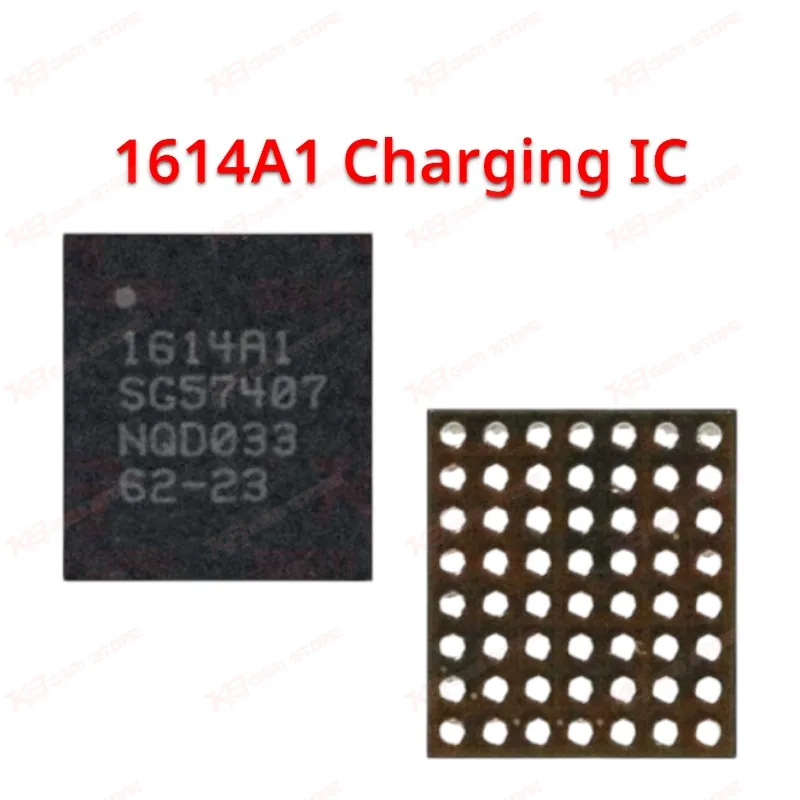
When an iPhone 12 series device won't charge, drains fast on standby, or throws an "accessory not supported" message with a genuine cable, the 1614A1 IC is usually the first component you check on the board. Technicians know this chip by its working name, Tristar, and its board label, U2 — the same naming convention carried over from earlier iPhone charging chips like the Hydra series.This IC sits between the Lightning connector and the power management system. It negotiates communication with whatever gets plugged in — a charger, a computer, a car adapter — and decides how much current the phone should draw. When it fails, that negotiation breaks down. You'll see phones stuck at 1% even after hours on the charger, batteries that jump erratically between percentages, or a dead phone that shows zero response to any charger at all.On the repair bench, a bad 1614A1 is one of the most common causes of charging issue complaints on iPhone 12 units. Before condemning the chip, check the charging port for corrosion or bent pins, inspect the battery connector, and confirm the board hasn't taken liquid damage — a burnt or shorted U2 IC often points to a deeper power rail issue that needs diagnosis with a DC power supply and current reading before you commit to a reflow.Replacing this IC is a standard microsoldering job, not a beginner task. You're working with a BGA package that needs controlled hot air reballing, a stencil matched to the 1614A1 footprint, proper flux, and a steady hand under magnification. Rushing the reflow or misaligning the balls leads to cold joints, which show up later as intermittent charging — the phone works fine on the bench, then drops charging again after a few days of use in the customer's pocket.This chip is a frequent replacement part in any shop that handles iPhone 12 board-level repair. If you're running an ISP or EEPROM-based repair workflow on these boards, having genuine 1614A1 stock on hand means you're not waiting on a supplier every time a charging complaint walks through the door. Pair it with a quality hot air rework station and a matching BGA stencil for consistent results, and keep a multimeter or DC power supply nearby to confirm current draw after the swap before handing the phone back.For shops doing volume on iPhone 12 series, this IC pairs naturally with U2 test boards and jumper wire kits for cases where a full IC change isn't the fix and a jumper repair solves the short instead. Stock decisions here should reflect what actually walks through your door — iPhone 12 charging complaints are common enough that most active repair benches keep this chip on hand rather than sourcing it per job.