


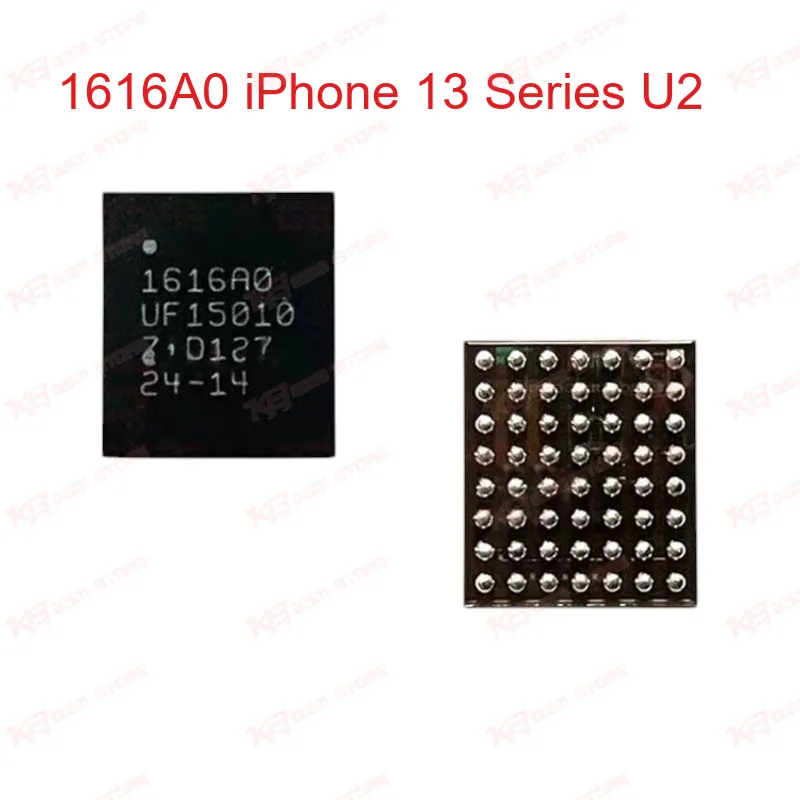
1616A0 iPhone 13 Series U2
1616A0 iPhone 13 Series U2
Regular price
Rs.300.00 PKR
Regular price
Sale price
Rs.300.00 PKR
Shipping calculated at checkout.
Quantity
Couldn't load pickup availability
The 1616A0 U2 USB charging IC, known on the board as U9300 or Tristar, is the charging control chip used in iPhone 13, 13 mini, 13 Pro, and 13 Pro Max. When a phone shows dead charging, no power detection, or charges only on specific cables, this IC is usually the first suspect. It handles USB power negotiation and communicates directly with the charging port and PMIC. Technicians use it as a direct replacement part during board-level charging repair, especially after liquid damage or a failed charging port swap that didn't fix the fault.
⚖️ Weight: 0.01 kg
SKU:MST-IC-371
- Safe & Secure Payment
- Fast Delivery
- WhatsApp Support


Description
FAQ
What is the product name?
The product name is the 1616A0 U2 USB Charging IC.
What is the brand of this product?
This is an Apple OEM board component, referenced as U9300.
What is the model of this product?
The model is 1616A0, also known by its board position U9300.
What is this product used for?
This IC controls USB charging power management and is used to fix dead or inconsistent charging on affected iPhones.
Which devices are compatible with this product?
It is compatible with iPhone 13, 13 mini, 13 Pro, and 13 Pro Max.
Who should use this product?
This product is suitable for mobile repair technicians, repair shops, service centers, and professional users.
Does replacing this IC fix charging issues that persist after a port replacement?
Yes — if the port and flex cable have already been ruled out, this IC is the next most common cause of persistent charging faults on iPhone 13 boards.
Can this IC be reflowed instead of replaced?
A reflow can sometimes resolve a cracked solder joint under the chip, but if the chip itself has degraded, a full replacement with proper reballing is needed.