


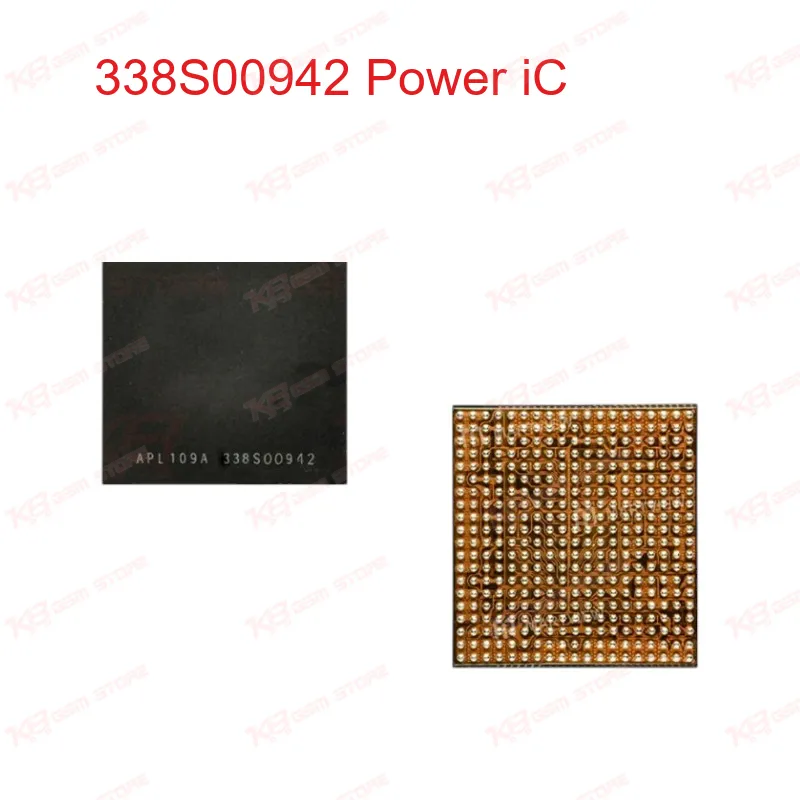
338S00942 Power iC
338S00942 Power iC
Regular price
Rs.1,400.00 PKR
Regular price
Sale price
Rs.1,400.00 PKR
Shipping calculated at checkout.
Quantity
Couldn't load pickup availability
The 338S00942 power management IC, also known by its internal marking APL109A, is the main power chip used on the iPhone 14 Pro and iPhone 14 Pro Max motherboard. This BGA IC regulates and distributes power to the A16 Bionic processor and other core components on the logic board. Technicians reach for this chip when a device shows dead phone symptoms, hang on logo, or no power after liquid damage or a bad flash attempt, where the fault traces back to the main power rail rather than the CPU or software side.
⚖️ Weight: 0.01 kg
SKU:MST-IC-379
- Safe & Secure Payment
- Fast Delivery
- WhatsApp Support


Description
FAQ
What is the product name?
The product name is 338S00942 Power Management IC (APL109A).
What is the brand of this product?
The brand of this product is Apple.
What is the model of this product?
The model of this product is 338S00942, internally marked APL109A.
What is this product used for?
This product is used to restore the main power rail on a faulty iPhone 14 Pro or 14 Pro Max motherboard.
Which devices are compatible with this product?
This IC is compatible with the iPhone 14 Pro and iPhone 14 Pro Max motherboards only.
Who should use this product?
This product is suitable for mobile repair technicians, board-level repair shops, and service centers doing iPhone 14 Pro motherboard work.
Does replacing this IC fix a dead phone with no boot?
It fixes dead phone cases only when the fault is confirmed on this specific power rail; if the A16 processor or a different power IC is faulty, replacing this chip alone won't resolve the boot issue.
Can this IC be replaced without a hot air rework station?
No — this is a BGA chip, so it requires hot air reflow equipment and a reballing kit or stencil; it cannot be swapped with a soldering iron alone.