


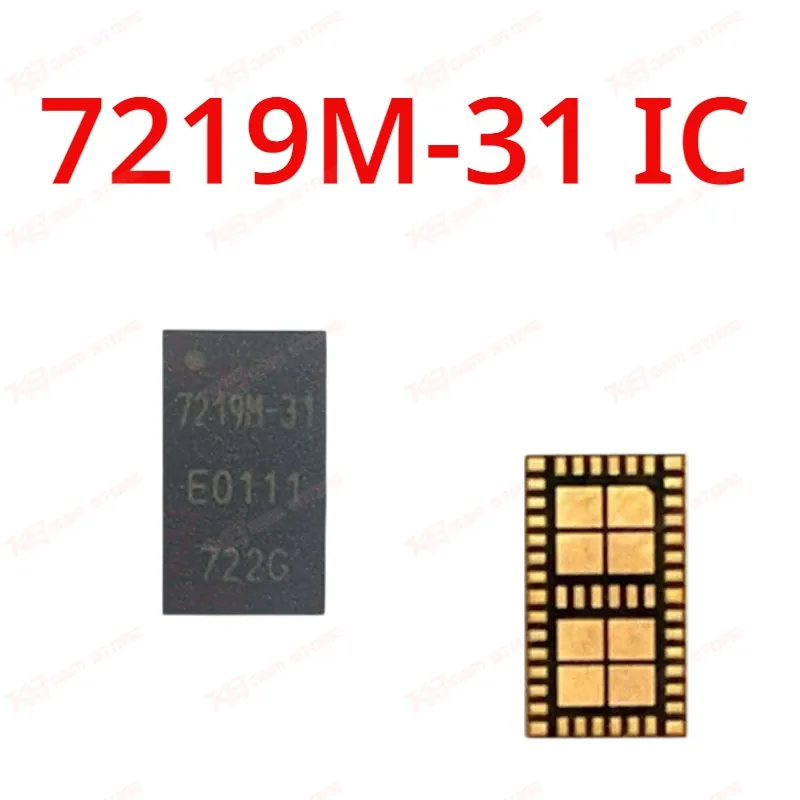
7219M-31 IC
7219M-31 IC
Regular price
Rs.400.00 PKR
Regular price
Sale price
Rs.400.00 PKR
Shipping calculated at checkout.
Quantity
Couldn't load pickup availability
Short Description: The 7219M-31 is a QFN-package Network PA/IF Signal IC used to restore network and signal function on Oppo 5S and Samsung A20S boards. It handles power amplification and IF signal processing in the phone's RF chain, making it the go-to replacement when a board shows no network, weak signal, or unstable call and data connectivity. Built for board-level technicians who need a direct, verified replacement part rather than a guess-and-check swap, this IC lets you target network faults at the component level and get the device back on air without replacing the whole RF module.
⚖️ Weight: 0.01 kg
SKU:MST-IC-208
- Safe & Secure Payment
- Fast Delivery
- WhatsApp Support


Description
FAQ
What is the product name?
The product name is 7219M-31 Network PA/IF Signal IC.
What is the brand of this product?
This part is sold as a verified aftermarket/generic replacement IC; a specific manufacturer brand isn't independently confirmed.
What is the model of this product?
The model is 7219M-31.
What is this product used for?
It's used to repair network and signal faults on the confirmed compatible devices, including no-network, weak-signal, and unstable connectivity issues.
Which devices are compatible with this product?
This IC is confirmed compatible with Oppo 5S and Samsung A20S.
Who should use this product?
This product is suitable for mobile repair technicians, repair shops, service centers, and professional users.
What package type is the 7219M-31 IC, and how should I reflow it?
It's a QFN package. Use a hot air station with a controlled heat profile, matched nozzle size, and generous flux to avoid bridging or tombstoning, since QFN has no visible leads to check after placement.
Will the 7219M-31 fix a "no network" fault if the baseband is already confirmed good?
Yes — if you've isolated the fault to the RF/PA stage and confirmed the baseband and antenna switch test clean, the 7219M-31 targets the PA/IF signal path directly for that fault pattern.